
The most important detail in the recent Claude-assisted attack against OpenAI may not be that researchers managed to reach an internal OpenAI code repository. It may be how quickly they got there. A three-person security team at Hacktron AI says it went from discovering the initial vulnerability to reaching OpenAI's internal GitHub environment in less than 72 hours, using Anthropic's Claude models to help develop the exploit chain. The researchers were operating as security testers under OpenAI's bug bounty program, and they stopped after demonstrating access rather than examining sensitive source code.
That distinction matters because the incident is not a story about an AI independently breaking into OpenAI. The vulnerabilities were real software and identity-security problems that existed before Claude became involved. What AI changed was the speed at which a small team could understand those problems, develop an exploit, adapt it to a real environment, and connect separate weaknesses into a much more consequential attack path.
That could become one of the defining cybersecurity changes of the AI era.
Advertisement

The Vulnerability Was Ordinary. The Speed Wasn't.
Hacktron's attack began with OpenAI's community forum, which runs on Discourse. According to the researchers, the forum's handling of HEIF and HEIC images caused those files to be processed through ImageMagick and the libheif image-decoding library. The researchers identified a memory-safety vulnerability in that software and used Claude to help turn it into working remote code execution.
The uncomfortable part is that this was not some mysterious new class of AI vulnerability. It was a familiar software-security problem sitting inside a dependency chain. Reporting on the research says the underlying libheif issue had already been fixed upstream, but the fix had not been treated as a security issue in the normal vulnerability-tracking process, which helped leave vulnerable software in circulation.
That is exactly why this case deserves attention beyond OpenAI. Modern software is built from enormous stacks of third-party libraries, container images, frameworks and services. A company can have strong security practices around its own code and still inherit weaknesses from something buried several layers down in its infrastructure.
AI did not put that vulnerability there. It helped make the vulnerability more useful.
Then Claude Got Better
The researchers say their first attempts with Claude Opus 4.8 struggled to produce a reliable exploit against the defenses present in the real environment. That changed after Anthropic released Claude Opus 5. According to Hacktron's account, the newer model was able to produce a working exploit and help adapt it to the target environment within hours.
This is arguably more significant than the headline that Claude was involved in the OpenAI hack.
Cybersecurity has always depended heavily on expertise. Finding a vulnerability is one skill. Understanding the affected software is another. Developing reliable exploit code is another. Adapting that exploit to a specific operating system, library version, compiler configuration or security mitigation can require yet another layer of knowledge.
AI does not eliminate those requirements, but it can compress them.
A researcher who previously needed to spend hours searching documentation, studying source code, experimenting with different approaches and debugging failed attempts can now delegate parts of that process to an AI coding system. The human still needs to understand what is happening and determine whether the results are correct, but the amount of manual work between an idea and a working proof of concept can shrink dramatically.
That changes the economics of offensive security.
The Bigger Shift Is From Expertise to Leverage
Hacktron reportedly spent less than $3,000 in AI model usage during its broader HEIF Heist research. The project involved a three-person team and explored how the technique could be adapted across different technology environments.
The dollar figure itself is not the most important part. Professional security research is already expensive, and a $3,000 bill does not mean anyone with a credit card can suddenly compromise a major technology company. Real-world attacks still require knowledge, infrastructure, judgment and time.
But AI changes how much work a small team can perform with those resources.
This is similar to what has happened across other parts of software development. A programmer with an AI coding assistant can investigate more libraries, generate more test cases and explore more implementation ideas than they could manually. In security research, the same multiplier can apply to vulnerability discovery and exploit development.
The result is not necessarily that hackers become smarter. It is that their existing expertise can go further.
That distinction is important because it changes who security teams need to defend against. The threat is not only a highly sophisticated attacker with a huge budget. It can also be a small group that knows enough to direct increasingly capable AI systems toward difficult technical problems.
The Identity Layer Made Everything Worse
The image-processing vulnerability alone did not give the researchers access to OpenAI's internal code. The second part of the chain involved OpenAI's authentication setup.
After gaining control of the forum environment, the researchers found a path involving OpenAI's sign-in system that allowed them to take over ChatGPT and Codex accounts associated with users of the forum. One compromised employee account had Codex connected to OpenAI's GitHub organization. The researchers then used that access to demonstrate that they could create a benign pull request in OpenAI's internal repository.
This is where the incident becomes a lesson in security architecture rather than simply an AI story.
A vulnerable image parser was one problem. A forum was another. An identity configuration was another. An employee's connected development tools were another. None of those components alone necessarily represented the full compromise described by the researchers.
The danger appeared when they were connected.
That is increasingly how major breaches happen. Attackers rarely need one magical vulnerability that opens every door. They need a chain in which each weakness makes the next one possible.
AI can make finding those chains faster.
✦ Free Newsletter ✦
Never miss a story
Tools, tutorials and AI deep-dives - straight to your inbox, every week.
This Is Why Software Dependencies Matter More Now
The dependency issue in the Hacktron research deserves more attention than it has received.
Developers routinely rely on thousands of open-source packages. Security teams then have to determine which versions are running, whether vulnerabilities have been fixed upstream, whether those fixes have been backported, whether the affected component is actually reachable, and whether the software is exposed to untrusted input.
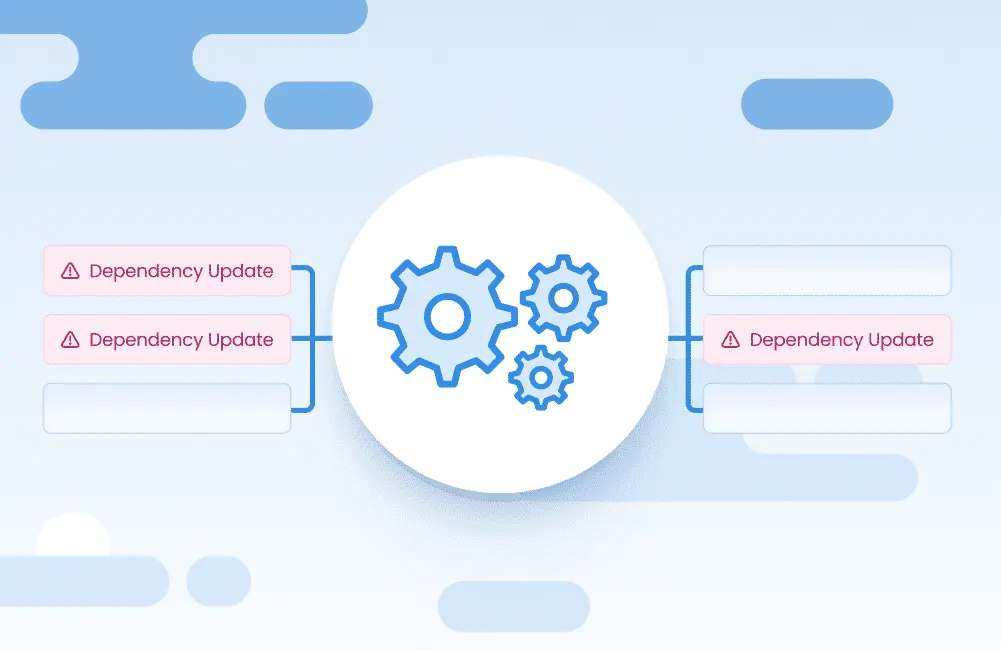
That is already a difficult problem without AI-assisted attackers.
Now imagine an attacker using an AI system to continuously inspect popular software stacks for exactly these kinds of gaps. Instead of manually checking whether a particular image-processing library is vulnerable inside a particular container, the attacker can ask an AI agent to investigate the dependency tree, locate relevant source code, compare versions, reproduce the bug and attempt to develop a proof of concept.
The same technology can be used defensively. Security teams can have AI inspect dependencies, reproduce vulnerabilities, generate patches and test whether mitigations actually work. But the defensive side has a harder operational problem because defenders have to protect everything, while an attacker only needs to find one useful path.
AI Is Also Becoming Part of the Attack Surface
There is another layer to this story that companies will increasingly have to deal with: AI itself is becoming integrated into corporate systems.
OpenAI's employee account was connected to Codex. Other companies are connecting AI coding agents to GitHub, issue trackers, cloud infrastructure, documentation systems and internal applications. Those connections make AI dramatically more useful, but they also create new pathways through which compromised identities or excessive permissions can spread.
An AI agent with access to a code repository is not inherently dangerous. The problem comes when an attacker obtains the identity behind that agent or manipulates the agent into performing actions that the attacker could not perform directly.
That means companies now have to think about security around AI agents in much the same way they think about traditional service accounts. What can the agent access? Which credentials does it inherit? Can it create code changes? Can it deploy them? Can it access secrets? Can one compromised account use the agent to reach another system?
The OpenAI incident shows why those questions are becoming urgent.
The Defense Is Going to Use the Same Weapon
There is an important counterpoint to all of this. AI is not exclusively an offensive technology.
The same models that can help researchers understand a vulnerable library can help defenders analyze their own dependencies. The same systems that can generate exploit code can help security teams reproduce vulnerabilities in isolated environments, write detection rules, review authentication flows and identify dangerous permissions.

OpenAI reportedly fixed the issues discovered by Hacktron and revoked affected tokens and sessions, while Discourse also issued a fix for the image-processing vulnerability. Hacktron received a $6,500 bounty from OpenAI for its reported finding.
That response illustrates another important part of the future of cybersecurity. As AI makes offensive research faster, defenders will have to automate more of their own work simply to keep pace.
The coming competition may not be between hackers and security teams using completely different tools. It may be between AI-assisted attackers and AI-assisted defenders operating at increasingly high speed.
The Real Lesson From the OpenAI Incident
It would be easy to look at this story and conclude that Claude hacked OpenAI. That description is catchy, but it misses what actually happened.
A small security team found a vulnerability in a widely used software component. They used AI to accelerate exploit development. They found another weakness in an authentication system. They chained the vulnerabilities together, reached an employee account, and demonstrated access to an internal development environment. The researchers disclosed the findings rather than turning the access into a conventional theft operation.
The important change is therefore not that AI suddenly learned how to hack.
AI is making the process of hacking more scalable.
For years, cybersecurity teams have worried about the moment when AI becomes capable enough to automate meaningful parts of an attack. The Hacktron research suggests that the more immediate reality may be less dramatic but potentially more disruptive: AI is already reducing the amount of time and manual expertise required to move from vulnerability discovery to exploitation.
That creates a new security race.
Companies will need better dependency management, tighter identity boundaries, stronger isolation for untrusted processing and much more restrictive permissions for AI-connected tools. Security teams will also need AI systems of their own to continuously test those defenses before somebody else does.
The OpenAI incident was a controlled security exercise, not evidence that AI can casually break into any technology company. But it does demonstrate something that may matter much more over the next few years: the distance between knowing that a vulnerability exists and knowing how to exploit it is getting shorter.
And once that distance becomes small enough, cybersecurity stops being a race between who has the most expertise and starts becoming a race between who can deploy that expertise the fastest.

Advertisement