Type a question into Google right now and there is a good chance you will never click a single blue link to find your answer. Google will simply tell you, in a few generated paragraphs sitting above every other result, before you have scrolled an inch.
That box has a name - AI Overviews - and in the space of about eighteen months it has gone from an experimental feature to the dominant force reshaping how a quarter of a million content websites generate traffic. If you run a blog, a niche review site, a news outlet, or anything that depends on people clicking through from a Google search, the numbers behind this shift are not a future risk to plan around. They are a present reality already showing up in your analytics, whether you have noticed the cause yet or not.
Here is what the data actually says, why it is happening, and - this is the part most coverage of this topic skips - what is still demonstrably working for the publishers managing to grow despite it.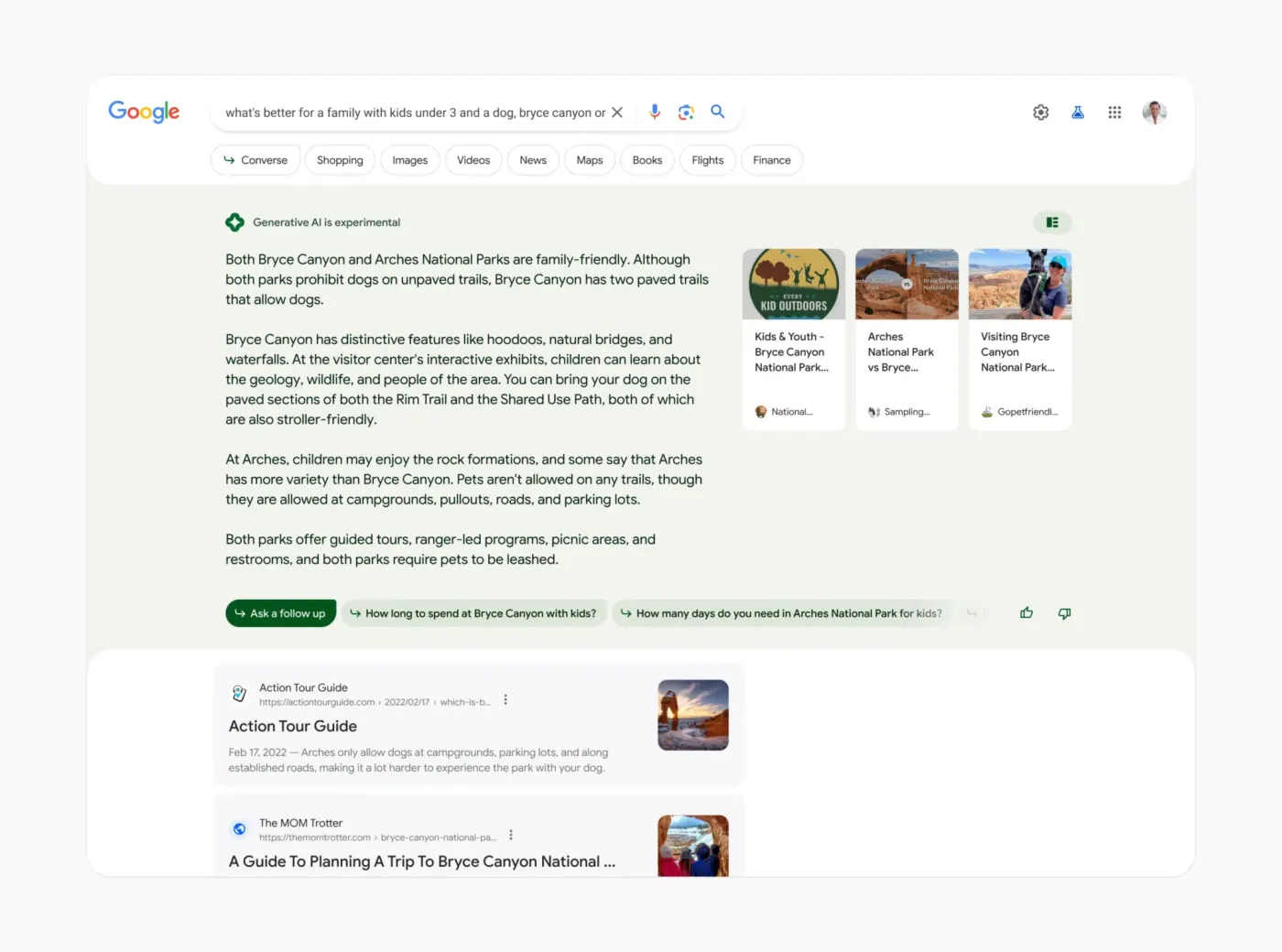
Advertisement
The Scale of What Changed, in Numbers
AI Overviews now appear in roughly 60% of US Google queries as of April 2026, having cleared that threshold for the first time. Eighteen months earlier, in late 2025, that figure sat closer to 25%. That is not a feature rolling out gradually. That is a fundamental rewiring of the search results page happening in real time, underneath a search engine that most website owners still mentally model as the same ten blue links it was five years ago.
The traffic consequence is direct and measurable. Ahrefs data from February 2026 puts the reduction in clicks caused by AI Overviews at 58% - meaning for queries where an AI Overview appears, the websites that would previously have received that click now see, on average, less than half the traffic they would have gotten before. A separate, earlier Ahrefs measurement from 2025 had this figure at 34.5%, which tells its own story: the suppression effect has nearly doubled in roughly a year, and there is no signal in the data suggesting that trend is close to levelling off.
The damage is not evenly distributed. Nearly 39% of marketers surveyed have seen measurable traffic drops since AI Overviews rolled out broadly, but the effect concentrates hard in specific sectors. Technology content has been the hardest hit category at 44% of surveyed marketers reporting declines, followed by travel and hospitality at 43% and retail and e-commerce at 35%. If you are reading this because you run a tech blog, you are not imagining the slowdown. You are running a website in the single most exposed category that exists right now.
The query-type pattern matters just as much as the sector data. AI Overviews trigger far more often on longer, more specific, more informational queries than on short or transactional ones - a ten-word question triggers an AI Overview more than five times as often as a single-word search. This means the exact kind of detailed, well-researched, "answer this specific question thoroughly" content that good SEO practice has spent a decade teaching publishers to create is precisely the content category now most likely to get summarised and answered without a click ever reaching the site that did the work.
Why This Is Happening Now, Not Earlier
None of this is really about Google becoming more aggressive for its own sake. It reflects a genuine shift in how a meaningful share of search behaviour now works, and Google's product decisions are downstream of that shift rather than the original cause of it.
ChatGPT alone now processes between 250 and 500 million search-style queries per week, putting it among the top handful of search properties globally by query volume when measured this way. Perplexity adds roughly 50 million more weekly queries on top of that, and Microsoft's Copilot inside Bing, Word, Outlook, and Teams handles a further 80 to 120 million search-intent queries weekly - a number skewed heavily toward workplace research that previously would have meant someone opening a browser tab and typing into Google.
Put together, AI-mediated search now represents a genuinely new structural category of query volume that simply did not exist four years ago. Google's own internal data backs up the scale of the shift on its side specifically: AI Mode, Google's more conversational and agentic search experience, has itself surpassed one billion monthly active users globally as of mid-2026.
Faced with a real and growing alternative where users get a synthesised answer instantly without leaving a chat window, Google's strategic logic is straightforward, even if it is uncomfortable for the publishers whose content trains and feeds these systems: if Google does not answer the question directly inside its own results page, a meaningful and growing share of users will simply stop coming to Google to ask it.
The Part Almost Nobody Explains Clearly: Where the Clicks Actually Go
Here is the detail that gets lost in most coverage of this topic, and it matters enormously for understanding the real shape of the problem rather than just its headline size.
AI Overviews are not eliminating clicks entirely. They are redistributing them, and the redistribution pattern is brutally uneven. The average AI Overview response links to between four and six sources, and across the full dataset, 96.45% of those cited URLs return a healthy, working page - meaning Google is reliably citing real, accessible content rather than broken or low-quality links. The citations are real. They are simply going to an extremely narrow set of websites.
Advertisement
Beyond Google's own domain - which is the single most frequently cited source inside its own AI Overviews, appearing in over 43% of responses, mostly through links back to other Google properties - the most commonly cited sources across the web are YouTube, Reddit, Wikipedia, and Quora. These four platforms function less like ordinary websites in Google's eyes and more like trusted reference infrastructure that the AI systems lean on disproportionately, almost regardless of topic.
For content that does come from outside this small set of mega-platforms, the citation pattern concentrates further still. Research from Growth Memo found that within any given topic, the top 10 domains capture 46% of all ChatGPT citations, and the top 30 domains capture 67%. That leaves an enormous long tail of the rest of the internet - including the vast majority of independent blogs, niche publishers, and smaller content sites - fighting over roughly a third of the citation opportunity that remains once the dominant handful of authority domains have taken their share.
This is the single most important strategic fact in this entire story: the AI Overview era did not just shrink the total number of available clicks. It dramatically narrowed which sites those remaining clicks are likely to land on, concentrating visibility toward an already-small set of large, trusted, frequently-updated domains.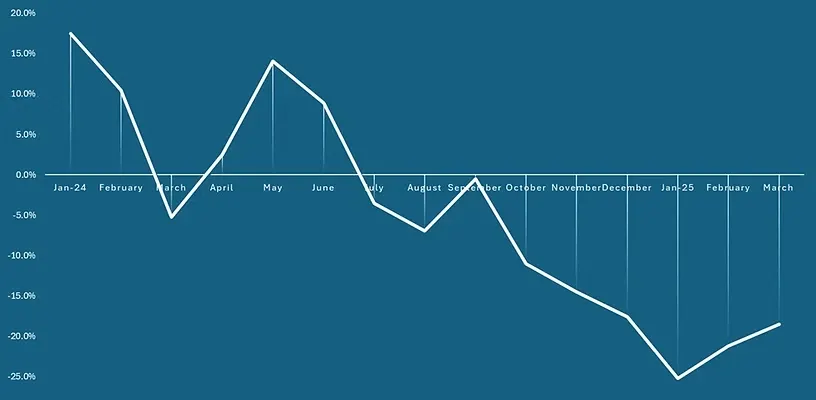
What Actually Gets Cited - The Patterns That Hold Across Every Major Study
If concentration toward large domains were the entire story, smaller publishers would have no path forward at all. The more useful and more actionable finding across the recent research is that specific, controllable content characteristics correlate strongly with getting cited, independent of overall domain size.
✦ Free Newsletter ✦
Never miss a story
Tools, tutorials and AI deep-dives - straight to your inbox, every week.
Content freshness matters more than almost any other single factor. ChatGPT is twice as likely to cite content updated within the past three months compared to older, untouched pages. Google's AI Mode shows a similar pattern: pages updated within the last two months are roughly 28% more likely to be cited than pages left untouched for over two years. This is a genuinely actionable lever that has nothing to do with domain authority - a smaller site that updates its strongest content regularly has a real, measurable advantage over a larger site sitting on stale, unmaintained pages.
Page speed is a citation factor, not just a ranking factor. This is the piece of the puzzle that almost never makes it into general SEO advice, and it is striking how directly it correlates. Pages with a First Contentful Paint under 0.4 seconds are three times more likely to be cited by ChatGPT than pages exceeding 1.13 seconds. Pages with strong Interaction to Next Paint scores show roughly 1.6 times higher odds of being selected as a source compared to slower pages. On Google's AI Mode specifically, pages with a Largest Contentful Paint score worse than 1.85 seconds have the lowest citation odds of any measured category. AI systems appear to be using technical page performance as a meaningful proxy signal for content quality and reliability, layered on top of - not instead of - the actual substance of what the page says.
Format and structure outperform raw length. Listicles carry a 25% citation rate across AI Mode, ChatGPT, and Perplexity combined, compared to roughly 11% for standard blog posts and opinion pieces covering comparable ground. Within AI Mode specifically, content broken into sections of 100 to 150 words has the highest likelihood of being lifted and cited directly - short enough to extract cleanly as a self-contained answer, long enough to actually contain a complete, useful point. This rewards a writing style built around clear, modular, directly-answerable sections rather than long unbroken paragraphs that bury the actual answer inside surrounding context.
Topic and category still shape your odds significantly before any of the above comes into play. Science (43.6%), Health (43.0%), Pets and Animals (36.8%), and broader People and Society content (35.3%) see the highest rates of AI Overview triggering of any major category. Shopping (3.2%), Real Estate (5.8%), Sports (14.8%), and News (15.1%) see the lowest. If you are publishing in one of the high-trigger categories, the stakes for getting the optimisation right are considerably higher, because a much larger share of your potential traffic is already passing through the AI Overview filter before it ever reaches a traditional organic result.
The Counterintuitive Finding: AI Traffic Converts Far Better Than the Clicks You Lost
Here is the genuinely surprising part of this story, and the part that should change how publishers think about the trade they are actually making.
Advertisement
The clicks that do make it through from an AI-generated answer are measurably more valuable than ordinary organic search clicks, by a wide margin. Exposure Ninja's analysis puts AI search traffic conversion at 14.2%, against roughly 2.8% for traditional Google organic traffic - a five-fold difference. SE Ranking's independent analysis found AI-referred visitors converting at rates up to 23 times higher than typical organic search visitors in some categories measured. The consistent overall finding across multiple independent firms: the average AI-search-referred visitor is worth somewhere around 4.4 times as much as the average traditional organic visitor, based purely on what they do once they actually land on a page.
The likely mechanism behind this is straightforward once you think it through. A user who clicked through from a synthesised AI answer rather than a list of blue links has already had a meaningful portion of their initial curiosity satisfied by the answer itself. The click they choose to make anyway represents a much more deliberate, higher-intent action - they specifically wanted more depth, more detail, or wanted to verify the claim against a primary source, rather than clicking reflexively through a list of similar-looking results to see which one might have what they need.
This reframes the entire situation in a way that pure traffic-volume coverage of this topic consistently misses. The right metric for a publisher to obsess over in 2026 is not raw organic click volume in isolation. It is the combination of citation frequency - being the source AI systems actually choose to mention and link to - and the quality of the smaller number of visitors that citation produces. A site that successfully positions itself for AI citation, even while losing meaningful raw traffic volume to AI Overviews answering simpler queries directly, can end up with a smaller but considerably more valuable and more engaged audience than it had under the old blue-links model.
What This Means in Practice for a Site Like Yours
Pulling all of this together into something genuinely actionable, rather than just alarming, here is what the data points toward doing differently.
Update your strongest existing content on a real schedule rather than only ever publishing new pieces. A six-month-old article refreshed today with current data, updated examples, and a clear "last updated" signal has a measurably better chance of citation than an equally good article left untouched since publication - this is one of the few citation factors that costs nothing but time and applies to content you have already written.
Take page speed seriously as a content strategy issue, not purely a technical one. The specific thresholds in the data - sub-0.4-second First Contentful Paint, sub-1.85-second Largest Contentful Paint - are achievable for a well-built site and are now functioning as a genuine, measurable citation gate rather than a minor ranking nicety.
Structure articles around clearly delineated, self-contained sections that could each stand alone as a complete answer to a sub-question within the broader topic, rather than one long continuous argument that only makes sense read start to finish. This is a genuine shift in how to write for this environment, and it rewards exactly the kind of structured, scannable, question-and-answer-oriented format that a careful human reader also tends to prefer.
Recognise that your category matters enormously for how much of this to worry about. A site publishing primarily in technology, travel, or retail content is operating in the highest-exposure categories that exist right now and should treat this shift as the single most important structural factor in its traffic planning for the next two years. A site in a lower-AI-Overview-trigger category like real estate or sports has more breathing room, though the trend across every category points in the same direction over time.
Stop measuring success purely by raw organic click volume, and start tracking citation frequency alongside it. Whether your content gets mentioned by name inside ChatGPT, Perplexity, or Google's AI Mode responses for the topics you care about is now a meaningful leading indicator of brand visibility and search performance in its own right, sitting alongside - not replacing - whatever your traditional Google Search Console data shows you.
Advertisement
The Honest Bottom Line
This is not a temporary glitch that reverses once Google "fixes" something, and it is not a passing trend that levels off any time soon. The data points in one consistent direction across every independent measurement firm covering this space: AI-mediated answers are capturing a growing share of the queries that used to generate organic clicks, the suppression effect is intensifying rather than stabilising, and the citations that remain available are concentrating hard toward a relatively small set of large, fast, frequently-updated, well-structured sources.
The publishers who will do best over the next two to three years are not the ones treating this as a reason to panic or give up on content entirely. They are the ones who understand precisely which specific, controllable factors - freshness, technical speed, structural clarity, genuine topical depth - actually move the needle on getting cited inside this new layer of search, and who build those factors into their ongoing publishing habits as deliberately as they once built keyword research and backlink strategies into the old one.
The blue links have not disappeared. They have simply become one layer in a search results page that now has several layers above them, each with its own distinct rules for who gets seen. Understanding those rules, rather than wishing the old page back, is the actual game being played from here.

Advertisement