The capital is there. The demand is real. The commitments are signed, the announcements are made, the press releases are written. And yet, by the most reliable estimates available right now, roughly half of the AI data centers the industry planned to have operational in the United States in 2026 will either miss their build timelines or be cancelled outright.
Not because the money ran out. Not because AI turned out to be overhyped. Not because the hyperscalers changed their minds. Because the physical components required to actually build and power a modern AI data center - the transformers, the switchgear, the batteries, the cooling hardware, the high-voltage infrastructure - are not available in sufficient quantity, cannot be manufactured fast enough, and in several critical categories depend on supply chains from a country the US government is simultaneously in an active trade dispute with.
The gap between what the AI infrastructure buildout requires and what the physical economy can actually deliver, in the specific timeframe the technology industry has decided it needs delivered, is the most underreported story in AI right now. The money flowing into this space is so enormous, and the announcements so relentless, that the bottleneck hiding underneath them has been easy to miss. It deserves a clear, honest examination.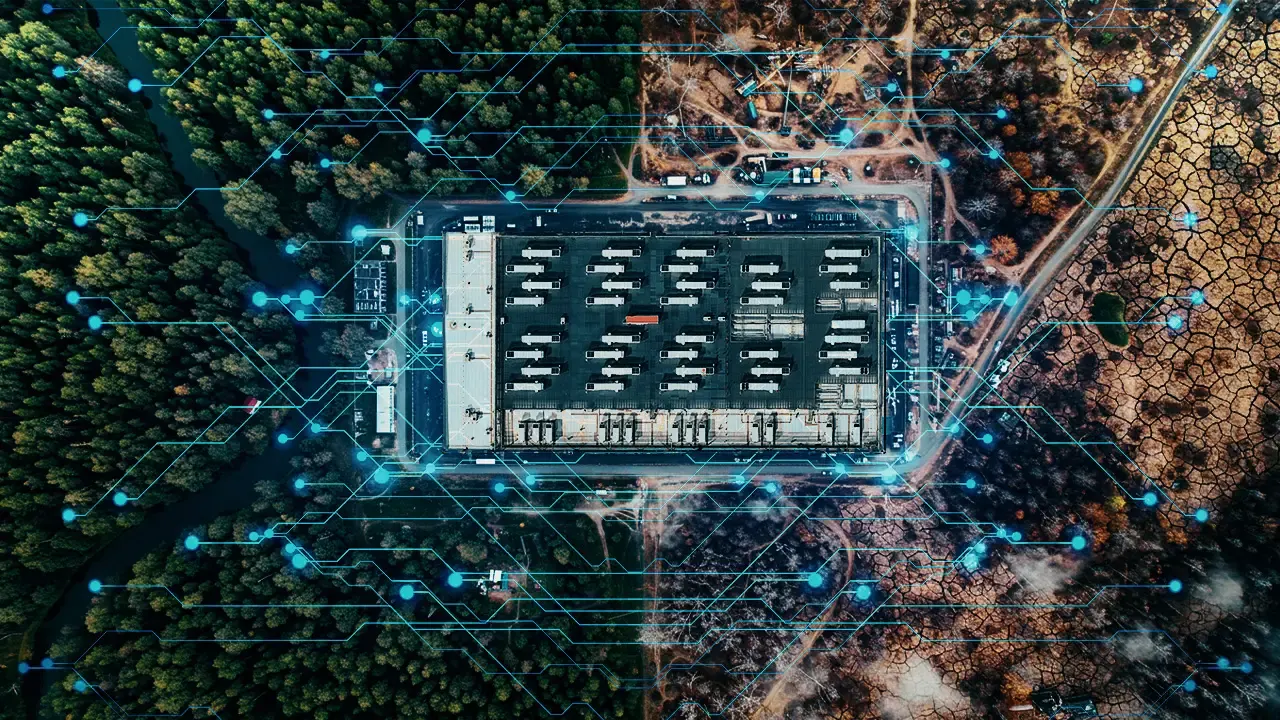
Advertisement
The Numbers That Define the Scale of the Problem
Start with the capital commitments, because the scale matters for understanding why the supply problem is so hard to solve quickly.
The combined capital expenditure of the fourteen largest publicly owned data center operators globally is expected to approach $750 billion in 2026 - up from just under $450 billion the year before, itself a two-thirds increase over 2024. Between August 2025 and February 2026, analyst forecasts for what those same fourteen companies would spend in 2027 were revised upward by 56%, before that year had even begun. These are not static projections being calmly updated - they are estimates chasing a buildout that keeps accelerating faster than anyone modelling it in advance managed to anticipate.
Against that backdrop of extraordinary capital deployment, the construction reality looks strikingly different. According to Bloomberg analysis, approximately 30 to 50 percent of roughly 140 planned US data center projects targeting 16 gigawatts of capacity are projected to miss their 2026 timelines or be cancelled entirely. Sightline Climate's analysis cited alongside this Bloomberg data suggests that roughly 12 gigawatts of US data center capacity will actually come online in 2026 - substantially less than what the original pipeline implied. And even that 12 gigawatt figure is not primarily constrained by the pace of hyperscaler investment decisions or compute hardware availability. It is constrained by something considerably more unglamorous: the availability of electrical equipment.
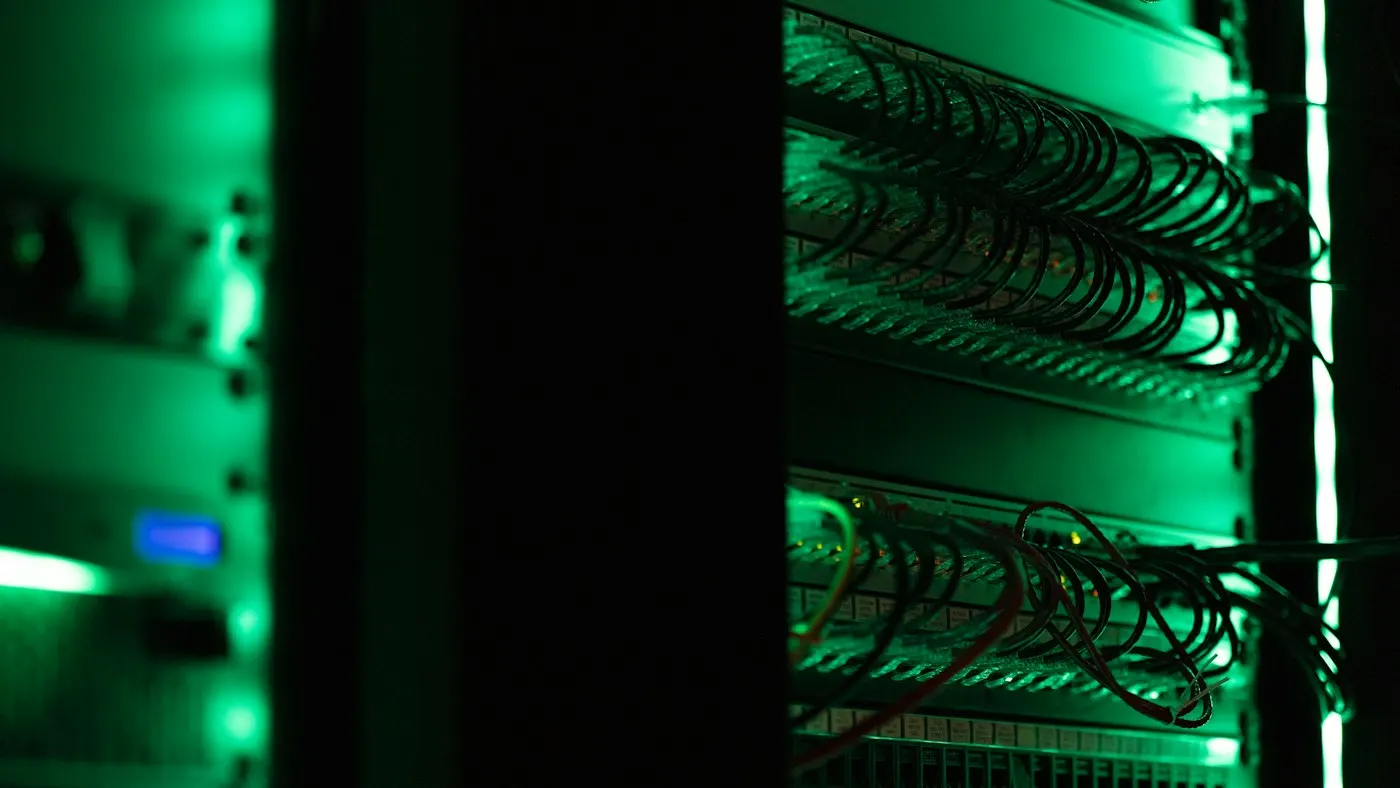
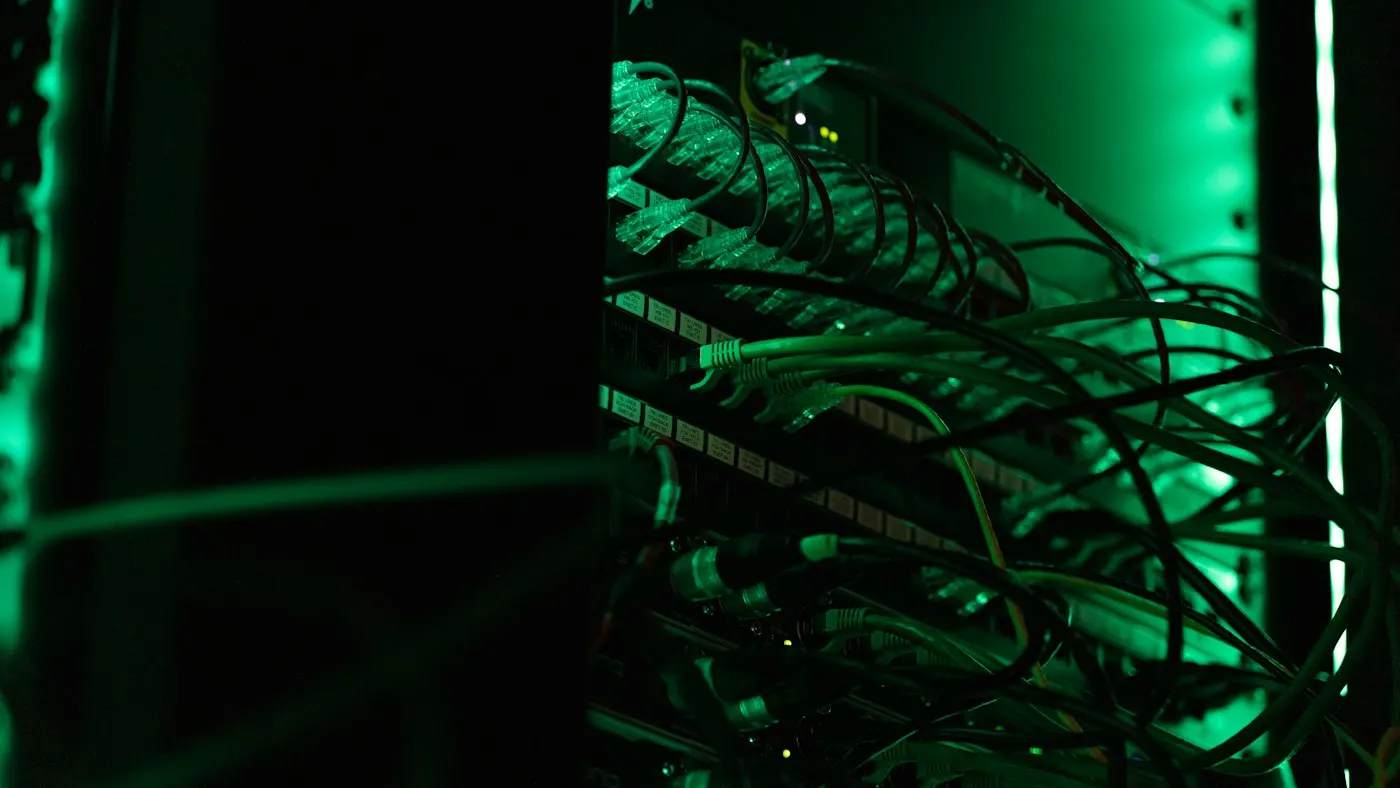
Transformers. Switchgear. Batteries. These are the components that sit between the grid and the servers, and without them the servers cannot operate regardless of how much money has been committed to buying them. The lead time for a high-power transformer - the kind of industrial electrical equipment a large data center campus requires - has extended from roughly 12 weeks a few years ago to somewhere between one and two years in the current market, depending on the specific configuration. That is not a temporary supply hiccup. It is a structural mismatch between the pace at which the AI industry decided it needed infrastructure and the pace at which the industries supplying that infrastructure's physical components were designed to operate.
The China Supply Chain Problem Nobody Wants to Talk About Loudly
Here is the dimension of this story that makes the bottleneck meaningfully harder to solve than a simple "ramp up manufacturing" response would suggest.
The United States does not manufacture sufficient quantities of high-power electrical equipment domestically to meet anywhere near the demand the AI buildout has created. Despite a decade of reshoring initiatives and manufacturing policy, US capacity for the specific kinds of transformers, switchgear, and related electrical infrastructure required by large data centers remains genuinely insufficient at current demand levels. The gap has been filled, as gaps in US industrial capacity tend to be filled, by imports.
The largest suppliers of high-power transformers to US AI data centers in 2025 and into 2026 have been Canada, Mexico, and South Korea. But China has been a significant and growing part of that supply picture as well - imports of high-power transformers from China climbed from fewer than 1,500 units in 2022 to more than 8,000 units in 2025, a roughly five-fold increase in three years. China accounts for over 40% of US battery imports, and its share in certain transformer and switchgear categories runs close to 30%.
The same US-China trade relationship that is generating tariffs, export controls on advanced chips, and escalating technology competition is the one that the AI infrastructure buildout depends on for a significant share of the electrical components required to actually build the facilities those chips would eventually inhabit. The contradiction is real, documented, and not easily resolved on any short timeline. Companies are paying the tariff premiums and importing anyway, because the alternative - waiting for US domestic manufacturing capacity to scale to meet the demand - would push timelines out by years rather than months.
What the Engineers Are Actually Dealing With
The Data Center World 2026 conference in Washington provided one of the clearest, most candid public articulations of exactly how fundamentally the engineering reality has changed inside these facilities, and the panel of executives from Oracle Cloud Infrastructure, Nvidia, and Google's data center technology group spoke with unusual directness about what building AI infrastructure actually looks like now versus even two years ago.
Advertisement
Ram Nagappan, vice president of AI infrastructure at Oracle Cloud Infrastructure, framed the core design challenge bluntly: operators must now design a single facility to support two fundamentally different workloads - large-scale AI training, which requires thousands of tightly synchronised processors working in near-lockstep, and distributed inference, which serves millions of individual real-time user requests with entirely different latency, networking, and resilience requirements. "You have to take both into account when you build the data center," Nagappan said, noting that the two requirements cascade into contradictory pressures on layout, cooling, power delivery, and network design.
What that means in practice is a facility that has to be genuinely bimodal in its architecture - supporting both the gradual density curve of traditional compute and storage infrastructure, and the dramatically steeper trajectory of AI-specific hardware, simultaneously and in the same building. Varun Sakalkar, a distinguished engineer in Google's data center technology and systems group, made the density shift concrete: racks that defined the previous decade by pushing 30 to 40 kilowatts are now being measured in hundreds of kilowatts, with designs approaching the megawatt range. The engineering shorthand for this shift has become a direct description of the resulting problem: "We're not designing a rack anymore - we're designing a system."
Moving from 40 kilowatt racks to megawatt racks is not a scaling challenge of the kind that can be resolved by doing the same thing in larger quantities. It requires fundamentally different power delivery infrastructure, different cooling approaches, different physical structure in the building itself, and different relationships with the electrical grid supplying the facility. None of those changes can be made quickly, and none of them can be made without the electrical equipment whose supply chain is simultaneously under severe pressure.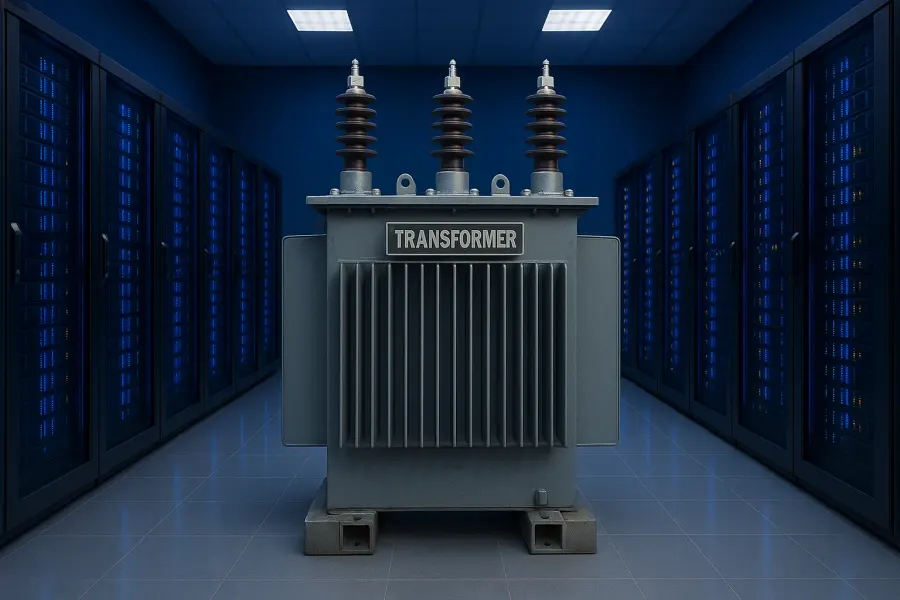
The Cooling Crisis Hiding Underneath the Power Crisis
The power availability challenge that dominates data center coverage is real and significant. But running closely behind it, less frequently discussed, is an equally significant engineering problem: how to remove the heat generated by racks operating at densities the previous generation of cooling infrastructure was never designed to handle.
Air cooling - the dominant approach for most of the history of commercial data centers - simply stops being viable at the power densities AI data centers now routinely require. Moving enough air to extract heat from a megawatt rack would require fans operating at velocities and volumes incompatible with normal human presence in the facility, let alone the kind of maintainability that an operational data center requires. The transition to liquid cooling - either direct-to-chip cooling that runs coolant through channels built into the processor packages themselves, or immersion cooling that submerges entire servers in a thermally conductive fluid - is not optional for facilities built around current-generation AI hardware. It is structurally required.
✦ Free Newsletter ✦
Never miss a story
Tools, tutorials and AI deep-dives - straight to your inbox, every week.
This transition is well understood within the industry and actively underway, but it creates its own supply chain pressure on a completely separate set of components: the coolant distribution units, the quick-disconnect fittings, the heat exchangers, and the rear-door heat exchangers for facilities transitioning incrementally from air to liquid rather than building liquid-first from the ground up. The industry term for this choice - "1P versus 2P cooling," referring to single-phase and two-phase direct-to-chip liquid cooling - has moved from technical specification language into a genuine strategic decision that affects capital costs, operational complexity, facility design, and vendor lock-in considerations, all at once.
Google's Sakalkar noted at Data Center World that the industry's historical approach of optimising individual racks within a building has given way to something larger: the "campus as a product," where hyperscalers now treat entire multi-building campuses as integrated systems rather than collections of independent facilities. That shift changes not just how individual buildings are designed but how power delivery, cooling, and network infrastructure are planned and deployed across potentially hundreds of acres of development. The complexity introduced at that scale, combined with the physical infrastructure supply constraints described above, is why projects that appear straightforward on paper - identified sites, committed capital, announced timelines - are consistently running into delays that capital alone cannot solve.
The Political Revolt That Has Already Blocked $130 Billion Worth of Projects
Against the backdrop of the supply chain and engineering constraints, a third pressure has been building in parallel that the industry was slow to anticipate and is still struggling to respond to effectively.
More than 75 data center projects, with a combined estimated development value exceeding $130 billion, were successfully blocked or significantly delayed in the first three months of 2026 alone, according to reporting from Tom's Hardware. The opposition has taken forms ranging from community ballot measures to state legislation to utility rate disputes, and it has spread geographically far beyond the Northern Virginia market where early data center political opposition was concentrated.
Advertisement
California saw a city approve the first voter-enacted data center ban through a direct ballot measure. Oklahoma enacted the "Data Center Consumer Ratepayer Protection Act," requiring large-load AI projects to cover their own infrastructure costs rather than spreading those costs across existing residential electricity customers. North Carolina advanced legislation designed to prevent utilities and ratepayers from absorbing the financial risks of AI infrastructure expansion if projected demand fails to materialise - a hedge against the scenario where companies sign power commitments they later walk away from, leaving local customers with stranded costs. Virginia revised its permitting guidance for backup generators specifically in response to community concerns about emissions from diesel generators running more frequently than emergency-use assumptions historically implied.
Wisconsin enacted what has been characterised as the first data center-specific electricity tariff in the country, establishing a regulatory baseline that other states are now examining. Ohio's earlier suspension of data center tax incentives, driven by the realisation that projected exemption costs had grown far beyond initial estimates, is being revisited as communities across the state continue to evaluate whether the economics of hosting large facilities genuinely serve their interests.
The pattern across all of these regulatory and community-driven interventions is consistent: the pitch that sold data center development to communities in earlier years - jobs, tax revenue, economic activity - is being weighed more carefully against the actual distribution of costs, including electricity rate impacts on existing customers, water consumption for cooling, emissions from on-site generation, and demands on grid infrastructure that communities did not build and may not be equipped to upgrade.
JT Steenkamp, vice president at Prologis Mobility, described the resulting pressure succinctly at Data Center World 2026: "This is a story of a nexus of real estate and power, and particularly speed to power as it pertains to this new age of AI." The companies that are navigating this most successfully are the ones that have large land positions already in industrial-zoned areas with existing utility relationships - which dramatically narrows the field of viable sites and concentrates development activity among a relatively small number of large operators with those pre-existing positions.
The 200 Gigawatt Question Nobody Can Answer Cleanly
The broadest version of this challenge is captured in a single figure from Prologis's analysis: the United States could see roughly 200 gigawatts of new AI-driven electricity demand by the end of the decade, while simultaneously retiring more than 100 gigawatts of existing generation capacity as older plants reach end of life.
For context on what 200 gigawatts of new demand means: current total US electricity generating capacity is approximately 1,200 gigawatts. Adding 200 gigawatts of new demand from a single sector, in under a decade, while retiring 100 gigawatts of existing supply simultaneously, is not a stress test the US electrical system was designed to pass. It requires not just the nuclear deals and renewable procurement agreements that the largest hyperscalers have been signing with considerable fanfare, but the grid transmission and distribution infrastructure upgrades required to actually deliver that power to where the data centers are being built - and those upgrades, on the timelines the industry's announcements imply, are not currently on track.
The International Energy Agency has issued multiple reports in 2025 and 2026 highlighting the widening gap between AI-driven data center power demand growth and the electricity infrastructure available to meet it. The $1.4 trillion US electricity infrastructure overhaul underway, driven substantially by data center demand, is the largest upgrade to American electrical infrastructure since rural electrification in the mid-twentieth century - which is not a comparison that conveys speed. Rural electrification took decades.
What This Means in Practice
The honest summary of where this leaves the AI data center buildout in mid-2026 is more complicated than either the capital commitment figures or the cancellation statistics individually suggest.
The investment is genuine, the demand is genuine, and the technology companies deploying these facilities are not going to stop building because of supply chain friction. They are paying premium prices for available transformers, signing nuclear power agreements that will take years to produce electricity, exploring distributed on-site generation as a bridge, and navigating community opposition case by case in individual regulatory proceedings. This is not a boom running out of steam. It is a boom running into the physical limits of the supply and infrastructure systems it depends on.
Advertisement
What the constraints are producing is a specific pattern of outcome: the largest, best-resourced operators with the longest-established site portfolios and utility relationships are moving forward on something closer to their original timelines. The mid-tier and smaller operators, without those pre-built advantages, are accumulating delays. The geographic concentration of buildable capacity is narrowing around the states and sites where regulatory relationships, available power, and industrial zoning already exist - Texas, parts of the Southeast, and a narrowing list of international markets where similar conditions apply.
Sean James, Nvidia's distinguished engineer for energy systems, offered the most honest single-sentence assessment of the bridge-building the industry is currently doing at Data Center World 2026, referring to on-site generation as a way to accelerate deployment in the face of grid connection delays: "It's a good stopgap. It's not the preferred long-term solution."
That phrase - good stopgap, not preferred long-term solution - could serve as the honest summary of nearly every adaptation the AI data center industry is currently making to the gap between its ambitions and the physical reality of what can be built, powered, cooled, and permitted in the time available.
The ambitions are real. The physical reality has its own timeline, and it is not asking for permission.

Advertisement