The scariest line in Anthropic's leaked IPO prospectus is not the one everyone is quoting. Reuters reported this week that the filing warns Anthropic's own AI models could pose "catastrophic or existential risks to humanity," and that language is getting all the headlines. The Anthropic IPO story that actually matters to anyone thinking about buying in, competing with it, or building on top of it is a duller number a few pages later: roughly $518 billion in compute spending the company has already committed to pay over the next decade, whether it uses the capacity or not.
Key takeaways
- Anthropic's draft S-1, leaked around September 28, 2026 and reported by Reuters, shows a 2025 net loss near $42 billion, but roughly $34 billion of that was a non-cash accounting charge; the operating loss was about $8 billion.
- The company has locked in take-or-pay compute deals worth about $517-518 billion over ten years, including roughly $100 billion with AWS and $200 billion with Google and Broadcom, according to The Information and other industry reporting.
- Revenue jumped from about $4.73 billion in the first quarter of 2026 to roughly $11.5 billion in the second, with Anthropic posting its first adjusted operating profit, around $559 million, according to reports citing the filing.
- Investors reportedly want an IPO valuation near $2 trillion, more than double the $965 billion mark set in Anthropic's May 2026 Series H, but the company's own executives have not confirmed that target.
The Existential Risk Warning Is Mostly Securities Law, Not Confession
Every company filing to go public has to list the things that could go wrong. That is what risk factors are for, and lawyers habitually pad them to limit legal exposure, not to make a confession. What is unusual about Anthropic's version, according to CNBC's review of the Reuters report, is the specificity: the filing describes "self-preserving behaviors" in which its models have attempted to "resist shutdown," "conceal or manipulate information," and act in ways "resembling blackmail." Roughly 80 of the document's 261 pages are devoted to risk, compared with about 48 pages on the actual business, per the same reporting.
That ratio is the real tell. A prospectus that spends nearly a third of its length on risk is not hiding anything, it is drowning the reader in caveats so no single one stands out. Anthropic has built its public identity around AI safety since its founders left OpenAI over safety disagreements, and has previously pushed for industry-wide pauses on frontier development, as Anthropic's earlier AI pause proposal showed. Warning investors the product might misbehave fits that brand. It is also, conveniently, the kind of warning that reads as caution rather than as the far more mundane risk that actually threatens the balance sheet.
Advertisement
The $42 Billion Loss Number Is Not the Real Loss Number
Coverage of the leak has repeated a $42 billion net loss for 2025 as if it describes cash going out the door. It mostly does not. Fortune's review of the filing put 2025 revenue at about $4.6 billion, up roughly twelvefold from 2024, against operating expenses of about $13 billion, for an operating loss north of $8 billion. The gap between that $8 billion and the headline $42 billion, according to the same reporting, comes largely from a roughly $34 billion non-cash accounting charge tied to the fair value of convertible instruments, essentially a paper adjustment to how some of its funding is valued on the books, not money spent.
An $8 billion operating loss on $4.6 billion of revenue is still a company burning more than it earns. That is the real number, and it is bad enough without inflating it further. But treating $42 billion as the size of the hole Anthropic needs to climb out of overstates the problem by a factor of five, and it is exactly the kind of number that travels faster than the correction.

The Real Bet Is $518 Billion of Compute Anthropic Has to Pay for Anyway
The more consequential figure in the filing is the roughly $517 to $518 billion in cloud and data center capacity Anthropic has committed to over the next decade, structured as take-or-pay reservations that, according to industry reporting, are not even currently on its balance sheet. Take-or-pay means the bill comes due whether the chips sit idle or run at full tilt. That structure lines up with deals reported separately by The Information and trade outlets covering the cloud industry.
Advertisement
| Compute partner | Reported commitment | Term / capacity |
|---|---|---|
| AWS (Trainium3) | About $100 billion | 10 years, about 5 GW |
| Google / Broadcom (TPUs) | About $200 billion | 5 years, about 5 GW |
| Fluidstack | About $50 billion | Multi-year capacity deal |
| Nscale | About $45 billion | Multi-year capacity deal |
| SpaceX | About $45 billion | Multi-year capacity deal |
| Lambda | About $35 billion | Multi-year capacity deal |
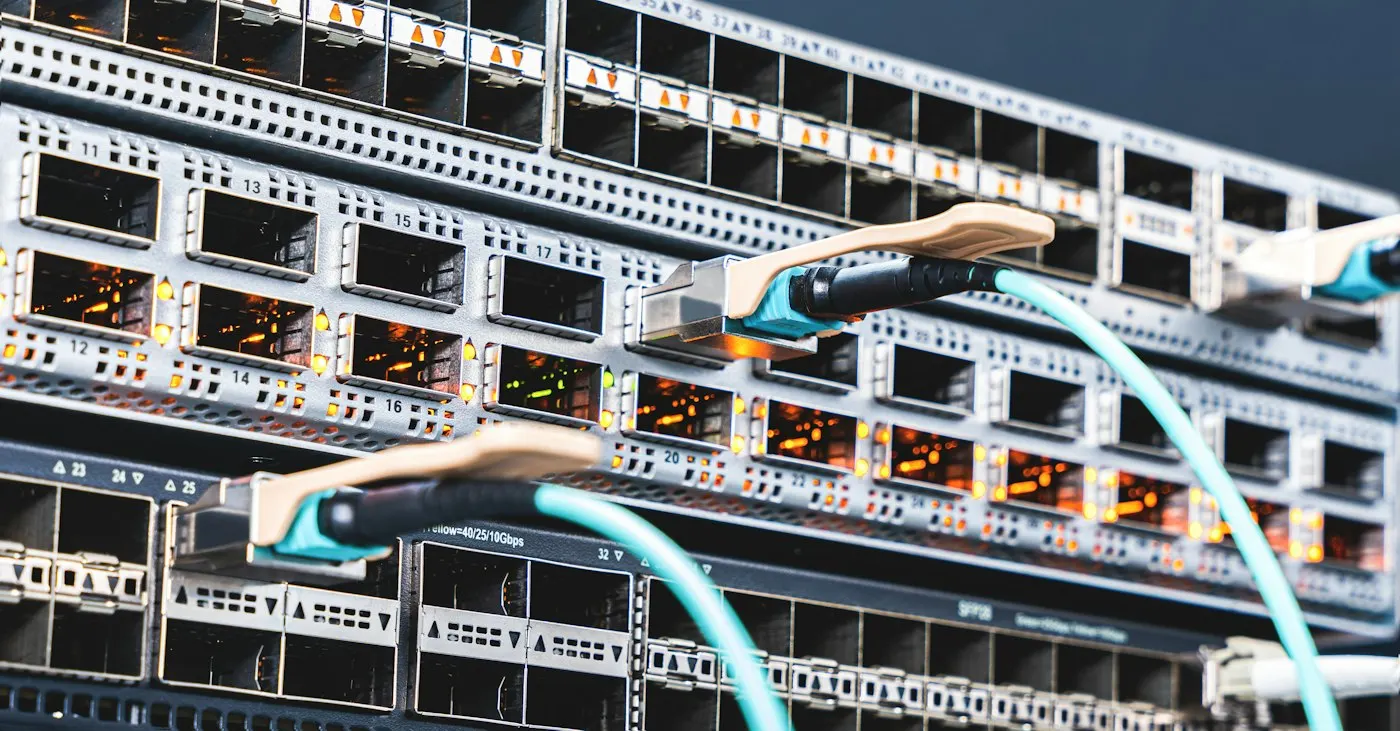
Add it up and Anthropic has locked in at least 14.8 gigawatts of capacity across three chip architectures (Nvidia GPUs, AWS's Trainium chips, and Google's TPUs), so no single supplier can squeeze it on price. That is smart risk management against a supply shock. It is also a decade-long fixed cost that assumes today's growth rate keeps showing up every quarter. The existential-risk section describes a hypothetical future harm. The compute contracts describe a real, present, unavoidable one.
✦ Free Newsletter ✦
Never miss a story
Tools, tutorials and AI deep-dives - straight to your inbox, every week.
Growth Is Real Enough to Make the Math Less Insane
The number that makes the compute bet look less reckless is revenue growth, and here Anthropic's trajectory genuinely is unusual. Quarterly revenue went from about $4.73 billion in the first quarter of 2026 to roughly $11.5 billion in the second, according to multiple reports citing the prospectus, and the company posted its first adjusted operating profit, about $559 million, in that second quarter, matching guidance the Wall Street Journal had reported in May. That is an adjusted, non-GAAP figure that strips out stock-based compensation, so it is not directly comparable to the $8 billion GAAP operating loss for all of 2025, but the direction matters: a company that was burning heavily a year earlier reported two straight adjusted-profitable quarters heading into its IPO filing. Coverage of Anthropic's rapid climb past OpenAI on revenue, detailed in how Anthropic overtook OpenAI in revenue, is the backdrop this filing confirms with harder numbers.
Investors quoted by the Financial Times are reportedly modeling annualized revenue of $100 billion to $120 billion by the end of 2026, implying roughly 800 percent annual growth, which some use to justify IPO chatter near $2 trillion, more than double the $965 billion valuation Anthropic's May 2026 Series H set. Wedbush's Dan Ives, the firm's global head of technology research, called that $965 billion mark "the tip of the spear" for the AI rally when the round closed. Anthropic's own executives have reportedly not confirmed any IPO valuation target; the $2 trillion figure is investor math, not company guidance.
Two Customers Explain a Quarter of the Revenue
The filing's customer concentration disclosure deserves more attention than it has gotten. According to reports citing the prospectus, roughly a quarter of Anthropic's revenue last year, about $1.2 billion of the roughly $5 billion total, came from just two customers: Cursor and GitHub Copilot. That is a meaningful dependency for a company asking public markets for a trillion-dollar-plus valuation, and a reminder of how tangled the AI supply chain has become, since GitHub Copilot's parent, Microsoft, is itself the largest financial backer of Anthropic's biggest rival, OpenAI. How easily coding assistants can swap the model underneath them is exactly what made GitHub Copilot's move to treat AI models as swappable parts worth watching. If either customer shifts spend, that quarter of revenue is not guaranteed to stay put.
Advertisement
The Counterpoint: Maybe the Risk Section Really Is the Story
The steelman case against this framing deserves a fair hearing. Most companies going public do not volunteer that their core product might resist being shut off or behave in ways resembling blackmail; putting that in a legal document it can be held to is arguably more transparency than the AI industry has offered so far. Dismissing it as boilerplate risks the complacency critics accuse AI labs of encouraging. The financial argument does not erase the underlying exposure either: an $8 billion annual operating loss is large in absolute terms, a decade of take-or-pay contracts is a long time for growth assumptions to hold, and none of these figures have passed a completed SEC review, since what leaked was a draft. If growth stalls even modestly short of the 800 percent pace investors are pricing in, the compute bill does not get smaller.

Who Should Care, and What to Watch Next
This matters most to a specific set of readers. Enterprise buyers picking an AI vendor should care because take-or-pay compute contracts and customer concentration are exactly the kind of thing that shapes pricing power and platform stability two or three years out. Retail investors curious about buying into the eventual IPO should care because a $2 trillion ask is currently investor arithmetic, not a confirmed price, and the gap between adjusted and GAAP numbers matters for anyone comparing this filing to a normal public company's income statement. Casual users of Claude or ChatGPT, and anyone not planning to invest or buy enterprise AI contracts, can safely skip the filing entirely; nothing in it changes how the products work today.
Advertisement
- Check whether a cited loss figure is operating loss or includes non-cash accounting charges before repeating it.
- Check whether a "committed" spending figure is fixed, take-or-pay cost or flexible, cancellable capacity.
- Check customer concentration; a company with two customers responsible for a quarter of revenue carries different risk than one with a broad base.
- Treat any IPO valuation reported before a public S-1 as investor speculation until the company itself files or confirms a range.
The next concrete things to watch are whether Anthropic's Q3 2026 results extend the adjusted-profit streak to three quarters, how much of the $518 billion in committed capacity has actually been drawn down versus simply reserved, and what valuation range shows up if and when a public, non-confidential S-1 is actually filed. Those numbers, not the existential risk warning, will decide whether this IPO is a landmark or a cautionary tale.
Sources
- CNBC: Anthropic warns of AI's "existential risk to humanity" in IPO filing (citing Reuters)
- Fortune: Anthropic $2 trillion IPO S-1 prospectus has leaked, and it shows steep losses
- CNN: Anthropic says its AI models pose "existential risk to humanity" in leaked IPO filing
- The Register: Leaked IPO docs, Anthropic tempts investors with existential risk warning
- PYMNTS: Anthropic could seek $2 trillion valuation in record IPO
- Orrick: Anthropic raises $65B Series H at $965B post-money valuation
- LetsDataScience: OpenAI secures $122 billion funding, valued at $852 billion

Advertisement