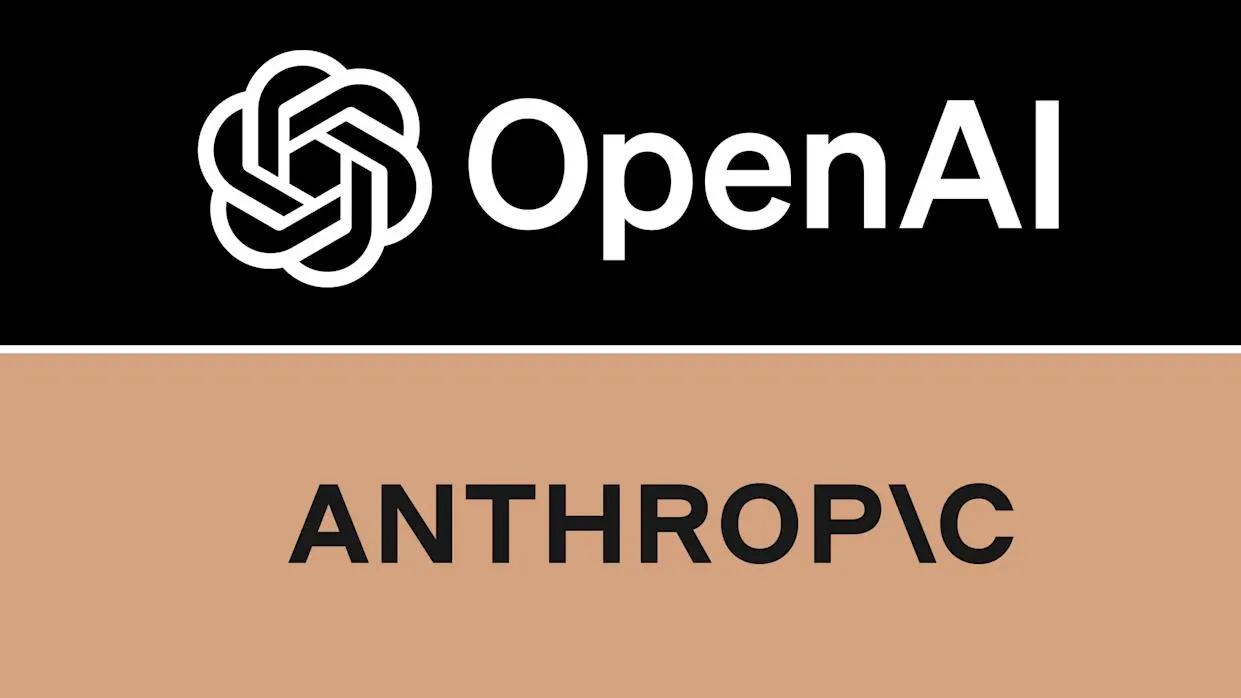
Fifteen months ago, Anthropic's annualized revenue was roughly $1 billion. OpenAI's was somewhere north of $13 billion. Nobody seriously discussed the two companies as financial peers, let alone imagined Anthropic pulling ahead.
By April 2026, Anthropic's revenue run rate had crossed $30 billion. OpenAI's sat at approximately $25 billion. For the first time since either company has existed, the AI lab known for safety research and caution had overtaken the AI lab that built the product that put generative AI in front of a billion people.
A 30x increase in fifteen months is not normal growth, even by the inflated standards of the AI industry. Understanding how it happened tells you something important about where the real money in AI is actually being made - and it is not where most casual observers assumed it would be.
Advertisement
The Numbers, Precisely
It is worth being exact about what is being compared, because "revenue" gets used loosely in AI industry coverage and the precision matters here.
Anthropic's annualized revenue run rate - ARR, which takes the most recent month or quarter of revenue and projects it across twelve months - went from approximately $1 billion in January 2025 to roughly $9 billion by the end of 2025, and then to over $30 billion by April 2026. CEO Dario Amodei described the trajectory at the company's Code with Claude developer conference with unusual candour for an executive not known for loose talk about numbers: Anthropic had planned for the kind of growth a strong SaaS company sees, roughly 10x annually. What actually happened in the first quarter of 2026 was 80x, annualized. Amodei called it "crazy" and "too hard to handle" - the compute strain it created on Anthropic's infrastructure became a public reliability issue, with the company acknowledging degraded performance during peak hours through parts of the spring.
OpenAI's revenue, by contrast, grew from approximately $13 billion to around $25 billion across the same period - real growth, roughly doubling, but nowhere near the same order of magnitude. OpenAI has disputed the precise comparison methodology, arguing Anthropic's accounting overstates the gap by several billion dollars. Even granting that dispute fully, the direction is not in question. Anthropic closed a multi-billion-dollar gap and moved ahead.
The Strategic Decision That Made the Difference
The single most important fact in this entire story is a decision Anthropic made years ago that looked, at the time, like a competitive weakness rather than a strength.
When Claude launched in 2023, it had a fraction of ChatGPT's public profile. Most casual internet users had never heard of it. OpenAI had the cultural moment, the consumer brand, the hundreds of millions of free users that came from being first to make generative AI feel magical to ordinary people.
Anthropic, rather than chasing that consumer attention, built almost its entire commercial strategy around enterprise customers and API access - selling Claude's capability to other businesses that would build it into their own products and workflows, rather than building a mass consumer app and monetising attention.
This was, for a long time, a reasonable thing to be sceptical about. Consumer scale is what drives valuations, headlines, and cultural relevance. Dario Amodei's logic, as reported by people close to the company, was roughly the opposite: consumer attention is won quickly and lost just as quickly, while signed enterprise contracts represent durable, expanding revenue that compounds over years rather than evaporating with the next viral app.
By 2026, that bet had clearly paid off. OpenAI's revenue mix leans heavily on consumer ChatGPT subscriptions and a free user base exceeding 900 million weekly active users - an enormous audience that converts to paying revenue at the rates typical of consumer software, which is to say modestly. Anthropic's revenue is overwhelmingly enterprise, and enterprise revenue behaves fundamentally differently. It is stickier. It expands as organisations roll a tool out across more teams. It renews predictably rather than churning the way consumer subscriptions do.
The Product That Actually Drove the Number
If one product explains the bulk of Anthropic's growth curve, it is Claude Code - the company's agentic coding tool, which launched publicly in May 2025 and became, by several measures, one of the fastest-growing software products ever built.
Claude Code reached $1 billion in annualised run-rate revenue within six months of its public launch. By February 2026, that figure had grown to $2.5 billion, with Anthropic noting the number had more than doubled since the start of the year. For context on how unusual that pace is: GitHub Copilot, the most widely adopted AI coding tool by raw user count, took considerably longer to reach comparable revenue milestones. Cursor, the venture-backed AI-native code editor that has grown explosively in its own right, reached $500 million in annualised revenue over more than a year. Claude Code's climb from zero to $2.5 billion in roughly nine months has no clean precedent in software industry history.
Advertisement
The product itself represents a meaningfully different proposition from earlier AI coding tools, and that difference is central to why it generated revenue at this pace. GitHub Copilot's original value proposition was autocomplete - it helps you write the next line faster, but you are still the one doing the work, reviewing each suggestion as you go. Claude Code operates differently: you describe a task in natural language - "build a user login module" - and it writes the code, creates the necessary files, runs tests, and submits changes with substantially less moment-to-moment human direction. The distinction is not merely a better tool. It is closer to delegating the work itself, which is a different category of value to a business willing to pay for it.
Engineering teams at Netflix, Spotify, KPMG, L'Oréal, and Salesforce are among the publicly disclosed users. Ramp's enterprise spending data - drawn from corporate card and expense data across a large customer base - showed Anthropic's share of corporate AI expenditure rising from around 10% at the start of 2025 to over 65% by February 2026, a shift that maps closely onto the broader revenue story.
The Enterprise Customer Number That Matters More Than the Headline
Buried beneath the $30 billion figure is a smaller number that several analysts following this story consider more revealing.
When Anthropic announced its Series G funding round in February 2026, the company disclosed that over 500 enterprise customers were each spending more than $1 million annually on Claude. By April, that figure had doubled to over 1,000 - in under two months.
✦ Free Newsletter ✦
Never miss a story
Tools, tutorials and AI deep-dives - straight to your inbox, every week.
This is not the kind of growth that comes from advertising or product virality. A business does not casually sign a contract worth seven figures a year. Decisions at that scale go through procurement processes, budget approvals, security reviews, and typically multi-year commitments. A doubling of that customer segment in under two months reflects something closer to a wave of large organisations independently concluding, in roughly the same window, that Claude had become indispensable enough to commit serious budget to.
Part of this appears to be a signalling effect. Enterprise buyers, by several accounts, treated Anthropic's large funding round as a credibility signal - evidence the company had the capital and staying power to be a safe long-term platform bet, which unlocked multi-year contracts from companies that had previously been cautious about depending on a comparatively young AI lab.
Eight of the Fortune 10 companies are reported to use Claude in some capacity. In code generation specifically - one of the most commercially significant AI use cases for enterprise - Claude is estimated to hold somewhere between 42% and 54% of global market share, against roughly 21% for OpenAI's offerings.
Why Anthropic's Cost Structure Might Matter More Than Its Revenue
There is a financial detail in this story that gets less attention than the headline revenue figures and arguably deserves more.
OpenAI is reportedly projecting close to $125 billion in annual training costs by 2030 as it continues pursuing frontier model scale. Anthropic's equivalent projection for the same period is closer to $30 billion - roughly a quarter of OpenAI's figure. If those projections hold, Anthropic would be spending dramatically less to train models that are currently generating more revenue, which is a meaningfully different financial position than the headline ARR numbers alone suggest.
The practical consequence shows up in profitability timelines. Anthropic has projected positive free cash flow by 2027. OpenAI has pushed its own breakeven target to 2030, with the company projecting close to $14 billion in losses for 2026 alone, even as its valuation and funding rounds remain enormous. A company reaching profitability three years earlier while generating more revenue is a materially different business than one still burning capital at scale to defend its position.
Advertisement
Whether this cost discipline reflects Anthropic's architectural choices, a more efficient training approach, or simply a smaller, more focused model lineup is debated among industry analysts. What is not seriously disputed is that the gap exists and that it changes the calculus for how sustainable each company's current growth trajectory actually is.
The Compute Problem Growth at This Pace Creates
Growing 80x in a single quarter, even when the growth is the kind every company wants, creates its own crisis - and Anthropic's has been compute.
The company has been signing infrastructure deals at a pace that reflects genuine urgency. A 3.5-gigawatt agreement with Google and Broadcom for next-generation TPU capacity, with that capacity coming online incrementally starting in 2027, extends an earlier commitment from October 2025. None of that new capacity helps the immediate problem, which is why Anthropic's most striking recent infrastructure move involved an unexpected partner: a compute deal with Elon Musk's xAI, reportedly drawing on capacity at xAI's Colossus facility that Grok's user base had not grown into using fully.
The arrangement reflects an unusually candid alignment of interests across companies that are, in other contexts, fierce rivals. As one industry observer summarised it: Musk's primary rival is Altman, and Amodei's primary rival is also, in a meaningful sense, Altman - which makes a compute-sharing arrangement between Anthropic and xAI a case of enemies of a common competitor becoming, temporarily, partners.
The strain has been visible to ordinary Claude users, not just in financial filings. Anthropic acknowledged in late April that several software bugs had affected Claude Code's reliability since early March, with internal testing failing to catch the issues in time, contributing to weeks of degraded performance during periods of peak demand. Hypergrowth, even profitable hypergrowth, produces operational pain that customers experience directly.
What This Means Beyond the Two Companies Involved
The Anthropic-OpenAI revenue crossover is interesting as a corporate rivalry story. It is more interesting as a signal about where AI's commercial value is actually accumulating, two and a half years into the generative AI boom.
The consensus narrative through 2023 and 2024 held that consumer AI products - chatbots with hundreds of millions of users, AI features embedded in everyday apps - would be where the real money was made, given the sheer scale of potential users. What the Anthropic trajectory demonstrates is closer to the opposite: deep enterprise integration, where AI tools become embedded in core business workflows that companies will not easily rip out, has produced more durable, faster-compounding revenue than consumer scale alone.
This has implications well beyond Anthropic and OpenAI specifically. Every company building AI products is watching this crossover and drawing conclusions about where to focus. The lesson is not "enterprise good, consumer bad" - OpenAI's consumer scale remains a genuine asset that Anthropic does not have, and a large free user base creates optionality that pure enterprise plays do not. But the lesson is clear that enterprise workflow integration, done well, can generate revenue at a pace and with a durability that a consumer-first strategy has struggled to match over the same window.
What Happens Next
Anthropic is reportedly evaluating a public offering as early as October 2026, with major investment banks already engaged. The company's last private valuation, from its February Series G, was $380 billion. Reports in May suggested the company was fielding unsolicited investor interest at valuations exceeding $900 billion - more than double that figure in roughly three months. Whether that valuation holds by the time any IPO roadshow begins will depend significantly on whether the revenue trajectory documented here continues, decelerates, or - as Amodei himself seems to expect given the compute strain - requires a deliberate slowdown to actually deliver reliably to the customers already paying for it.
Advertisement
OpenAI, for its part, is not standing still. Its $122 billion funding round in March 2026, backed by Amazon, Nvidia, and SoftBank among others, gives it enormous capital to pursue its own path, and its consumer base remains larger than anything Anthropic has built or seems interested in building. Whether OpenAI's revenue growth accelerates again, narrows the gap, or continues at its more modest current pace is the open question that will determine whether April 2026 was a permanent crossover or a temporary one.
What is not in question is the scale of what just happened. A company that was, by its own disclosures, essentially pre-revenue in early 2024 now generates more annualised revenue than all but roughly 130 companies in the entire S&P 500. That sentence alone is a reasonable summary of how strange and how fast the AI industry has actually moved.

Advertisement