
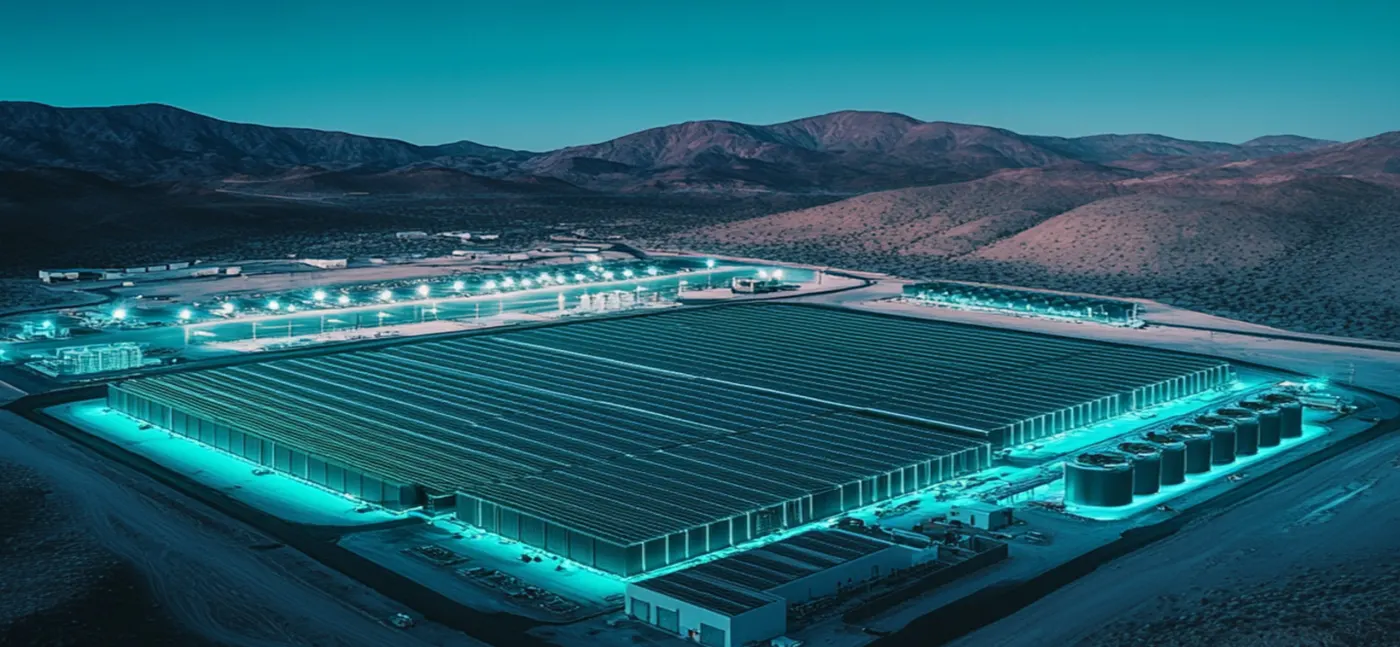
Brian Rothenberg is a township trustee near Columbus, Ohio. Last year, his community learned that a gas fuel-cell power plant - one that would be the largest of its kind in the entire United States - was being planned nearby. The plant exists to serve a single customer: an Amazon Web Services data center.
Rothenberg and his neighbours found out about this not through a public consultation process designed to give them a voice, but largely after the fact, through reporting. That sequence - massive industrial energy infrastructure approved with minimal public input, built to power AI rather than the communities surrounding it - is not an isolated incident. It is becoming the standard pattern across the United States in 2026, and a Reuters investigation published this week put hard numbers on just how widespread it has become.
At least 57 proposed or under-construction power plants are currently being built specifically to serve individual AI data centers, representing approximately 73,000 megawatts of generating capacity. For context, that is more generating capacity than the entire country of Poland uses. And it is being built, in many cases, with environmental review processes and public hearings that traditionally accompany major energy infrastructure either dramatically shortened or skipped entirely.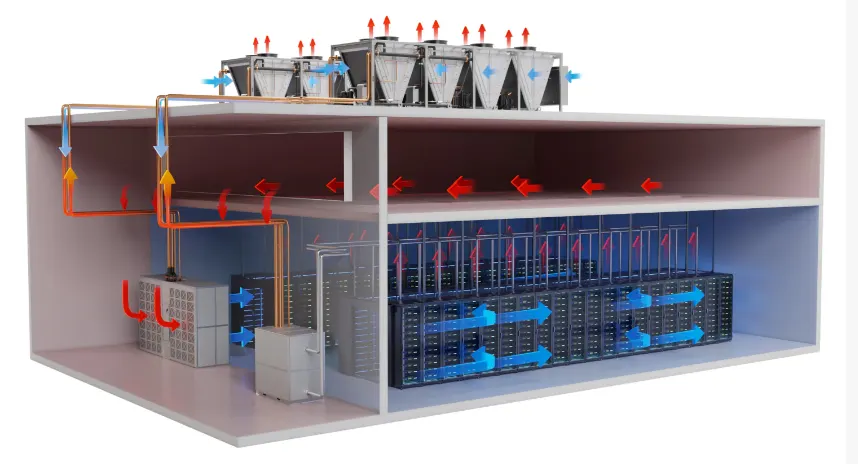
Advertisement
What "Off-Grid" Power Actually Means - And Why It Matters
The technical term driving most of this build-out is "off-grid" or "behind-the-meter" power generation. Understanding what this means is essential to understanding why the oversight gap exists.
A traditional power plant connects to the regional electrical grid and contributes its electricity to a shared pool that gets distributed across homes, businesses, and industry in the area. Connecting to the grid in this way requires a lengthy regulatory process - environmental impact assessments, public hearings, grid capacity studies, interconnection agreements with regional grid operators. This process exists because adding a major new generator to the shared grid affects everyone who uses that grid, and the public has a recognised interest in how it is managed.
Off-grid or behind-the-meter generation sidesteps much of this. The power plant is built specifically to serve one customer - in these cases, a single data center - through a direct, private connection that never touches the shared public grid. Because the electricity is not entering the shared system, many of the regulatory processes designed around grid interconnection do not apply in the same way.
This is the loophole, if it can be called that, that is enabling the speed of the current build-out. Data center operators who would face years of delay connecting to the existing grid can instead build a dedicated power plant next to their facility, sized exactly to their needs, and bypass much of the review process that would apply to a grid-connected plant of equivalent size.
Sean James, a distinguished engineer for energy systems at Nvidia, described behind-the-meter power candidly at Data Center World 2026: "It's a good stopgap. It's not the preferred long-term solution." Even the industry building these plants acknowledges this is a workaround rather than a sustainable model.
The xAI Situation in Tennessee and Mississippi
The most scrutinised example of this pattern involves Elon Musk's AI company xAI and its Colossus data center campus spanning Tennessee and Mississippi.
Reuters has reported that gas turbines powering the Colossus facility have operated without the permits that would typically be required for power generation of this scale. xAI's position is that the units are temporary and not connected to the grid, which the company argues exempts them from certain regulatory requirements that would otherwise apply.
Whether that argument holds up is, at the time of writing, an open regulatory and legal question. What is not in dispute is the scale of the operation: Colossus is one of the largest AI training facilities in the world, and the power generation supporting it has proceeded faster than the permitting processes designed to evaluate air quality and environmental impact from large-scale gas combustion.
Michael Cork, a researcher at Harvard University, described the broader pattern of rapid off-grid natural gas deployment as "one of the largest under-examined air-quality risks in the country." Natural gas combustion produces nitrogen oxides and fine particulate pollution - both linked to respiratory illness - and the normal review process for plants of this scale exists specifically to assess and mitigate exactly these risks before construction proceeds. When that review is shortened or bypassed, the assessment that would normally happen before a community is exposed to a major new pollution source happens, if at all, after the fact.
The State-Level Legislative Pattern
What makes this story more than a single company's regulatory dispute is the pattern of state-level legislation specifically designed to accelerate this kind of development.
In West Virginia, lawmakers passed legislation last year exempting certain data center microgrids from local zoning laws - directly removing one of the primary tools communities have historically used to have input into industrial development in their area. A large gas plant proposed in Tucker County, West Virginia received a state air permit the same year, with public documents reviewed by Reuters showing that key technical details had been redacted, officials say to protect confidential business information.
In Ohio, lawmakers recently approved provisions specifically shielding data center-related information from public records requests. This is a direct reduction in the transparency tools that residents, journalists, and watchdog organisations have used historically to understand what is being built near them and why.
These are not isolated state-level quirks. They represent a consistent legislative pattern: as data center and associated power plant construction has accelerated, a number of state legislatures have moved to reduce the regulatory friction and public visibility that would normally accompany projects of this scale and environmental significance.
The Federal Push Makes This Faster, Not Slower
The federal regulatory direction in 2026 is amplifying rather than counterbalancing the state-level trend.
Energy Secretary Chris Wright has urged the Federal Energy Regulatory Commission to adopt an expedited 60-day review process for grid connection requests specifically from large data centers - a dramatic compression from the multi-year timelines that have traditionally applied to projects of this scale. The proposal is explicitly framed around supporting AI and manufacturing policy goals, reflecting a White House position that energy infrastructure delays are a primary obstacle to maintaining US leadership in AI development.
The tension this creates with existing regulatory precedent is real. FERC previously rejected a plan from Talen Energy that would have directly powered an Amazon facility from a Pennsylvania nuclear plant, expanding behind-the-meter power sales from 300 megawatts to 480 megawatts - with the regulator citing concerns about the regional grid operator PJM's processes not being properly followed. That rejection demonstrates that the existing regulatory framework, when applied with its traditional rigor, does push back on some of these arrangements. The proposed 60-day review process would significantly narrow the opportunity for that kind of scrutiny to occur.
✦ Free Newsletter ✦
Never miss a story
Tools, tutorials and AI deep-dives - straight to your inbox, every week.
The administration's position is coherent on its own terms: AI infrastructure development is a strategic national priority, competing directly with China's own massive AI infrastructure investment, and energy permitting delays measured in years are a genuine competitive disadvantage. The trade-off is that compressing review timelines from years to 60 days necessarily reduces the depth of environmental and community impact assessment that can occur within that window.
Why This Connects to the Broader AI Energy Story
This fast-tracked power plant trend is the missing piece in the AI data center energy story that does not get the same attention as the nuclear power agreements or the grid capacity headlines.
The nuclear power purchase agreements that Microsoft, Amazon, and Google have signed represent the long-term, carefully negotiated, publicly announced solution to AI's power demands. They take years to materialise and involve extensive regulatory review specifically because nuclear power generation carries its own distinct safety oversight regime.
The off-grid natural gas plants covered in the Reuters investigation represent the short-term, immediately deployable, far less scrutinised solution that is actually meeting the bulk of current demand while the nuclear agreements mature. Natural gas was the largest single electricity source for data centers in 2024 at roughly 40% of the total energy mix, and the off-grid build-out documented this week is how a significant portion of that natural gas capacity is being delivered - quickly, locally, and with a regulatory footprint engineered to be as light as legally possible.
This is the bridge between now and the nuclear future that companies have committed to. The bridge is built of natural gas, and the construction of that bridge is happening with meaningfully less public visibility than the more photogenic nuclear deals receive.
What This Means for Communities Near Data Centers
For residents living near planned or existing data center campuses, the practical implications of this regulatory pattern are significant and worth understanding clearly.
The traditional safeguards - environmental impact review, public hearings, the ability to access permitting documents and understand what is being proposed before it is built - are being systematically reduced specifically for this category of development. A community that would have had a meaningful opportunity to understand and respond to a major industrial power plant proposal five years ago may now learn about an equivalent facility only after it has already received approval, with key technical details redacted from the public record.
The recourse available to affected communities is narrowing in parallel. Zoning exemptions remove one of the most direct tools local governments have used to manage industrial development. Public records exemptions remove the transparency that allows residents and journalists to understand and scrutinise what is happening. The combination leaves communities with substantially less ability to influence or even fully understand projects that directly affect their local air quality and environment.
This is not a uniquely American story. The same pressure - urgent AI infrastructure needs colliding with the deliberately slow pace of traditional energy regulation - is playing out in various forms internationally as well, wherever significant AI data center investment is occurring.
The Honest Tension
There is a legitimate version of the argument for faster permitting that deserves acknowledgment rather than dismissal. Energy infrastructure approval processes in the US have genuinely been slow, sometimes for reasons unrelated to environmental protection - bureaucratic friction, jurisdictional overlap, and process requirements that have accumulated over decades without necessarily being re-evaluated for whether they serve their original purpose efficiently.
If AI infrastructure represents a genuine strategic priority - which the federal government's position holds clearly - then some acceleration of permitting timelines is a defensible policy choice, not inherently a corrupt or negligent one.
The genuine concern is not that permitting is becoming faster. It is that the speed is being achieved specifically by reducing the public's ability to know what is happening and to meaningfully participate in decisions that affect their immediate environment. Faster permitting and reduced transparency are not the same thing, even though they are currently being pursued together. A regulatory framework that genuinely streamlined process without eliminating environmental review or public notice would address the legitimate complaint about slow permitting without creating the air quality and accountability gap that the current approach is creating.
That distinction - between efficient regulation and absent regulation - is the one that current state and federal policy in this area is not making clearly enough.
What Happens Next
The Reuters investigation and the growing body of reporting on this topic are likely to put pressure on state legislatures and federal regulators to address the transparency gap specifically, even if the underlying push for faster permitting continues.
Watch for legal challenges to specific projects - the xAI situation in Tennessee and Mississippi is the most likely flashpoint, given the explicit dispute over whether the "temporary, ungridded" framing actually exempts the facility from permits that would otherwise apply. Watch for state-level pushback in places like Ohio, where the township trustee's experience near Columbus is likely to be replicated in other communities discovering similar projects after the fact, and for renewed local political organising in response.
The federal 60-day review proposal, if implemented, will be the clearest signal of which direction this goes nationally. If it proceeds largely as proposed, the pattern documented in the Reuters investigation accelerates further. If community and environmental pushback forces modifications that preserve more meaningful review within a faster timeline, the current moment may prove to be the peak of the oversight gap rather than the new permanent normal.
Either way, the power plants are being built right now, today, at a pace that is genuinely difficult for the normal mechanisms of public accountability to keep up with. That is the story underneath the AI infrastructure boom that gets far less attention than the chips and the models - and it is the story that the people living next to these facilities are the first to actually experience.

Advertisement