On June 30, 2026 - the same day Anthropic's Fable 5 model was still offline under US export controls, day 18 of the most disruptive government-ordered AI restriction in history - a Chinese food delivery company quietly released one of the most geopolitically significant AI models ever built.
The timing was not accidental.
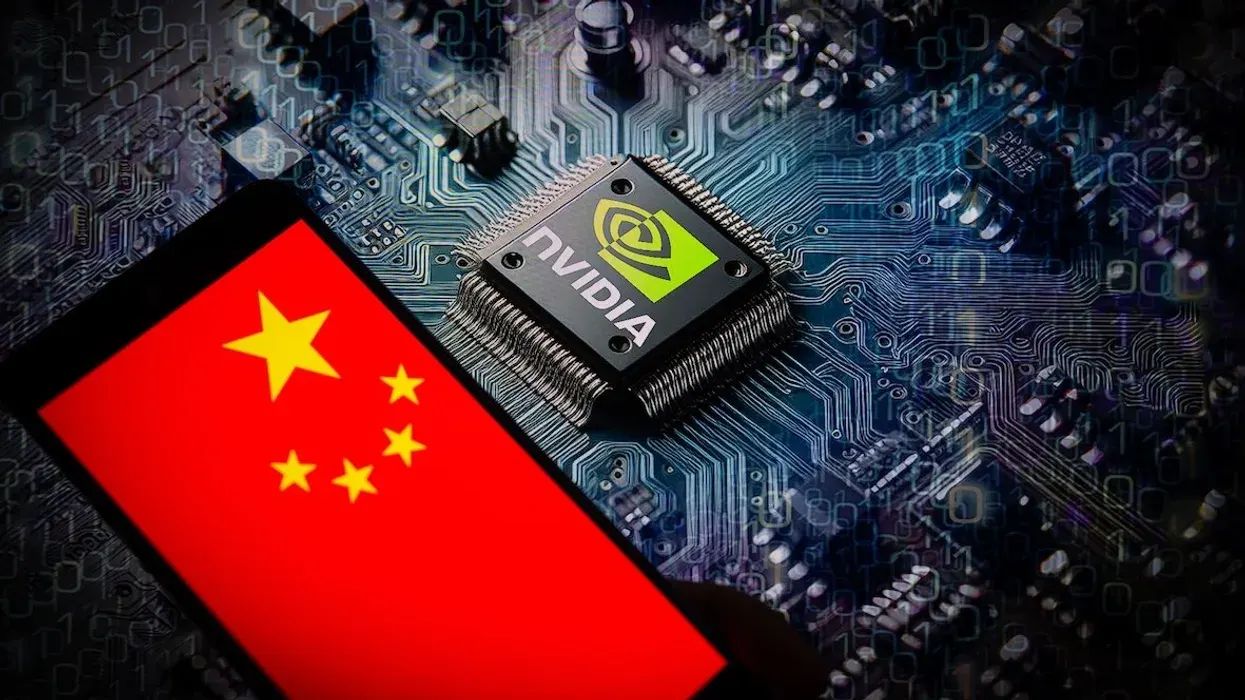
Meituan, which most people outside China know primarily as the country's equivalent of DoorDash, open-sourced LongCat-2.0: a 1.6 trillion-parameter large language model trained end-to-end on a 50,000-card cluster of domestic Chinese AI chips. Not Nvidia GPUs. Not Google TPUs. Not any hardware subject to US export controls. Chinese-designed application-specific integrated circuits, built and deployed entirely within China's own semiconductor ecosystem.
Advertisement
The model is competitive with GPT-5.5 and Gemini 3.1 Pro on agentic coding benchmarks. It had already been serving real developer traffic anonymously for weeks before the announcement, ranking among OpenRouter's top three most-used models under the codename "Owl Alpha" - processing approximately 559 billion tokens per day before anyone knew it was Chinese.
What LongCat-2.0 represents is not simply another large language model in an already crowded field. It is evidence, specific and documented, that the foundational assumption underlying US AI export control policy - that denying China access to advanced Nvidia GPUs would prevent it from training frontier-scale AI systems - has been proven wrong.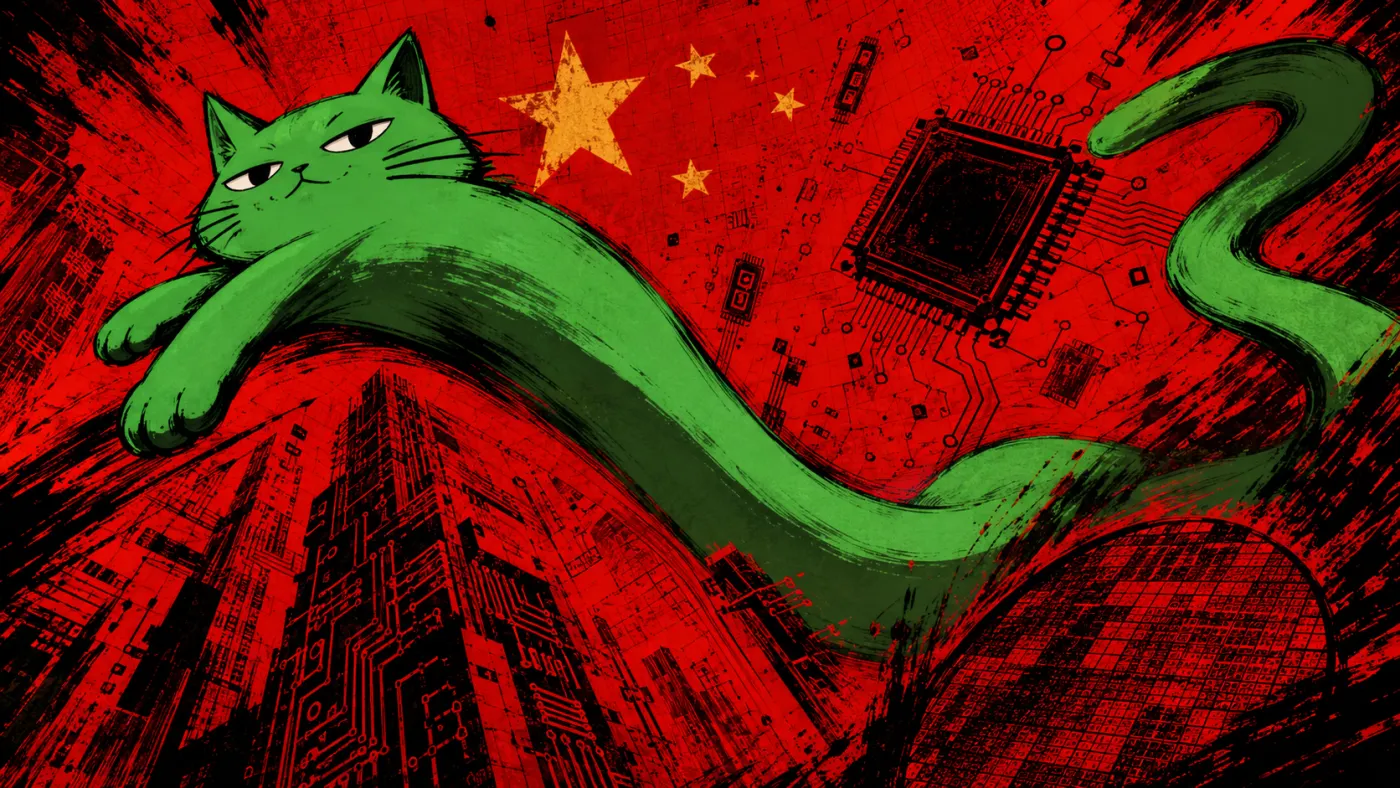
Why Pre-Training on Domestic Chips Is Different From Inference
This distinction is not technical pedantry. It is the entire point of the story, and most coverage of LongCat-2.0 has not explained it clearly enough.
When a large language model is deployed to answer user queries - the process called inference - it runs the trained model weights forward through the network for each request. This is computationally intensive at scale, but it is fundamentally a batch-processing problem: you take a fixed model and run it on lots of inputs. The computational demands, while significant, are more forgiving than what comes before them.
Pre-training is an entirely different category of work. This is the phase where the model learns from raw data - trillions of tokens of text, code, and other content - through billions of gradient updates across tens of thousands of chips that must communicate with each other constantly throughout the process. The chips work in tight synchronisation, the interconnect bandwidth between them is critical, and any instability in the cluster - a chip failure, a communication dropout, a numerical stability issue - can corrupt a training run that has consumed enormous computational resources.
This is why previous Chinese frontier models, including DeepSeek's V4-pro released in April 2026, used domestic chips for inference but still relied on foreign silicon for the compute-intensive pre-training phase. The domestic chips were good enough to serve a trained model. They were not trusted for the much harder work of training one from scratch.
LongCat-2.0 crossed that line. Meituan trained 35 trillion tokens through 50,000 domestic ASIC accelerators with, in the company's own words, no rollbacks and no irrecoverable loss spikes. The training run finished. The cluster held together. The model converged. That is the specific threshold that has been crossed. And once crossed, it cannot be uncrossed.
The Engineering That Made It Possible
Understanding what Meituan's team actually had to build is important for evaluating whether this is a replicable achievement or a one-off from a well-resourced company that got lucky.
The hardware stack itself remains partially undisclosed. Meituan has not publicly named the exact chip vendor, though multiple independent researchers point to Huawei Ascend 910C-class accelerators as the most likely candidates - and the explicit use of Huawei's Collective Communication Library (HCCL) for chip-to-chip coordination is the most concrete public evidence of this. HCCL is the Huawei-developed equivalent of Nvidia's NCCL - the software layer that coordinates gradient synchronisation across GPU clusters during training. The fact that Meituan built their training pipeline around HCCL rather than NCCL is the clearest signal that this is a Huawei Ascend deployment.
But the hardware is almost secondary to the software engineering required to make it work. Meituan implemented what they describe as 6D parallelism - simultaneous application of tensor parallelism, context parallelism, expert parallelism, data parallelism, pipeline parallelism, and embedding parallelism across the cluster. In plain terms: different dimensions of the computation are split and distributed across different groups of chips in six different ways simultaneously, each requiring careful coordination to produce correct gradient updates. This is the kind of distributed systems engineering that Nvidia's mature CUDA ecosystem and decades of accumulated software tooling make significantly easier. Doing it on alternative hardware, without those tools, required solving it from first principles.
The honest caveat worth naming clearly: Meituan has not disclosed the wall-clock time, energy consumption, or cost-per-effective-FLOP of the LongCat-2.0 training run compared to an equivalent Nvidia cluster. An achievement that required three times the compute cost and twice the engineering time to replicate what Nvidia hardware would deliver more simply is still strategically significant - but it is a different kind of significance than an achievement that demonstrates true cost-competitive parity. Independent benchmarking from firms like Artificial Analysis had not been completed at the time of writing. The benchmark numbers Meituan published are self-reported. The community benchmarks coming from developers who have access to the open-weight model will be the more reliable signal over the coming weeks.
Advertisement
The Owl Alpha Stealth Deployment Is the More Important Story
Before the June 30 announcement, LongCat-2.0 had been deployed anonymously on OpenRouter under the codename Owl Alpha. It was ranking among the platform's top three most-used models by token volume - roughly 10.1 trillion tokens per month, approximately 559 billion tokens per day - before anyone knew who built it or what it was.
This detail deserves more attention than it has received, because it changes what kind of claim the LongCat-2.0 announcement actually is. A company announcing benchmark numbers for a model trained on domestic chips, without prior deployment data, is making a claim that the community can evaluate through benchmarking but has not yet stress-tested in production. A company announcing benchmark numbers for a model that has already been serving hundreds of billions of tokens per day across thousands of real developer workloads - without users noticing anything that distinguished it from its peers - that is a different kind of claim. The Owl Alpha stealth deployment provided precisely the kind of uncontrolled, real-world validation that controlled benchmark environments cannot replicate. Developers chose it and kept using it, repeatedly, in meaningful volumes, without knowing it was Chinese hardware trained.
One researcher's comment when the identity was revealed - "I've been using Owl Alpha for a month and it's been fantastic, I had no idea" - is a single data point, but it is representative of a broader pattern in the developer community's response: surprise at the origin, combined with confirmation that the quality of outputs matched what had been experienced in actual use.
What This Does to US Export Control Policy
The US export control framework targeting AI chips - the successive rounds of restrictions on Nvidia H100s, A100s, and their successors - rested on a specific and now-challenged assumption: that the most advanced training runs required Nvidia's specific hardware, and that restricting that hardware would create a meaningful capability ceiling for Chinese AI development.
Export controls do not need to be impossible to circumvent to be effective policy. They work by raising costs, extending timelines, forcing harder engineering trade-offs, and creating friction that slows development relative to unrestricted competitors. All of those effects are real and continue to apply. Meituan's domestic ASIC cluster almost certainly required more engineering effort, more time, and more money to achieve what it achieved than an equivalent Nvidia cluster would have required. The policy was not useless.
✦ Free Newsletter ✦
Never miss a story
Tools, tutorials and AI deep-dives - straight to your inbox, every week.
What the policy could not do - what no export control policy that targets specific hardware categories can do once determined state actors and well-resourced companies commit to solving the underlying engineering problem - is prevent the development of frontier capabilities entirely. The DeepSeek moment in early 2025, when a Chinese lab released a model competitive with OpenAI's frontier offerings at dramatically lower apparent cost, was the first major signal that this was happening. LongCat-2.0 is a different kind of signal: not just that Chinese labs can achieve competitive model performance, but that they can now do the full training pipeline on hardware that does not depend on US exports at all.
The analyst Yuchen Jin made the point directly: "It reminds me of Jensen Huang's point on the Dwarkesh podcast: export controls on Nvidia GPUs won't stop China. They'll just accelerate the development of AI that runs on Chinese chips."
The geopolitical read on the timing - announced on day 18 of the Fable 5 export control ban, the day international developers were most acutely aware of their dependence on US-approved AI systems - is not subtle. Whether deliberately timed for maximum symbolic impact or simply coincidentally released on the same day, the juxtaposition was impossible to miss inside the AI community: US restricts access to its frontier AI, China demonstrates it can train its own.
The Broader Competitive Landscape This Fits Into
LongCat-2.0 does not exist in isolation. It is the most significant but not the only evidence of a rapidly developing Chinese AI chip ecosystem that is changing the competitive landscape in ways that the export control narrative has been slow to incorporate.
Xiaomi's MiMo-V2-Pro has become the most-used model on OpenRouter by weekly token volume, with Xiaomi processing 4.21 trillion weekly tokens for a 21.1% platform share versus OpenAI's 7.5%. A Chinese smartphone company has a larger share of the global developer traffic pipeline than OpenAI, measured by token volume on a major neutral platform.
Advertisement
Chinese AI providers now serve approximately 45% of all OpenRouter traffic, up from less than 2% a year ago. That is not a rounding error. That is a structural shift in where developers are routing their workloads, driven primarily by price differences that are themselves partially a function of the domestic chip ecosystem maturing enough to serve inference workloads at competitive cost.
Bernstein data from 2025 showed Nvidia still holding roughly 40% of China's AI chip market at that point. The verified Huawei Atlas-950 pre-training run at 1.6 trillion parameters is the most direct market-share challenge yet to that Nvidia position - not by replacing Nvidia for every workload, but by demonstrating that the most demanding workload category no longer requires Nvidia hardware in principle.
DeepSeek's ongoing work on its own inference chip - reported by Reuters as in early development stages - is the next step in the same trajectory. If DeepSeek's custom inference silicon delivers as planned, another layer of dependence on external hardware disappears from China's AI stack.
What Remains Unknown and Why It Matters
The honest assessment of LongCat-2.0's significance requires acknowledging what the announcement does not tell you, because the gaps in the public information are as analytically important as the confirmed facts.
The chip vendor is not publicly confirmed. The training cost and timeline relative to Nvidia alternatives are not disclosed. Independent benchmark verification from neutral third parties was not available at the time of the announcement. The model weights became fully public on July 5, meaning community evaluation is now underway but has not yet produced the kind of consensus assessment that emerges over weeks and months of broader testing.
These gaps matter for distinguishing between two different versions of the story. Version one: China has achieved genuine cost-competitive parity in frontier AI training on domestic hardware, and the export control policy has failed on its own terms. Version two: China has achieved a heroic engineering demonstration that frontier-scale training is possible on domestic hardware under significantly harder conditions than Nvidia clusters provide, at a cost premium that may or may not be sustainable as the only approach. Both versions are significant. They have very different implications for what the next two years of AI chip policy look like. The available evidence is more consistent with version two than version one - but version two is itself a more important outcome than most of the pre-LongCat-2.0 expert consensus predicted was achievable on this timeline.
The Meituan Factor: Why the Source Matters as Much as the Claim
It is worth dwelling on the specific company that made this announcement, because the source is not incidental to the significance.
Meituan is not primarily an AI company. It is China's dominant on-demand services platform - food delivery, local discovery, travel booking, ride-hailing. Its revenue model is built around connecting consumers to local services efficiently and at scale. It entered AI model development in 2023 through the acquisition of Light Year Beyond and did not announce its own internal model development plans until 2025. By most external assessments as recently as early 2026, it was not in the same tier of AI research credibility as DeepSeek, Baidu, Alibaba, or Tencent. A company that was not widely considered a serious contender in frontier AI research has now claimed - and provided evidence for - the most significant hardware achievement in Chinese AI development to date.
That is the part of this story that deserves the most careful attention from anyone monitoring the Chinese AI ecosystem. If Meituan - a food delivery company with a relatively recent and externally underestimated AI research effort - can train a 1.6 trillion-parameter model on domestic chips competitive with GPT-5.5, the question is not just what this means for US export controls. It is what other Chinese companies with serious compute budgets and engineering teams, currently not on the radar of Western AI analysts, might be building right now.
The Honest Takeaway
The cautious and accurate version of the LongCat-2.0 story is this: a Chinese company has provided credible evidence that frontier-scale AI pre-training is achievable on domestic Chinese hardware, the claim has not yet been fully independently verified, and the cost and efficiency comparisons to Nvidia alternatives have not been disclosed.
Advertisement
The honest and more important version is this: the export control policy's foundational assumption has been directly challenged by a specific, documented training run at a scale where that challenge is credible rather than theoretical. The question it forces - whether restricting Nvidia hardware actually prevents frontier AI development in China, or whether it merely delays and raises costs while accelerating the development of a parallel domestic hardware ecosystem - has been answered in a way that the more optimistic proponents of the export control approach did not anticipate on this timeline.
China's AI development is no longer solely an inference story that depends on US hardware for the hard part. It is, or is very close to being, a full-stack story that runs from domestic chips through domestic training clusters through competitive frontier models through open-weight releases that global developers are already using at enormous scale.
The geopolitical story of AI in the second half of 2026 is not primarily about which model wins the next benchmark. It is about who controls the hardware that trains the models, and whether the answer to that question is still as simple as it was in 2023. LongCat-2.0 is the most important piece of evidence yet that the answer is changing.

Advertisement