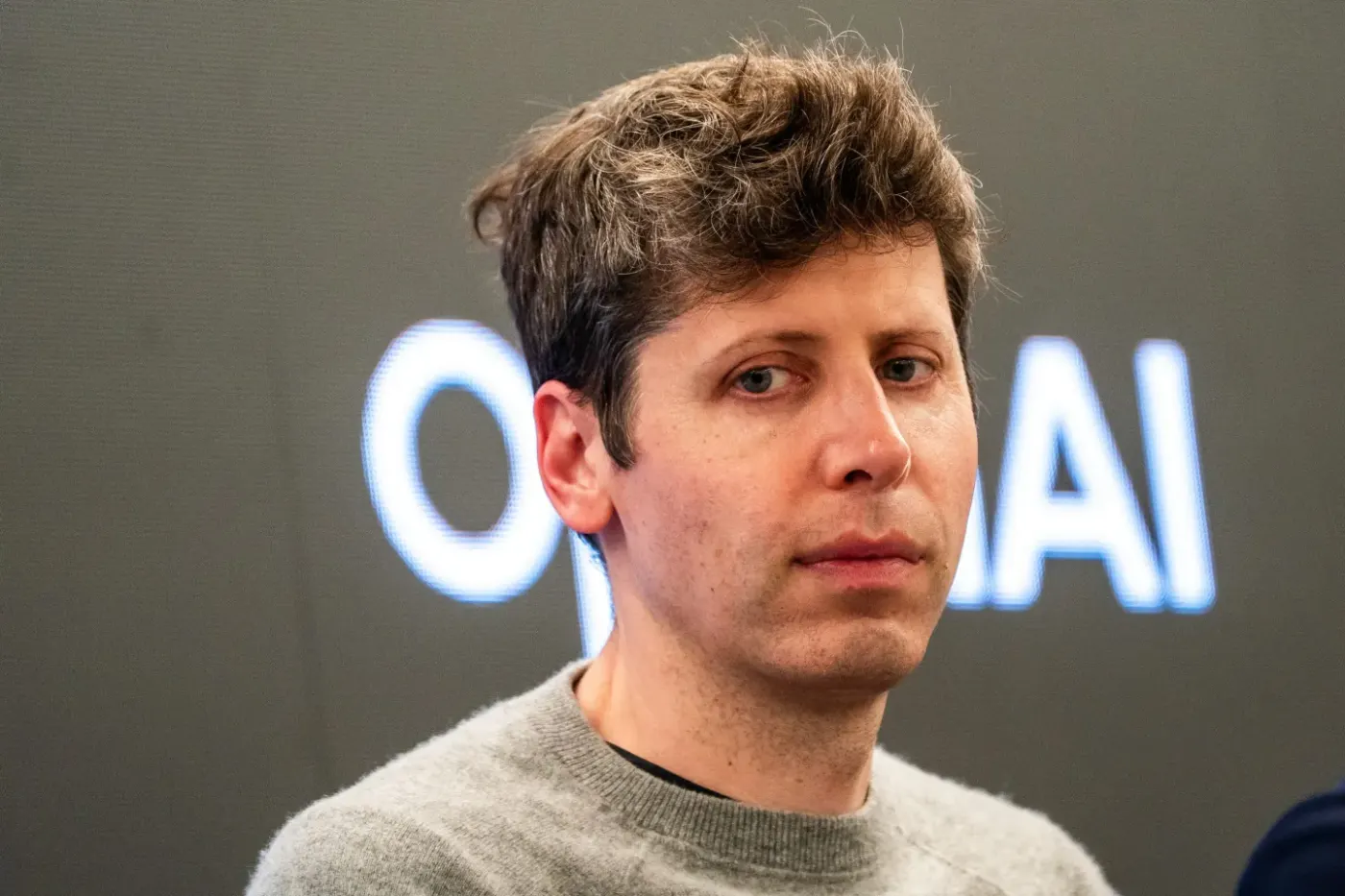
Sam Altman met with President Trump at the G7 summit in Evian-les-Bains on June 17, 2026. Six days later, OpenAI delayed the full public launch of GPT-5.6 at the government's request, with Commerce Secretary Howard Lutnick reportedly warning Altman against releasing the model without prior approval. Nine days after that, the Financial Times reported that Altman had proposed giving the US government a 5% equity stake in OpenAI — worth roughly $42.6 billion at the company's March 2026 valuation of $852 billion.
These three events, in that order and on that timeline, are not coincidental. They are a negotiation. And understanding what each side wants from it tells you something genuinely important about where the relationship between frontier AI companies and the US government is actually heading.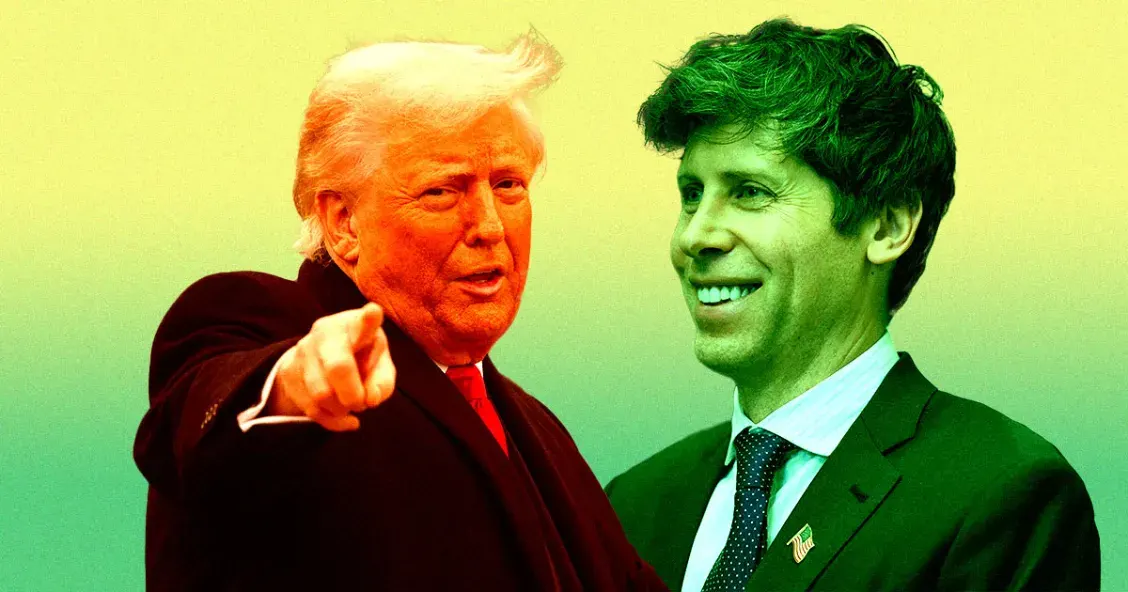
What Was Actually Proposed, Precisely
Strip away the headline number and the proposal has a specific structure that matters more than the dollar figure.
Advertisement
Altman is not proposing that OpenAI simply hand the government $42 billion in cash or stock. He is proposing that each of the leading US AI companies — OpenAI, Anthropic, Google, Meta, and implicitly others — allot 5% of their equity to a government-controlled vehicle modeled on the Alaska Permanent Fund. That is a meaningful distinction. The Alaska Permanent Fund is a sovereign wealth fund established in 1976 to invest Alaska's surplus oil revenues into a diversified portfolio, with annual dividends paid directly to state residents. It currently manages roughly $64 billion in assets and paid $1,000 per eligible Alaskan in 2025. The analogy being invoked, deliberately, is that AI is to the 2020s what oil was to Alaska's economy — a resource generating enormous wealth that the public has a legitimate claim to share in.
Implementing the arrangement at federal scale would require an act of Congress, according to the Financial Times' sourcing. The talks are characterised as conceptual and early stage. OpenAI declined to comment. The White House did not respond to press requests. None of the other companies named in the proposal — Anthropic, Google, Meta — have signalled any interest in participating, and one source explicitly told the FT that the administration and Anthropic have not discussed a government stake at all.
So the concrete status of this, on July 5, 2026, is: an idea floated in early conversations, not a deal, not a term sheet, not a formal proposal with agreed parameters. What makes it significant despite all of those qualifications is the context surrounding it — and the specific pressure that context suggests the proposal is designed to relieve.
The Pressure Being Relieved
OpenAI is simultaneously managing more government pressure than any private company in recent memory has managed at this scale and at this speed.
GPT-5.6 was delayed at the government's direct request — Lutnick's warning to Altman constitutes, in practice, a pre-publication review requirement applied to a private company's commercial product. This is not a regulatory process established by Congress. It is a direct executive branch request that Altman complied with. The precedent that compliance sets is the more consequential fact than the specific delay.
Anthropic's experience in June is the clearest illustration of what non-compliance looks like. The company's Claude Fable 5 model was disabled worldwide under the first export controls ever applied to an AI model rather than to hardware — a regulatory action that, reporting noted, pushed enterprise customers toward rival models, including lower-cost Chinese alternatives during the period of inaccessibility. Fable 5 access was restored on July 2, the same day the OpenAI equity stake story broke, after negotiations with the Trump administration. The connection between compliance and access to the market is not abstract.
OpenAI is also currently facing a probe from a coalition of 42 US state attorneys general, filed just days after the company's IPO filing became public. The combination of federal executive pressure, a 42-state legal action, and an IPO process that requires regulatory clarity to proceed creates a set of pressures that make a gesture toward the administration look considerably more rational than it might appear in a less charged environment.
Altman has been pitching some version of a government AI stake since early 2025. The April 2026 policy paper proposing a "public wealth fund" to distribute AI economic benefits to all Americans was the formalised version of the same idea. The 5% equity structure reported by the FT is its most concrete iteration. Whether the timing relative to the GPT-5.6 delay and the Anthropic episode is coincidental or represents a calculated escalation in the offer is not something either party has stated publicly — but the sequence is impossible to read as entirely unrelated.
The Sanders Counter-Proposal That Frames the Negotiating Range
Understanding what Altman is offering requires understanding what it is being offered against.
In mid-June, Senator Bernie Sanders introduced the American AI Sovereign Wealth Fund Act — a proposal at the opposite end of the ownership spectrum from Altman's 5%. Sanders' bill would impose a one-time 50% tax, paid in stock rather than cash, on companies with more than $200 million in annual AI-related revenue. His office estimates the resulting fund would be worth $7 trillion at current valuations and would pay $1,000 yearly dividends to every American from expected 5% annual returns. His argument, stated directly, is that AI's capabilities are built on "the collective knowledge of humanity and the creative work of tens of millions of people" used without permission or compensation — framing public ownership not as a political concession but as a return of something already owed.
Advertisement
Altman's 5% sits between Sanders' 50% and the status quo of zero. The political calculation is legible: offer something that Trump can frame as a win, preempt the more radical Sanders approach by establishing a lower precedent, and keep the arrangement small enough that it does not fundamentally alter operational control or the IPO structure. Trump's own public response to the concept was characteristically direct — he told reporters that government participation "could be a beautiful thing" and that he preferred equity over cash payouts, with Vice President JD Vance echoing that preference.
The Alaska Permanent Fund analogy does a lot of work in making the proposal palatable on both sides. For conservatives, it invokes a state-level success story built around resource revenue rather than redistribution. For progressives, it invokes the dividend-to-citizens model Sanders is also advocating, just at a smaller scale. It is genuinely clever framing — which is not the same as saying it would function the way the framing implies.
What the Government Actually Gets — and What It Doesn't
Here is where the proposal deserves considerably more scrutiny than the headline figures have generated.
A 5% equity stake in OpenAI at an $852 billion valuation is worth $42.6 billion on paper. That number is real in the same way that a pre-IPO valuation is real — it represents what investors agreed to pay in a private funding round, not what the equity is worth in a liquid market where anyone can sell it. OpenAI has confidentially filed for an IPO, which means the government's pre-IPO entry would be at private company terms, with the position then subject to whatever happens when OpenAI hits the public markets.
More significantly: a 5% stake is not a controlling stake, a board seat, a veto right, or a regulatory authority. The government would be a minority shareholder in a company it simultaneously regulates, reviews for export controls, and investigates through 42 state attorneys general. The conflict of interest this creates is not trivial — if federal agencies become major shareholders in the dominant AI developer, the government effectively sits on both sides of the negotiating table.
✦ Free Newsletter ✦
Never miss a story
Tools, tutorials and AI deep-dives - straight to your inbox, every week.
There is also an international precedent concern. If the US government acquires equity in its leading AI companies, other governments will demand comparable arrangements — from their own domestic AI companies as a condition of support, and potentially from US companies as a condition of market access. The structure that looks like a bilateral US domestic arrangement today has implications for every jurisdiction where AI companies operate, and those implications are almost certainly not fully modelled in what the FT described as "early conversations."
The Intel Precedent That Makes This Less Novel Than It Appears
One of the more useful pieces of context for evaluating this proposal is that the US government acquiring equity in a private technology company is not actually unprecedented under the current administration.
In August 2025, the government took a 9.9% stake in Intel by converting $8.9 billion of remaining CHIPS Act grants into equity at $20.47 per share — a conversion that effectively made the federal government a meaningful shareholder in one of the primary domestic semiconductor manufacturers. AMD and Nvidia separately agreed to hand over 15% of their China chip revenue in exchange for export licenses. These arrangements are different in structure from the OpenAI proposal — Intel received substantial government funding that was converted to equity, rather than offering equity in exchange for regulatory goodwill — but they establish that this administration is comfortable using equity as a tool in technology policy in a way that previous administrations were not.
The mechanism is different. Intel traded equity for cash and infrastructure support. OpenAI appears to be trading equity for political relationship management. But the underlying pattern — government as equity holder in critical technology companies — is the same, and the Intel precedent removes the "this has never happened before" objection that might otherwise make the OpenAI proposal seem radical.
Advertisement
Why Anthropic, Google, and Meta Are Unlikely to Follow
Altman's proposal is explicitly structured as an industry-wide arrangement, not a unilateral OpenAI concession. The vision is every leading US AI developer contributing a 5% stake to the same sovereign vehicle. The practical problem is that the other named companies have no obvious incentive to participate.
Anthropic emerged from June with its models partially restored after a government-imposed export control that the company had no mechanism to prevent or contest effectively. The relationship between Anthropic and the current administration, per the available reporting, is considerably more adversarial than OpenAI's deliberate cultivation of cooperative positioning. Asking Anthropic to voluntarily hand over equity after that episode is a difficult proposition.
Google and Meta are both large enough, and have enough existing regulatory exposure across multiple jurisdictions, that adding a US government equity stake creates complications that do not obviously resolve any of their existing problems. Google is already navigating antitrust proceedings that touch directly on its market position in search and AI. Meta faces European regulatory scrutiny and US privacy litigation. For either company, a 5% government equity stake introduces a financial entanglement with a regulator whose interests are not aligned with the company's commercial interests, without a clear counterbalancing benefit.
The most likely near-term outcome is that this remains an OpenAI-specific arrangement, if it advances at all, rather than the industry-wide framework Altman has described. Whether an OpenAI-only government stake provides the regulatory goodwill Altman is presumably seeking without the broader participation he has proposed is a political calculation that has not yet been tested.
The Deeper Shift This Reveals
Step back from the specific proposal and its specific complications, and the more significant story is the structural shift in the relationship between AI companies and the US government that this episode illustrates.
The AI industry has moved, in roughly eighteen months, from a regulatory environment where the primary government concern was largely consumer protection and bias in lower-stakes applications, to an environment where the government is actively delaying model launches, imposing export controls on specific AI models for the first time in history, taking equity stakes in chip companies, and receiving equity proposals from AI labs in exchange for political goodwill. This is not the regulatory relationship that any of the companies involved planned for or would prefer. It is the regulatory relationship they have, and the strategic choices they are making now are adaptations to that reality.
Altman's approach — cooperative, proactive, willing to offer structural concessions before being required to — is a deliberate positioning relative to a more adversarial alternative. Whether it produces meaningfully better outcomes for OpenAI than the alternative would is not something that can be evaluated yet. What it does produce, visibly, is a seat at the table in negotiations that are otherwise happening to the industry rather than with it.
The Intel model — government takes equity in a chip company using CHIPS Act funding as leverage — is being adapted and extended. The OpenAI model being proposed — company offers equity voluntarily in exchange for political relationship management — is a different mechanism aimed at a similar destination. In both cases, the endpoint is a government that holds financial stakes in the private technology companies most central to its strategic interests.
Whether that endpoint is better described as public participation in AI's economic upside, or as a structural conflict of interest between the regulator and the regulated, depends significantly on which part of the arrangement you are asked to evaluate. Both descriptions are accurate. The question of which one is more consequential is the one that will take considerably longer than this particular news cycle to answer.
Where This Goes From Here
Congressional action, which the FT sources suggest would be required for any formal implementation, is not something the current session has shown particular urgency on. The talks are explicitly characterised as early and conceptual. The other companies named as intended participants have not signalled interest.
The most realistic near-term outcome is that this surfaces again in the context of OpenAI's IPO process — either as a settled arrangement that provides regulatory clarity ahead of the float, or as an unresolved negotiation that becomes one of the complicating factors investors have to evaluate when the company goes public. A government equity stake agreed before the IPO would be structured at private company terms; a stake negotiated after would reflect whatever the market values the company at post-float. The difference in those two scenarios, at a company that could IPO at a valuation north of a trillion dollars, is the kind of number that makes IPO timing decisions significantly more complicated than they already are.
Advertisement
Altman has been working toward some version of this arrangement for over a year. The specific 5% figure and the Alaska Permanent Fund structure are the clearest and most public articulation of the proposal to date. The administration has expressed enthusiasm in principle, without committing to specifics. The other companies have not responded publicly.
What has changed, definitively, is that the conversation is now happening at the level of equity and sovereign wealth funds rather than at the level of voluntary disclosure commitments and responsible AI principles. That shift in the register of the negotiation — from ethics to ownership — is the most durable signal in this entire story, whatever the specific outcome of these particular talks turns out to be.

Advertisement