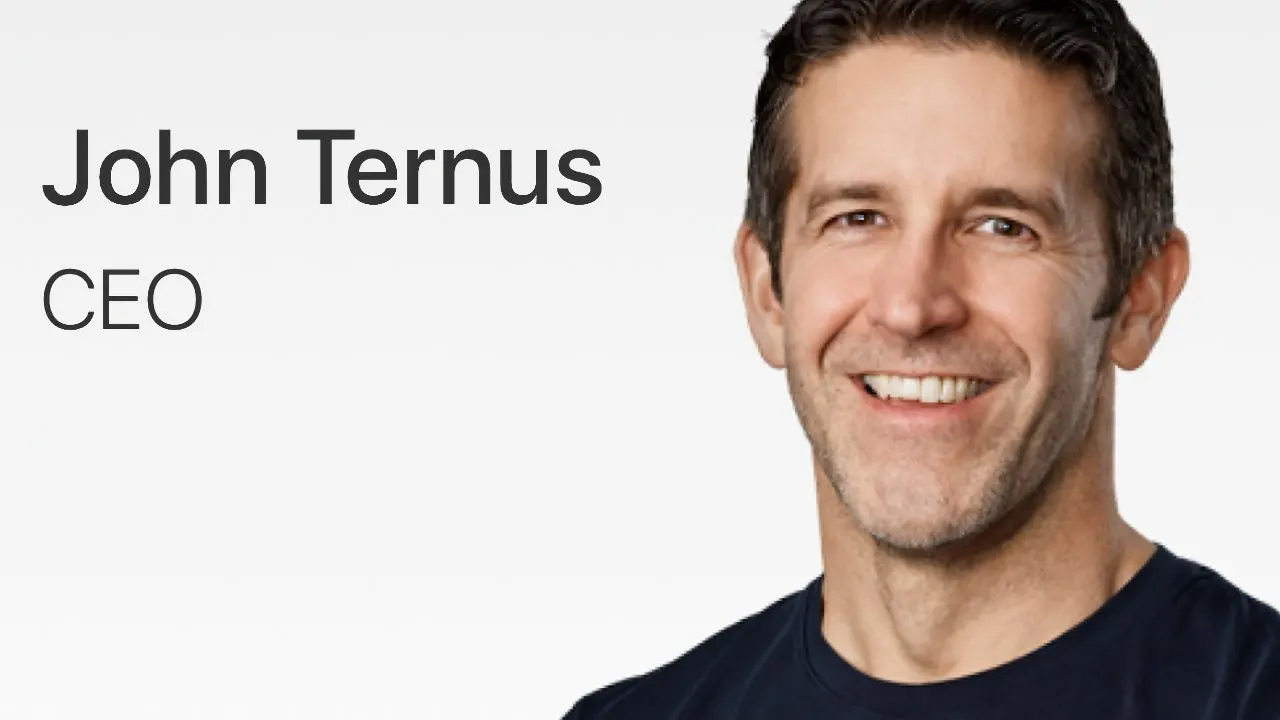
John Ternus has officially taken over as Apple CEO, ending Tim Cook's 15-year run. But the real challenge is not replacing Cook. It is deciding what Apple needs to become next.
Apple has entered a new era.
On September 1, 2026, John Ternus officially became the company's chief executive officer, succeeding Tim Cook after 15 years at the top. Cook has moved into the role of executive chairman, where he will continue to support Apple in selected areas, including relationships with governments and policymakers.
Advertisement
For most companies, a leadership change of this scale would be enough to dominate the news cycle.
At Apple, it is only the beginning.
Ternus takes control at a moment when the technology industry is changing faster than it has in years. Artificial intelligence is reshaping software, smartphones are becoming increasingly dependent on AI features, and competitors are aggressively building new products around generative AI.
Apple now has a new CEO, a major product event approaching, and a much bigger question hanging over the company:
What does Apple look like after the iPhone era?
Tim Cook leaves behind an enormous legacy
It is difficult to discuss Apple's future without first understanding what Tim Cook accomplished.
When Cook became CEO in 2011, Apple was already one of the world's most valuable technology companies. During his tenure, however, the company expanded dramatically.
Apple's annual sales grew from roughly $108 billion when Cook took over to more than $400 billion, while the company's market value reached several trillion dollars.
Cook's Apple became much more than an iPhone company.
The Apple Watch became a major product category.
AirPods created an enormous accessories business.
Services became a critical source of recurring revenue.
Apple Silicon transformed the Mac lineup.
The company also expanded its manufacturing and supply-chain operations while gradually reducing some of its dependence on China.
Cook's greatest strength was not necessarily inventing completely new categories every year.
It was execution.
He turned Apple's enormous installed base into a powerful business ecosystem and expanded the company without destroying the qualities that made its products attractive.
That is an extraordinary achievement.
But it creates a difficult problem for his successor.
How do you lead a company that is already enormous without simply managing what already exists?
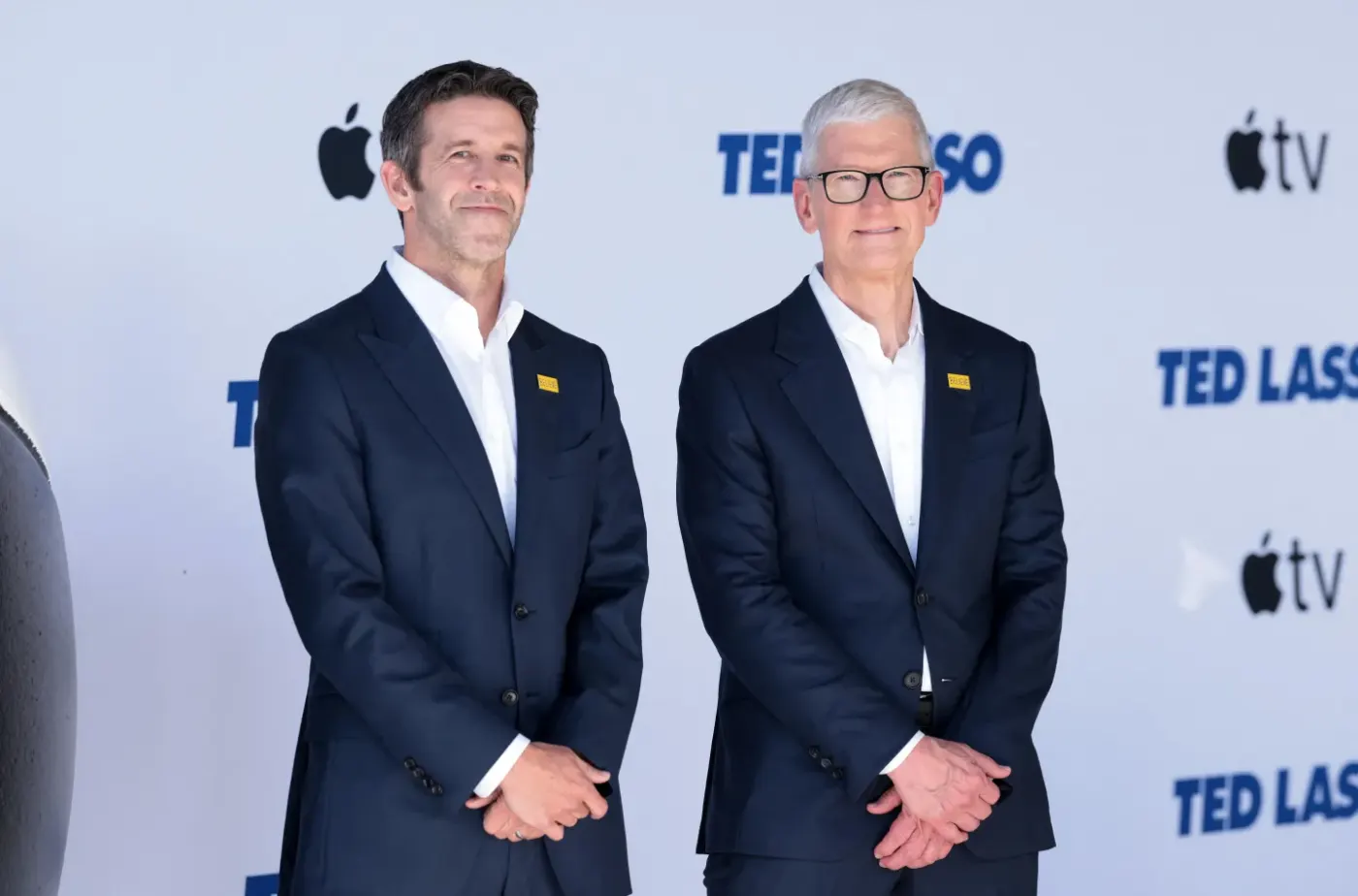
John Ternus is a very different kind of Apple CEO
Ternus is not an outsider arriving at Apple with a revolutionary plan.
He has spent almost his entire career inside the company.
He joined Apple's product design team in 2001 and eventually became senior vice president of Hardware Engineering. During his career, he worked on products across the iPad, iPhone, Mac and Apple Watch lines and played important roles in Apple's hardware development.
That background matters.
Ternus understands how Apple develops products from the inside.
He knows the engineering culture.
He knows the hardware organization.
He knows how Apple's product teams operate.
And he has spent years working under Cook.
This should make the transition relatively stable.
But stability is not necessarily what Apple needs most.
The technology industry is moving into a period where artificial intelligence could fundamentally change how people interact with computers.
That creates pressure for a company famous for redefining user interfaces.
Apple's biggest challenge is AI
This is where Ternus's leadership will be tested.
Apple has been slower than some competitors to make AI the center of its product strategy.
The company introduced Apple Intelligence and has continued expanding its AI capabilities, but Apple's progress has not always matched the expectations created by the rapid growth of ChatGPT, Gemini and other AI systems.
Apple itself unveiled a major new generation of Apple Intelligence at WWDC 2026, including a significantly upgraded Siri designed to understand personal context, work across apps and use information from the web.
The technology is important because Siri could become much more than a voice assistant.
Imagine asking your phone to find a message from someone, identify information inside it, add something to your calendar, search your photos for supporting information and then prepare a response.
That is no longer a simple voice command.
It is an AI agent interacting with your digital life.
And that is exactly where the smartphone industry appears to be heading.
Apple has one advantage that its competitors cannot easily copy
Apple's AI strategy has a unique foundation. The company controls the hardware, operating system, applications and much of the user experience. That gives Apple an opportunity to integrate AI much more deeply than a standalone chatbot company can.
Advertisement
Apple says its next-generation Apple Intelligence architecture is designed around privacy and integrates its foundation models across its platforms. The company also emphasizes a combination of on-device processing and more powerful server-based models for tasks that require greater computational resources.
If Apple executes this correctly, AI could become almost invisible. That might actually be Apple's biggest advantage. Instead of asking users to open an AI application, Apple can place intelligence directly inside the operating system. Your phone could understand what you are looking at. Your messages could become more useful. Photos could become easier to search. Applications could interact with each other through AI. Siri could become a genuine assistant instead of a voice-controlled search box. That is a much bigger opportunity than simply adding another chatbot.
But Apple has a credibility problem with Siri
The challenge is that Apple has been promising a smarter Siri for some time. Consumers have heard about more capable AI assistants while watching competing companies move quickly. That creates a difficult situation for Ternus.
Apple cannot simply announce another AI strategy. It needs to demonstrate that the technology actually works. The September 9 event therefore carries more significance than a normal iPhone launch. It will be one of the first major public tests of the new Apple era. And it comes just days after Ternus officially became CEO.
The September iPhone event matters
Apple has confirmed its September event for September 9, with the company expected to introduce its next generation of hardware. Industry reports have pointed toward new iPhone models and potentially Apple's first foldable iPhone, although not every rumored product is confirmed.
That distinction is important.
Apple's product launches generate enormous attention, but rumors are not the same as announcements.
The more interesting question is not simply whether Apple introduces a thinner phone, a new camera system or a foldable device.
It is whether Apple can make the next generation of hardware feel like part of a larger transformation.
If AI is going to become the central interface for computing, Apple needs hardware capable of supporting that transition.
The iPhone may increasingly become less about the apps you open and more about what the device can understand and accomplish for you.
The iPhone problem is not that it is unsuccessful
Apple does not have a crisis in the traditional sense.
The iPhone remains one of the most important consumer technology products ever created.
The problem is different.
The iPhone is so successful that Apple has to be careful about what comes next.
If the next major computing platform emerges around AI agents, smart glasses, wearables or another new interface, Apple cannot simply rely on selling increasingly powerful versions of the same smartphone forever.
It needs to participate in the next platform shift.
That is one reason the company's work on AI wearables and other future products matters.
Apple reportedly has been exploring products that could extend its ecosystem beyond the phone, including smart glasses and new forms of AI-enabled hardware.
None of these products is guaranteed to become a hit.
But the strategy makes sense.
Apple needs to make sure the next generation of computing happens inside its ecosystem rather than outside it.
Ternus has another problem: Apple's culture
There is an important difference between succeeding Steve Jobs and succeeding Tim Cook.
Jobs was Apple's product visionary.
Cook became known for operational excellence.
Ternus comes from engineering.
That could influence Apple's next chapter.
A CEO with deep hardware experience may place greater emphasis on product development, engineering and the physical design of new devices.
✦ Free Newsletter ✦
Never miss a story
Tools, tutorials and AI deep-dives - straight to your inbox, every week.
That could be particularly valuable if Apple is preparing for a world where AI requires new hardware rather than simply better software.
The challenge will be balancing engineering ambition with Apple's enormous operational complexity.
Apple can no longer behave like a small startup searching for its first breakthrough product.
Every major decision affects hundreds of millions of customers, developers, suppliers and investors.
Advertisement
The company has to innovate without destabilizing the ecosystem that made it successful.
Apple's relationship with AI companies is becoming strategically important
There is another issue hiding underneath Apple's AI strategy.
Apple does not necessarily need to build every AI technology itself.
The company has already worked with outside AI providers as part of its broader strategy, while simultaneously developing its own models and infrastructure.
That creates both flexibility and dependence.
If Apple relies too heavily on external AI companies, it risks becoming dependent on technology controlled by someone else.
If it insists on building everything internally, it could fall further behind while competitors move faster.
Ternus therefore faces a strategic decision:
How much of Apple's AI future should Apple control itself?
That question could become as important as the question of which processor goes into the next iPhone.
Apple still has something most AI companies want
There is one major advantage Apple has that many AI companies would love to possess.
Hundreds of millions of people already use Apple devices every day.
Apple doesn't have to convince everyone to download a new AI application.
It can put AI directly into the devices people already own.
That distribution is extraordinarily powerful.
If Apple can turn its existing ecosystem into an AI platform, it could instantly put advanced AI capabilities in front of a huge global audience.
The challenge is making those capabilities genuinely useful.
People do not need another chatbot.
They need technology that saves time.
They need devices that understand context.
They need software that can perform tasks without forcing them to learn a new interface.
If Apple gets that right, its AI strategy could become much more significant than the current generation of AI features suggests.
The next Apple era may be defined by intelligence, not hardware
For years, Apple's competitive advantage was built around hardware and software working together.
That remains important.
But AI introduces another layer.
Intelligence becomes part of the product.
The processor matters because it determines how quickly AI can run.
The operating system matters because it determines what information AI can access.
Privacy matters because AI may interact with extremely personal information.
Hardware matters because cameras, microphones and sensors give AI more context about the world.
This means Apple's future products may increasingly be designed around AI from the beginning rather than having AI added afterward.
That is a significant change in product philosophy.
What should Apple fans watch next?
The next few months could tell us a lot about Ternus's strategy.
There are five things worth watching.
1. Siri
Can Apple finally deliver the intelligent assistant it has been promising?
2. AI integration
Will Apple Intelligence become a genuinely useful part of everyday workflows, or remain a collection of individual features?
3. New hardware
Does Apple introduce products that demonstrate a new direction rather than simply improving existing categories?
4. Developer adoption
Will developers be able to build genuinely useful experiences around Apple's AI capabilities?
5. Apple's long-term AI strategy
Perhaps most importantly, will Apple explain where it wants to be three or five years from now?
Consumers can understand a new iPhone.
Investors can understand quarterly revenue.
The bigger question is whether Apple has a clear vision for computing after the smartphone.
A new CEO does not automatically mean a new Apple
It is tempting to treat September 1 as a dramatic reset.
It isn't.
Cook remains connected to Apple as executive chairman.
Ternus has spent decades inside the company.
The existing leadership team remains largely intact.
Apple's culture, supply chain and ecosystem are not going to change overnight.
That is probably a good thing.
Apple is too large and too important to make reckless changes simply for the sake of appearing different.
But continuity should not become complacency.
The technology landscape is changing rapidly.
AI is altering software.
Search is changing.
Smartphones are evolving.
Wearables are becoming more capable.
Computers are becoming increasingly conversational.
Apple needs to make sure its famous attention to detail doesn't become a reason to move too slowly.
Advertisement
The real test for John Ternus
John Ternus does not need to become the next Steve Jobs.
He does not need to imitate Tim Cook.
He needs to determine what Apple should be next.
That may be the hardest job in technology.
Apple already has enormous financial resources, an extraordinary hardware organization, a massive developer ecosystem and one of the world's strongest consumer brands.
What it needs now is direction.
If Ternus can combine Apple's hardware expertise with a genuinely compelling AI strategy, his tenure could mark the beginning of another major Apple era.
If Apple moves too cautiously, competitors may define the next generation of computing first.
That is why the leadership change matters.
The story isn't simply that Tim Cook is leaving the CEO role.
The story is that Apple is being forced to answer what comes after the iPhone, and John Ternus has inherited the question.
The first answers will begin arriving very soon.

Advertisement