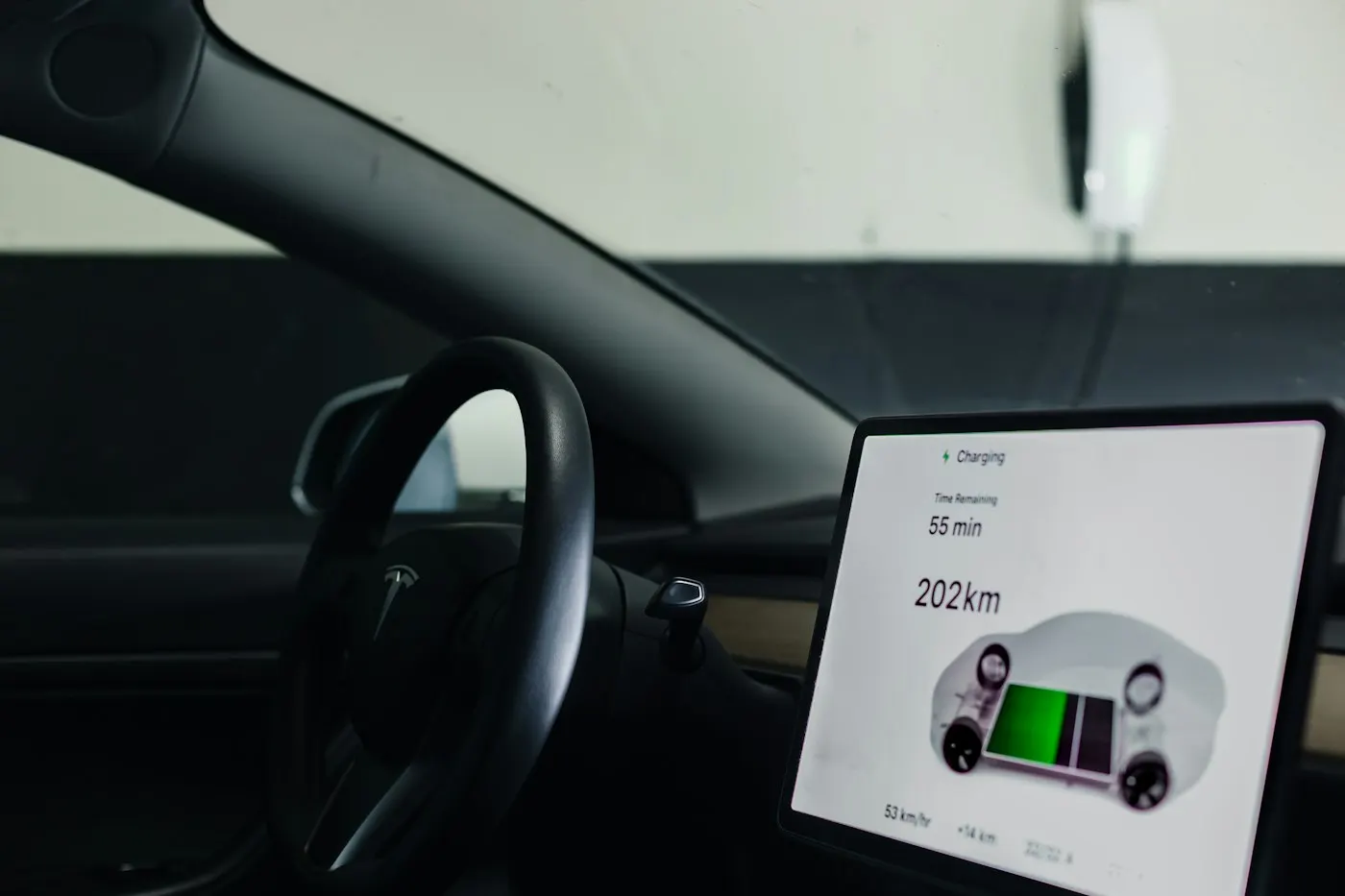
Tesla did not rename "Full Self-Driving" in Europe because the technology got safer. It renamed the feature because that was the price Germany set for backing the approval Tesla could not win on the merits alone. The real story in this week's news is not a marketing tweak, it is an admission, buried in a diplomatic trade, that the old name never matched what the system actually does.
Key takeaways
- Germany's transport minister, Steffen Bilger, said on October 6, 2026 that the "FSD" name is "somewhat misleading" and backed EU-wide approval after Tesla offered to rename the system "Tesla Assisted Driving" in Europe.
- The EU-wide vote, run through a committee that needs support from member states representing 55% of countries and 65% of the bloc's population, has slipped from October to December 2026.
- France's consumer protection regulator already found Tesla's "fully autonomous" marketing deceptive in 2025 and threatened fines of 50,000 euros (about $58,000) a day; French buyers who paid 7,500 euros for the feature still cannot use it.
- At least seven EU countries, including the Netherlands, Belgium, Slovenia and Croatia, have approved a European version of the system individually while the bloc-wide vote is pending.
The Rename Is the Price Germany Charged for Its Support
On October 6, 2026, Germany's Federal Ministry for Transport put out a statement backing prompt EU-wide approval of Tesla's driver-assistance software. Transport Minister Steffen Bilger said his goal was for "Tesla drivers to be able to enjoy the benefits of 'assisted driving' throughout the EU without delay," according to Reuters reporting carried by The Star. The ministry's own language called the current name "somewhat misleading."
In exchange, Tesla offered to rename the feature "Tesla Assisted Driving" across its European marketing and software. Germany, in turn, agreed to support a condition that lets the system exceed posted speed limits by up to 10%, a compromise worked out after Bilger met with Tesla the previous month to discuss technical details and liability. That is a negotiated settlement, not a safety verdict. Germany is not saying the system got better. It is saying it will accept a cosmetic concession in return for political cover to say yes.
Advertisement
"Full Self-Driving" Was Always a Branding Claim, Not an Engineering One
None of this changes what the system is. Reuters' own framing of the story describes it as assisting the driver, not replacing one, and the French investigation that preceded this saga was built on the same point: the capability on sale is a driver-assist feature that still requires constant supervision, not an autonomous vehicle in the sense most buyers would assume from the words "full" and "self-driving."
That gap between the name and the capability is exactly what France's DGCCRF, the country's consumer protection and anti-fraud authority, flagged in June 2025. Its multi-year investigation into Tesla's French subsidiary, running from 2023 to 2024, concluded that Tesla engaged in deceptive commercial practices around the autonomous driving claims, trade-in offers and order handling. Regulators gave Tesla four months to fix its marketing or face fines of 50,000 euros (roughly $58,000) a day. French Tesla owners had already paid 7,500 euros for the FSD option, and reporting at the time noted they still could not use it because of the same regulatory gap that made the marketing deceptive in the first place.
Why the EU Vote Keeps Slipping: the Math Behind a Yes
The approval Tesla is chasing does not run through a simple national decision. The legal mechanism is a provisional type approval the Dutch authority RDW already granted under Article 39 of EU Regulation 2018/858. For that provisional approval to become an EU-wide type approval, it has to clear a vote in the EU's Technical Committee on Motor Vehicles, where member states representing at least 55% of countries and 65% of the bloc's population have to vote in favor.
That threshold is why a vote once expected in October 2026 has already slipped to December. Individual countries can approve the system on their own in the meantime, and at least seven have: the Netherlands, Belgium, Slovenia and Croatia among them, according to reporting from Electrive and The Next Web tracking the committee process. But Germany's own technical regulator, the KBA, was still reviewing documentation as of early October and had not committed to a vote either way, even as its transport minister spoke in favor politically. A cabinet minister's statement of support and a technical regulator's sign-off are not the same thing, and conflating them is the easiest way to overstate how settled this is.
✦ Free Newsletter ✦
Never miss a story
Tools, tutorials and AI deep-dives - straight to your inbox, every week.
The Speed Offset Is the Argument Everyone Is Actually Having
Strip away the name change and the dispute that is actually holding up approval is about speed, not branding. The Dutch version of the system, the one several countries have already approved, can raise the detected speed limit by up to 50% in certain conditions. Germany's negotiated version caps that offset at 10%. Sweden and France have both raised concerns about the feature regardless of the cap, and the European Transport Safety Council has specifically questioned whether letting a driver-assist system exceed posted limits at all conflicts with existing UN vehicle regulations.
Advertisement
This is the part of the story that gets lost when headlines focus on the rename. A name change costs Tesla nothing in capability. A speed-offset limit does, because it is the one feature regulators keep singling out as the actual safety-relevant difference between versions. Watching whether the December vote keeps, loosens or kills the speed offset is a better signal of where this is headed than watching what the feature gets called.
What the Honest Counterpoint Looks Like
The fairest case for Tesla and for Germany's approach is that this is how safety regulation is supposed to work: a company proposes a product, regulators push back on specific claims and specific behaviors, and the two sides land on a version that is more conservative than the original pitch. Under that reading, a 10% speed offset with a renamed, more accurate label is a reasonable middle ground, and Germany backing it is itself evidence the process produced a better outcome than either an outright ban or an unconditional approval would have.
There is also a practical argument for Tesla's position: Level 2 driver-assist systems from other automakers carry similarly ambitious names in some markets, and singling out Tesla's branding while other companies use comparably confident language elsewhere would be inconsistent enforcement rather than principled regulation. Regulators are not immune to picking the most visible target. That said, France's finding was based on a documented, multi-year investigation into specific deceptive practices, not just an aggressive name, which is a higher bar than branding alone.
Who This Actually Affects, and What to Watch
European Tesla owners who already paid for FSD are the ones with the most immediate stake. If you bought the option expecting capability that matches the US marketing, the rename itself changes nothing about what your car can do today, only what it will be called once Tesla rolls the update out. If you are cross-shopping a driver-assist package in Europe right now, treat every "full" or "autonomous" claim with the same skepticism regulators just applied to Tesla's, since the underlying SAE Level 2 classification, requiring constant driver supervision, is what matters, not the marketing name attached to it.
Advertisement
- Watch the December EU committee vote and whether the 55%/65% threshold is met, not just whether more countries announce individual approvals before then.
- Watch whether the speed-offset cap that got Germany's backing survives the full vote unchanged, since that is the actual safety variable.
- Skip the story if you do not drive in the EU and are not shopping for a Tesla there. The rename has no bearing on how FSD is marketed or regulated in the United States.
- If you are a Tesla shareholder or watching the stock, treat "EU approval" headlines as provisional until the KBA and the full committee, not just one minister, sign off.
This pattern, where a company trades a disputed claim for regulatory approval rather than winning the argument on the facts, is becoming familiar well beyond cars. Regulators scrutinizing AI companies' claims about their own agents' behavior are running the same playbook: force a concession on language or limits first, worry about full verification later. The lesson for anyone evaluating a bold technology claim in 2026, autonomous driving or otherwise, is to ask what regulators required the company to give up to get a yes, not just whether they said yes.
Sources
- Musk welcomes German backing for Tesla driver assistance tech as group chases EU approval, Reuters via The Star
- EU vote on Tesla FSD not expected before December, Electrive
- Slovenia becomes the sixth EU country to clear Tesla's FSD, a month before the bloc votes, The Next Web
- Tesla Faces $58,000-A-Day Fines In France Over 'Deceptive Marketing Practices', Jalopnik
- Tesla Renames FSD to 'Tesla Assisted Driving' in Europe, Not a Tesla App
Advertisement