The biggest constraint on how fast AI companies can build new data centers in 2026 is not the supply of Nvidia chips or even the availability of electricity. It is the town council meeting down the street. Local opposition blocked or delayed an estimated $198 billion worth of U.S. data center projects in the first half of 2026 alone, according to the tracking firm Data Center Watch, and the AI data center backlash behind that number is now a bigger swing factor in the industry's build-out timeline than any single hardware shortage.
Key takeaways
- Data Center Watch found 75 projects worth about $130 billion blocked or delayed in Q1 2026 and another 45 projects worth $68 billion in Q2, together matching roughly two years of 2025-level disruption in six months.
- Active opposition groups grew from 396 at the end of 2025 to more than 840 by mid-2026, spread across 49 states, per the same tracker.
- Maine's legislature passed the nation's first statewide data center moratorium in April 2026, but Governor Janet Mills vetoed it over a jobs carve-out dispute, showing how local economics still cut both ways.
- In Port Washington, Wisconsin, opposition to a $15 billion Vantage data center escalated into a recall campaign against the town's mayor.
Nearly $200 Billion in AI Data Centers Is Now Stuck
Data Center Watch, a project run by the AI research firm 10a Labs, has published quarterly counts of U.S. data center projects facing serious local opposition since early 2026. The numbers describe a trend accelerating faster than most industry forecasts anticipated. In the first quarter, the firm counted at least 75 projects worth a combined $130 billion that were blocked or delayed by local pushback, a total that reportedly matched the full-year disruption recorded for all of 2025. The second quarter added 45 more projects worth roughly $68 billion, which the firm said amounted to more than half of all large data center developments proposed in that window.
| Period | Projects blocked or delayed | Value | Active opposition groups |
|---|---|---|---|
| Q1 2026 | 75 | $130 billion | 833 (up from 396 at end of 2025) |
| Q2 2026 | 45 | $68 billion | 843 |
The opposition is not a handful of loud activists in one or two states. Data Center Watch counted active local opposition groups in 49 states by mid-2026, and more than 300 state-level data center bills were introduced in just the first six weeks of the year, according to the firm's reporting cited by outlets including TheNextWeb and Newsweek. In Tennessee, a single Change.org petition against a proposed project drew more than 500,000 signatures, a scale of public engagement that would have been unusual for a local zoning fight even two years ago.
Advertisement
Why Are Communities Fighting Data Centers Now?
Residents are organizing against data centers because the costs tend to land on everyone nearby while the benefits mostly flow elsewhere. Large data centers draw enormous amounts of electricity and water, utilities often pass the cost of new transmission lines on to all ratepayers, and the facilities themselves are highly automated, so they create relatively few permanent local jobs compared with their multibillion-dollar price tags.
That imbalance is showing up directly in utility bills. New York Governor Kathy Hochul put it bluntly when her administration moved to tighten data center cost rules in 2026: "As data center development threatens to hike up utility bills, deplete our natural resources, and create uncertainty for New Yorkers, it's my responsibility to take action and lead." Clean Wisconsin, an environmental advocacy group, calculated that two proposed data centers in that state alone would require power equivalent to 4.3 million homes, in a state with only 2.8 million housing units total, a mismatch that explains why the fight there turned personal.
Maine's Vetoed Moratorium Shows Why Jobs Still Win Fights
In April 2026, Maine's Democratic-controlled legislature passed what would have been the first statewide data center moratorium in the country, pausing permits for large facilities for more than a year. Governor Janet Mills vetoed it. Her stated reason was not a defense of the industry broadly; it was that the bill lacked a carve-out for a specific project in the town of Jay, expected to bring more than 800 construction jobs and about 100 permanent positions to a community still recovering from a paper mill closure. Mills said she would have signed the bill without that provision, adding that "a moratorium is appropriate given the impacts of massive data centers in other states on the environment and on electricity rates," according to reporting from Bloomberg Law. The bill's backers fell well short of the two-thirds vote needed to override the veto.

The Maine episode captures the real dynamic better than a simple pro- or anti-data-center framing does. Opposition is not reflexive. It softens sharply wherever a project brings concentrated, visible local benefit, and hardens wherever the benefit is diffuse or goes to a company or state that isn't the one absorbing the water and electricity costs.
Advertisement
Wisconsin's Recall Vote Is a Preview of What's Coming
Port Washington, Wisconsin, a city of about 13,000 people, approved a $15 billion, 672-acre Vantage data center campus that needs 1.3 gigawatts of power in its first phase alone, requiring roughly 100 miles of new or upgraded transmission lines at an estimated cost of $1.6 billion. Opponents are now trying to force a recall election against the mayor who backed the deal, needing about 1,600 signatures to put it on the ballot. A similar pattern played out in Georgia, where data center-driven utility anger reportedly helped opposition candidates flip two Republican-held seats on the state's utility regulatory commission in a special election.
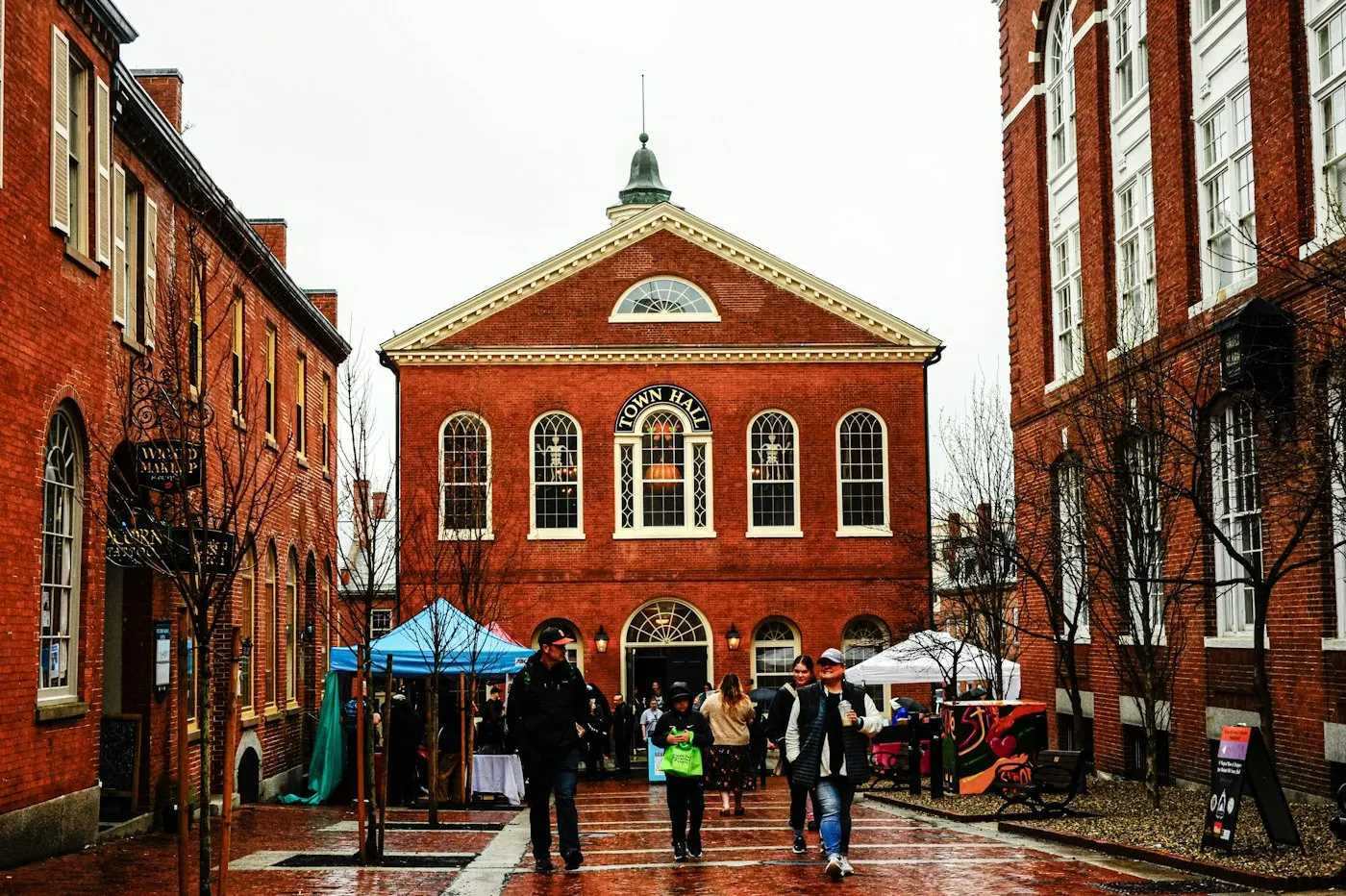
These are local races deciding state and national-scale infrastructure questions, which is precisely why the fight is spreading faster than industry groups expected. A mayor or a utility commissioner who approves one unpopular project can lose their job over it, and that feedback loop is now visible enough that other local officials are watching closely before saying yes to the next one.
✦ Free Newsletter ✦
Never miss a story
Tools, tutorials and AI deep-dives - straight to your inbox, every week.
This Is a Harder Constraint on AI Growth Than Chip Supply
Chip shortages and power generation gaps are real limits on AI infrastructure, something techdrifting.com has covered in the context of the power plants feeding these facilities, but both are problems capital can eventually solve: build more fabs, build more generation, wait a few years. Local political consent does not scale the same way. Every new site needs its own permits, its own utility agreements, and its own town council votes, and a company cannot simply throw more money at a community that has decided it does not want the water drawn down or the noise running around the clock.
Advertisement
That is a structural reason this friction is likely to persist rather than fade as a 2026 news cycle. It also helps explain why some AI companies have leaned toward smaller, more distributed data center formats rather than single mega-campuses: smaller sites draw less attention, need smaller transmission upgrades, and are easier for a local government to approve quietly.
The Counterargument: These Are Delays, Not a Shutdown
The strongest case against reading too much into these numbers is that "blocked or delayed" is not the same as "cancelled." Many contested projects eventually get built in modified form, sometimes smaller, sometimes with a community benefits agreement, sometimes years later than originally planned. Industry advocates also point out that national data center construction spending kept setting records through 2026 even as specific projects drew fire, meaning the opposition is a drag on individual deals rather than a cap on overall investment. A $198 billion disruption figure sounds enormous until it is set against total U.S. data center capital spending, which construction-tracking firms describe as having reached record levels this year.
That counterpoint has real weight, and it is fair to say the AI data center backlash has not stopped the buildout. But it has changed the terms of it: later timelines, higher local costs built into project budgets, more lawyers and community liaisons on every deal, and a growing list of sites that simply never get announced because developers now screen out politically risky locations before they become public fights at all.

What to Watch Next
This story matters most to AI infrastructure investors, local officials fielding a data center proposal, utility customers in a state with active projects, and anyone trying to judge how fast AI capacity can realistically grow. It matters less to readers only interested in consumer AI products like chatbots or coding tools, since those run on capacity that is mostly already built or contracted.
For anyone evaluating a new data center announcement, a short checklist helps separate a deal likely to stick from one likely to become the next fight:
Advertisement
- Check whether the announcement specifies permanent jobs separately from construction jobs; a large headline jobs number that is mostly temporary construction work is a warning sign for local backlash later.
- Look for a named water source and whether it is potable municipal water or a non-potable alternative, since water has become one of the fastest-growing flashpoints.
- See whether new transmission line costs are described as utility-funded or ratepayer-funded; ratepayer-funded upgrades are a reliable predictor of organized opposition.
- Check whether the state already has pending data center legislation, since 2026's moratorium and siting bills have clustered heavily in states with one high-profile fight already underway.
The honest takeaway is that AI's growth curve now runs through thousands of individual local approvals, not just through chip fabs and power plants. Readers tracking AI infrastructure should treat community opposition as a standing input in capacity forecasts, not a temporary news story, and should expect the companies that win the next round of sites to be the ones that treat local benefit sharing as a cost of doing business rather than an afterthought.
Sources
- TheNextWeb: Grassroots opposition blocked $130 billion in US data center projects in Q1 2026
- Newsweek: Data center projects face unprecedented surge in blocks and delays
- Data Center Watch: Q1 2026 report
- Data Center Watch: Q2 2026 report
- Christian Science Monitor: Port Washington, Wisconsin data center recall effort
- Bloomberg Law: Maine Governor Mills vetoes statewide data center moratorium

Advertisement