
Nearly 1,900 Blizzard Entertainment employees ratified the video game industry's first company-wide union contract in September 2026, winning severance guarantees, recall rights and a say over how artificial intelligence touches their jobs. Three months earlier, Ubisoft closed its newly unionized Halifax studio in under three weeks, cutting 71 jobs before a single contract proposal reached the table. The gap between those two outcomes has little to do with how hard either group of workers fought. It traces back to a promise Microsoft made in 2022, years before any of these workers cast a union vote.
Key takeaways
- Nearly 1,900 Blizzard workers ratified the video game industry's first wall-to-wall union contract in September 2026, covering severance, recall rights and new rules on AI use.
- Ubisoft closed its unionized Halifax studio on January 7, 2026, less than three weeks after workers certified their union, cutting 71 jobs.
- Microsoft's smoother path traces back to a 2022 labor-neutrality agreement with the Communications Workers of America, signed to help clear antitrust review of its $68.7 billion Activision Blizzard deal.
- A 2026 GDC industry survey found 33% of US game workers were laid off in the past two years, and 82% support unionizing, even though a contract has not stopped the layoffs.
What Did Microsoft Promise the Union Back in 2022?
On June 13, 2022, Microsoft and the Communications Workers of America (CWA) signed a labor neutrality agreement tied to Microsoft's pending $68.7 billion purchase of Activision Blizzard. Microsoft committed to staying neutral if employees moved to unionize, and the deal took effect 60 days after the acquisition closed. It was the first agreement of its kind in US tech.
The timing was not an act of goodwill. Regulators in the US, UK and EU were scrutinizing the biggest acquisition in gaming history, and the pro-labor Biden administration's FTC was a real obstacle. A neutrality pledge gave CWA a reason to stay quiet during the review, and gave Microsoft a cleaner path through antitrust approval. Quality assurance testers at Activision's Raven Software had already voted to unionize before the deal closed, and World of Warcraft staff followed in 2024 by forming WoWGG-CWA, the first wall-to-wall union at Activision Blizzard. The 2022 agreement is why that 2024 vote turned into an ordinary, if slow, contract negotiation rather than a fight over the right to organize in the first place.
Advertisement
What Blizzard Workers Actually Won
Roughly 1,900 CWA-represented Blizzard employees ratified their first contracts in September 2026, days before BlizzCon, after two years of bargaining. The agreements cover World of Warcraft, Hearthstone, Warcraft Rumble, Overwatch and Diablo staff, plus quality assurance, platform and technology, and story and franchise development units, according to Cartoon Brew's reporting on the ratification.
The terms go beyond a raise. Workers won four additional weeks of severance regardless of tenure, 14 months of recall rights giving laid-off staff priority for new openings, "just cause" protections with a grievance process, hybrid and remote accommodations, and a requirement that Blizzard discuss and bargain over how it uses generative AI in the workplace. Principal software engineer Daniel Weltz told reporters the contract "secures a lot of what people already love about working here" while adding new protection around layoffs. Overwatch quality analyst Simon Hedrick called it "the beginning of a new era at Blizzard."

Ubisoft Halifax Shows the Other Branch of the Same Tree
Workers at Ubisoft's Halifax studio won union certification around December 18, 2025. Ubisoft closed the studio on January 7, 2026, less than three weeks later, cutting 71 jobs, 61 of them union members. CWA Canada filed a labor complaint with the Nova Scotia Labour Board, arguing the closure was designed to stamp out the union before it could negotiate anything. Ubisoft denied that, pointing to the same financial difficulties and global restructuring driving layoffs across the rest of the company.
The dispute ended in a settlement, not a ruling. CWA Canada announced in April 2026 that workers had overwhelmingly approved a deal with Ubisoft; the compensation terms are confidential, and Ubisoft made no admission that unionizing played any role in the closure. CWA Canada president Carmel Smyth said the outcome reflected "the solidarity our members showed" and credited Ubisoft with ultimately negotiating "in a good faith and professional manner," even after what she called a "disappointing" opening position. The union got its members paid. It never got the studio reopened, and it never got Ubisoft to admit the timing was anything but coincidence.
Advertisement
The Industry's Broader Numbers Back Up the Split
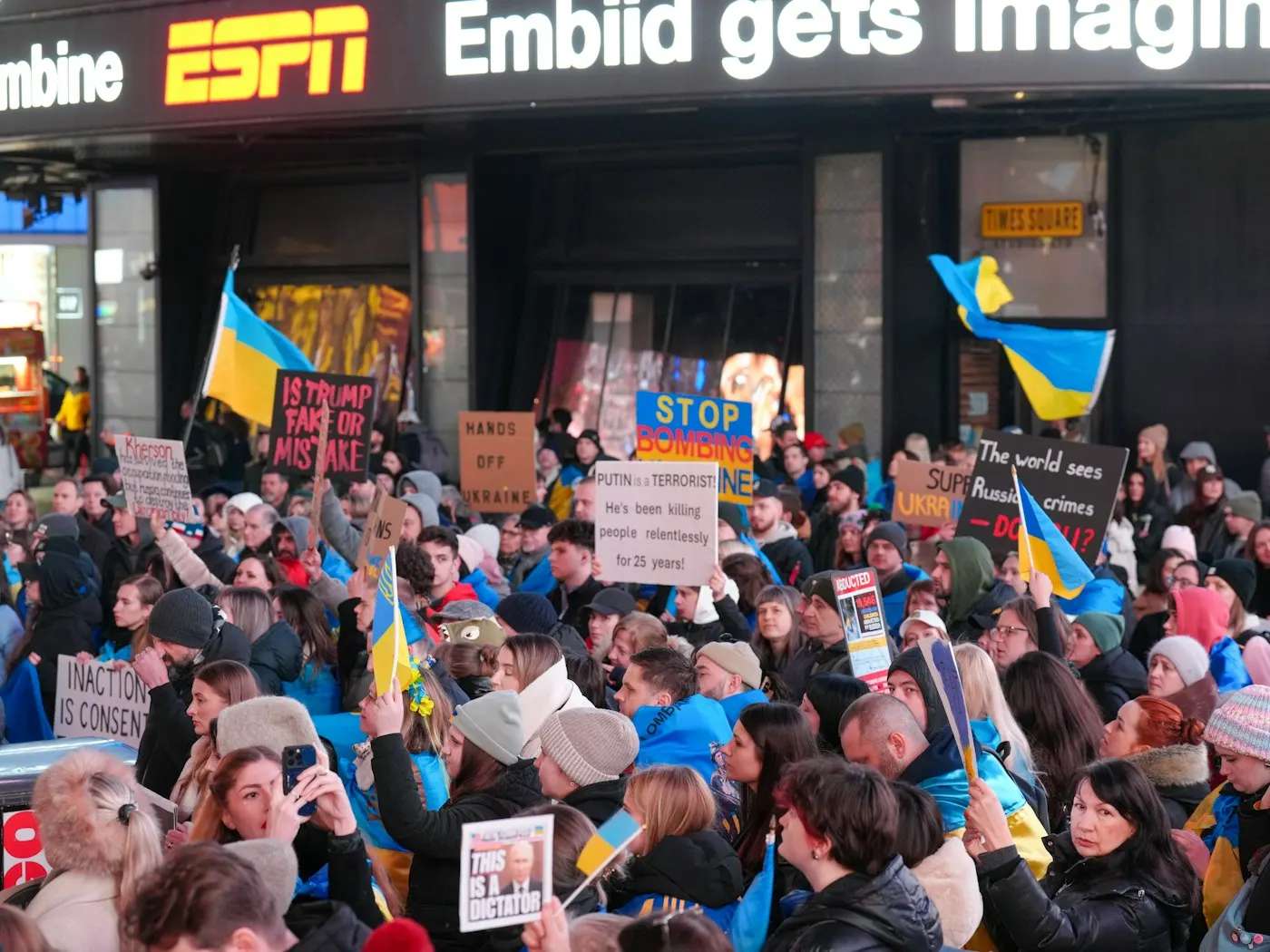
Halifax and Blizzard are not outliers; they sit inside a much larger wave. Microsoft announced on July 6, 2026 that Xbox would cut 3,200 jobs, about 20% of the division, with half taking effect immediately. CEO Asha Sharma said bluntly that "our business today is not healthy," citing margins three to ten times lower than comparable entertainment businesses. Those cuts included divesting Double Fine and Compulsion Games and, as Ninja Theory's closure showed, putting other studios up for new ownership entirely. CWA members rallied across nine US and Canadian cities in August 2026, over 800 strong, pressing Microsoft for first contracts at the studios still negotiating.
✦ Free Newsletter ✦
Never miss a story
Tools, tutorials and AI deep-dives - straight to your inbox, every week.

The GDC Festival of Gaming's 2026 State of the Game Industry survey, drawn from more than 2,300 professionals, puts numbers behind the mood: a third of US respondents had been laid off in the past two years, half said their current or most recent employer had cut staff in the past year, and 82% of US respondents said they support unionizing, though only 62% said they would personally join one. That gap between support and action is its own story, one this site has covered before as part of a broader consolidation wave that keeps compressing headcount even at profitable publishers.
| Metric | Figure | Source |
|---|---|---|
| Blizzard workers covered by new contract | ~1,900 | Cartoon Brew |
| Ubisoft Halifax jobs cut | 71 (61 union) | CWA Canada |
| Xbox division jobs cut, 2026 | 3,200 (~20%) | Bloomberg Law |
| US game workers laid off, past 2 years | 33% | GDC survey |
| US game workers who support unionizing | 82% | GDC survey |
The Honest Counterargument: Contracts Don't Stop Layoffs
The cleanest version of this story, Microsoft the good guy and Ubisoft the bad one, does not hold up to scrutiny. Blizzard's union contract did not stop Microsoft from cutting thousands of other gaming jobs the same year; it only changed the terms for the workers it covers, giving them severance floors and recall rights instead of nothing. A neutrality pledge and a ratified contract are not immunity from the business cycle, and nobody involved has claimed otherwise.

Ubisoft's side of the argument deserves the same fairness. The company has been in well-documented financial trouble across its entire business, not just in Halifax, and CWA Canada itself chose to settle rather than push the Nova Scotia Labour Board to a finding of anti-union intent. Ubisoft never admitted wrongdoing because none was proven. It is entirely possible the Halifax closure really was about money, and that the timing, three weeks after certification, was bad luck rather than retaliation.
Advertisement
Both of those caveats can be true and the core argument still holds: whatever actually motivated Ubisoft, it faced no binding external commitment comparable to Microsoft's 2022 deal that would have made closing a newly unionized studio costly or slow. Microsoft had one. That asymmetry, not the sincerity of either company's stated reasons, is what best explains why one group of workers got a contract and the other got a settlement check.
What to Watch Next
Three things will show whether 2026 was a turning point or a one-off. First, whether other Microsoft-owned studios under the same neutrality umbrella, including ZeniMax units like Bethesda, id Software and Obsidian, reach their own first contracts in 2027, which would suggest Blizzard's deal is a template rather than a special case. Second, whether CWA Canada's complaint against Ubisoft pushes any Canadian province toward faster "just cause" or notice requirements for studio closures that follow a union vote, since a confidential settlement sets no legal precedent. Third, whether publishers with no antitrust-driven incentive to stay neutral, think EA under its new Saudi PIF and Silver Lake ownership, or Ubisoft itself, change their posture toward organizing at all, or keep treating a union vote as background noise next to a restructuring plan that was already in motion.
If you are weighing whether a union vote at your own studio is likely to produce a contract instead of a closure notice, 2026's record suggests a blunt rule:
- Check whether your parent company signed, or is close to signing, a binding neutrality or labor-peace commitment tied to a merger or regulatory review, the way Microsoft did in 2022. If so, expect a slow but real multi-year path toward a contract.
- If your parent company has no such external commitment and is already restructuring or losing money, expect that a union vote buys you standing to negotiate an exit, not protection from one.
- Either way, do not expect a contract to stop layoffs outright. Treat recall rights, severance floors and grievance procedures as the real prize, because that is what both sides were actually bargaining over.
This matters most if you work in game development, are deciding whether to back an organizing drive at your own studio, or cover labor and antitrust policy for a living. If you are only tracking release dates or hardware specs, this one is a detour worth skipping.
Sources
- Microsoft: CWA, Microsoft announce labor neutrality agreement
- Cartoon Brew: Nearly 1,900 Blizzard workers ratify first union contracts
- BetaKit: Union files labour complaint over Ubisoft Halifax closure
- CWA Canada: Workers approve settlement over Ubisoft Halifax closure
- The Spokesman-Review: Xbox cuts 3,200 jobs as gaming business struggles
- GDC: 2026 State of the Game Industry survey

Advertisement