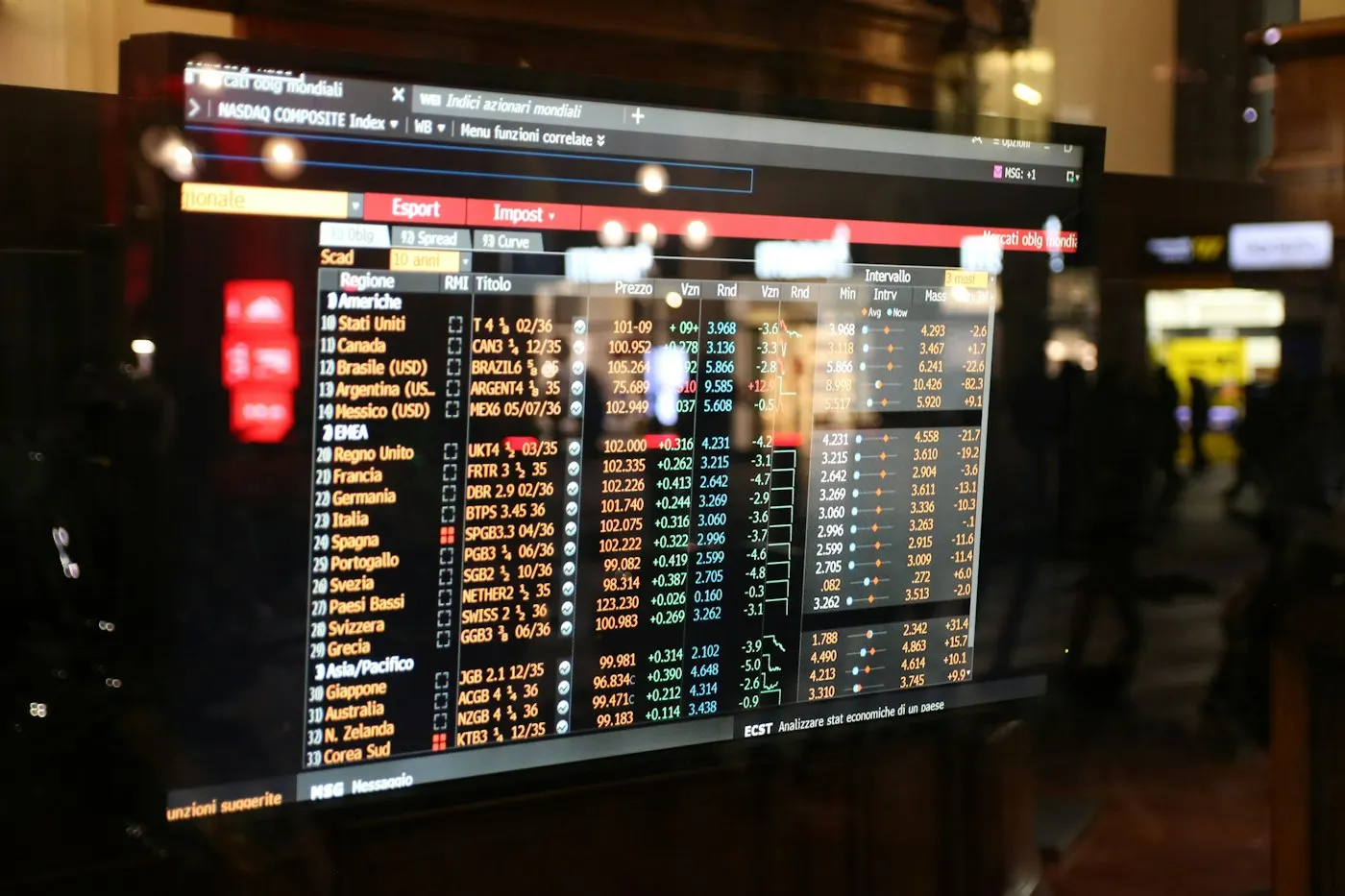

The real story out of Nvidia this week is not that Jensen Huang got his job back. It is that Nvidia told the Securities and Exchange Commission, in writing, that the U.S. government helped it decide he could have it back. On November 23, 2026, Nvidia's board voted unanimously to reinstate Huang as president, CEO and a board director, just eleven days after he resigned and six days after the same board said on an earnings call that it had no plans to bring him back.
Key takeaways
- Nvidia's board unanimously reinstated Jensen Huang as CEO on Nov 23, 2026, reversing its own Nov 17 statement that it did not intend to do so, according to Nvidia and multiple outlets including PBS NewsHour.
- Nvidia's SEC filing states the board "received input from senior levels of the United States government" before concluding reinstatement poses "no national security risk," a line that rarely appears in a CEO announcement.
- President Trump told CNBC "I convinced them" and "I made the deal," while Attorney General Todd Blanche said the Justice Department found no evidence Huang broke the law, per PBS NewsHour.
- An online petition for Huang's return, backed by Elon Musk and other tech leaders, grew from about 21,000 signatures to more than 150,000 within weeks, according to multiple reports.
The Board Reversed Itself in Six Days, Not Six Months
Huang resigned as president, CEO and board member effective November 12, 2026, and Nvidia's chief financial officer, Colette Kress, agreed to serve as interim CEO while keeping her CFO title, according to Nvidia's own announcement. Five days later, on the company's third-quarter earnings call, newly appointed board chair Harvey C. Jones told investors the board had unanimously accepted the resignation and did not intend to reinstate Huang, a position confirmed independently by the South China Morning Post and several NPR member stations. Then, on November 23, the same board reversed course entirely and voted unanimously to put him back in both jobs, effective immediately.
That is not a slow, deliberative governance process playing out over a normal review cycle. It is a public company's board stating one position on the record and abandoning it within six days, under outside pressure that was, by multiple accounts, substantial and highly public.
Advertisement
Nvidia's Own Filing Says Washington Signed Off First
The detail that matters most sits inside Nvidia's own SEC filing, not in the surrounding commentary. The filing says the board "received input from senior levels of the United States government" and that, based on that input, it concluded Huang's reinstatement "poses no national security risk." Boards do not typically cite government sign-off as a condition for rehiring a chief executive. The fact that Nvidia felt it needed to say so, in a federal filing, is itself the signal: Nvidia's leadership decisions are no longer purely a matter of corporate governance.
That shift did not happen by accident. Nvidia's chips sit at the center of U.S. export-control policy, and Nvidia's chip sales to China are already shaped directly by Washington's rules. A company that central to national AI and chip strategy should expect its leadership to be treated as a matter of state interest, not just shareholder interest, whenever a national-security question is anywhere near the story. It fits a broader pattern of AI companies seeking closer ties with regulators rather than distance from them, the same instinct behind AI labs lobbying for government shields alongside government rules.
Trump Took Credit, and the Board Did Not Deny It
President Trump did not wait for anyone to ask whether he had a role. He told CNBC "I convinced them" and "I made the deal," adding that "the board decided to do what we wanted them to do" and that his administration had assured Nvidia there were no national security concerns. According to PBS NewsHour, the push intensified over the weekend before the vote, with Vice President JD Vance reportedly stepping up outreach to board members, citing people familiar with the discussions.
Nvidia has not disputed any of this publicly. A company that wanted to project board independence from political pressure had every opportunity to push back on a sitting president publicly claiming he dictated its personnel decision. It did not take that opportunity, which is itself informative about how much leverage Washington now has over a company this systemically important.
Advertisement
The Affair, the Spy Suspicion and What Is Still Unconfirmed
Huang's original resignation was not explained in Nvidia's own statements, which describe only the personnel change itself. According to PBS NewsHour, Huang admitted to at least one extramarital affair, including a relationship with an executive at a Singapore-based chip firm who American officials reportedly suspect of ties to Chinese intelligence. Attorney General Todd Blanche, per the same report, said the Justice Department has reached no conclusion on whether that suspicion is accurate and found no evidence that Huang himself engaged in unlawful conduct. Separately, the department is reported to be investigating potential export-control violations tied to that same firm.

That distinction matters. "No evidence of unlawful conduct by Huang" and "no conclusion yet on an intelligence suspicion involving someone connected to him" are both true at once, and neither is a clean bill of health in the way the stock market's relief rally might suggest. Readers should treat the underlying espionage question as unresolved, not settled, regardless of how the share price reacted.
✦ Free Newsletter ✦
Never miss a story
Tools, tutorials and AI deep-dives - straight to your inbox, every week.
A Petition Does Not Usually Move a Board This Fast
Supporters organized an open letter calling for Huang's reinstatement almost immediately after his resignation. Signatures reportedly grew from roughly 21,000 in the first days to more than 150,000 by mid-November, with Elon Musk among the named signers, according to multiple outlets including TweakTown and the Korea Times. Nvidia's stock also slid sharply during the interim-CEO period, falling roughly a third from its October record close by mid-November, based on market coverage from that period, before recovering a large portion of that drop when the reinstatement was announced, per PBS NewsHour.
Both forces, employee and investor pressure plus a falling share price, clearly mattered. But they do not explain why a government national-security clearance shows up explicitly in the reinstatement filing. A petition can change a board's mind about whether a CEO is popular. It cannot, on its own, produce a sentence about "senior levels of the United States government."
The Counterargument: Maybe This Was Just Normal Diligence
The fairest pushback on the "Washington now runs Nvidia's personnel decisions" framing is that informal government consultation on an executive with foreign-contact exposure is not new or improper. Companies with classified contracts, export licenses or CFIUS-adjacent business routinely run sensitive personnel questions past relevant agencies before making them public, precisely to avoid a later finding that they ignored a flagged risk. Under that reading, the filing language is defensive lawyering, a board making sure it has documented due diligence, not evidence that a president personally overruled an independent board.
Advertisement
That argument has real merit, and it is probably part of the truth. But it does not fully explain Trump's own account of events. A board quietly consulting agencies about sanctions exposure is different from a sitting president publicly and repeatedly claiming personal credit for reversing a named board's stated decision, on a company whose stock moves global indexes. Both things can be true, but the second one is the part that sets a precedent worth tracking, regardless of how ordinary the paperwork looks.
Who Should Care About This, and Who Can Safely Skip It
This matters most to investors in Nvidia or AI-adjacent chip stocks, to people who follow how the Trump administration is exercising influence over companies it considers strategically important, and to anyone tracking how CFIUS-style national-security review is quietly expanding beyond formal foreign-investment deals into ordinary personnel decisions. It is less urgent for readers who only care about near-term GPU pricing or product roadmaps, since Nvidia's own statements say operations and customer commitments are expected to continue without interruption.
- Follow this closely if you hold Nvidia stock, cover AI policy, or track how the U.S. government exercises informal leverage over strategically important companies.
- Treat it as background noise if you are only interested in GPU release timing or pricing, since Nvidia says its product roadmap is unaffected.
- Do not treat the espionage suspicion as resolved in either direction. The Justice Department has reached no conclusion, according to PBS NewsHour, and that status should not change just because the stock rallied.
What to Watch Next
Three threads are still open. First, the independent committee of Nvidia directors investigating the foreign-intelligence targeting of Huang has not reported its conclusions, and that report, whenever it lands, will be the real test of whether this was properly separated from politics. Second, Huang faces continued scrutiny from Congress in the weeks ahead, which could surface details Nvidia's own filings have not disclosed. Third, and most important for the wider industry, watch whether any other company Washington treats as strategically critical, in semiconductors, cloud infrastructure or frontier AI, has a leadership crisis handled the same way: with an explicit, filed reference to government sign-off. If that pattern repeats even once, this stops being a one-off Nvidia story and starts looking like a new normal for how the government and systemically important tech companies now share control over who runs them. Governance questions like this echo a broader pattern already visible in how little real control outside investors get at other AI-era companies going public.
Advertisement
For now, the concrete takeaway is narrow but useful: when a systemically important company discloses that it sought a government national-security clearance before a personnel decision, read that disclosure as a data point about the government's actual leverage, not as routine legal boilerplate. Watch the independent committee's eventual findings, not the stock price, for the real resolution of this story.
Sources
- Nvidia: Board Reinstates Jensen Huang as President, CEO and Board Director
- Nvidia SEC Form 8-K, November 23, 2026
- Nvidia: NVIDIA Announces CEO Transition
- PBS NewsHour: Nvidia board unanimously reinstates Jensen Huang as CEO and chairman
- CNBC: Trump on Nvidia's Jensen Huang reinstatement
- South China Morning Post: Nvidia board says it has no plans to reinstate Jensen Huang as CEO
- WUNC/NPR: Nvidia board says it does not intend to reinstate Jensen Huang as CEO
- TweakTown: Elon Musk and 160,000 others sign open letter calling for Jensen Huang's return

Advertisement