Marvell's October 6 Investor Day was supposed to be about chips. The real story in the fine print is a financial instrument: a warrant that lets Google buy up to 7% of Marvell, but only if Marvell actually ships the silicon it promised. That single mechanism, more than any speed benchmark, explains how the typical AI chip deal has quietly changed shape in 2026.
Key takeaways
- Google's warrant covers 58.97 million Marvell shares at a $206.58 strike price, worth roughly $12.2 billion, vesting in 240 tranches of $500 million each in custom chip revenue, according to Marvell's SEC filing reported by Futurum Group and 247wallst.
- The vesting structure implies a revenue ceiling of $120 billion through fiscal 2033, a target, not a current number.
- Marvell doesn't build Google's core TPU compute die; Broadcom and MediaTek do that, while Marvell supplies the networking, memory and storage chips that attach to it.
- This is the second major AI warrant-for-supply deal in a year, after AMD gave OpenAI a warrant for up to 160 million shares tied to six gigawatts of GPU deployment in October 2025.
Why Is Google Paying Marvell in Stock, Not Just Cash?
Google wants Marvell locked into its roadmap for years, and a warrant that only pays off as Marvell hits revenue milestones costs Google nothing up front while still giving Marvell a reason to prioritize Google's orders. Most chip supply deals are simpler: the buyer pays, the vendor ships. Marvell's agreement with Google, signed July 29, 2026 and disclosed in an SEC filing on August 19, flips part of that. Alongside its purchase orders, Google received a warrant, an option to buy Marvell stock later at a fixed price, covering 58.97 million shares at $206.58 each, according to filings reported by Futurum Group, 247wallst and the newsletter AI Weekly. At issuance that stake was worth about $12.2 billion, or roughly 7% of Marvell.
The warrant does not vest all at once. It unlocks in 240 separate tranches, one for every $500 million of custom product revenue Marvell books from the relationship, per the same reporting. Multiply it out and the full warrant implies Marvell delivering $120 billion in cumulative custom silicon revenue to Google by fiscal 2033. That makes this AI chip deal structured less like a sales contract and more like a long-dated incentive plan, where Google's payoff rises in lockstep with how much hardware Marvell actually ships it.
Advertisement
The $120 Billion Figure Is a Ceiling, Not a Forecast
It is tempting to read "$120 billion" as Marvell's next seven years of guaranteed revenue. It is not. It is the cumulative total Marvell would need to hit for Google to exercise every tranche of the warrant, spread across fiscal years through 2033. Marvell has not given fiscal-year-by-fiscal-year revenue targets matching that figure, and nothing obligates Google to keep ordering at a pace that gets there.
What Marvell has said is narrower and nearer-term. On its most recent earnings call, covering the quarter reported in late August 2026, the company posted record net revenue of $2.739 billion, up 37% year over year and $39 million above the midpoint of its own guidance, according to Marvell's press release corroborated by TelecomTV, Pulse2 and StorageNewsletter. Data center revenue, the segment that includes custom silicon, grew 46% year over year in that same quarter. CEO Matt Murphy told investors he expects "a significant acceleration in our Custom business beginning in the second half of fiscal 2027," a comment reported by 247wallst. That is a real, current growth story. The $120 billion ceiling is a separate, much longer bet on whether that growth holds for seven more years.
Marvell Doesn't Build Google's Core AI Chip, and That Distinction Matters
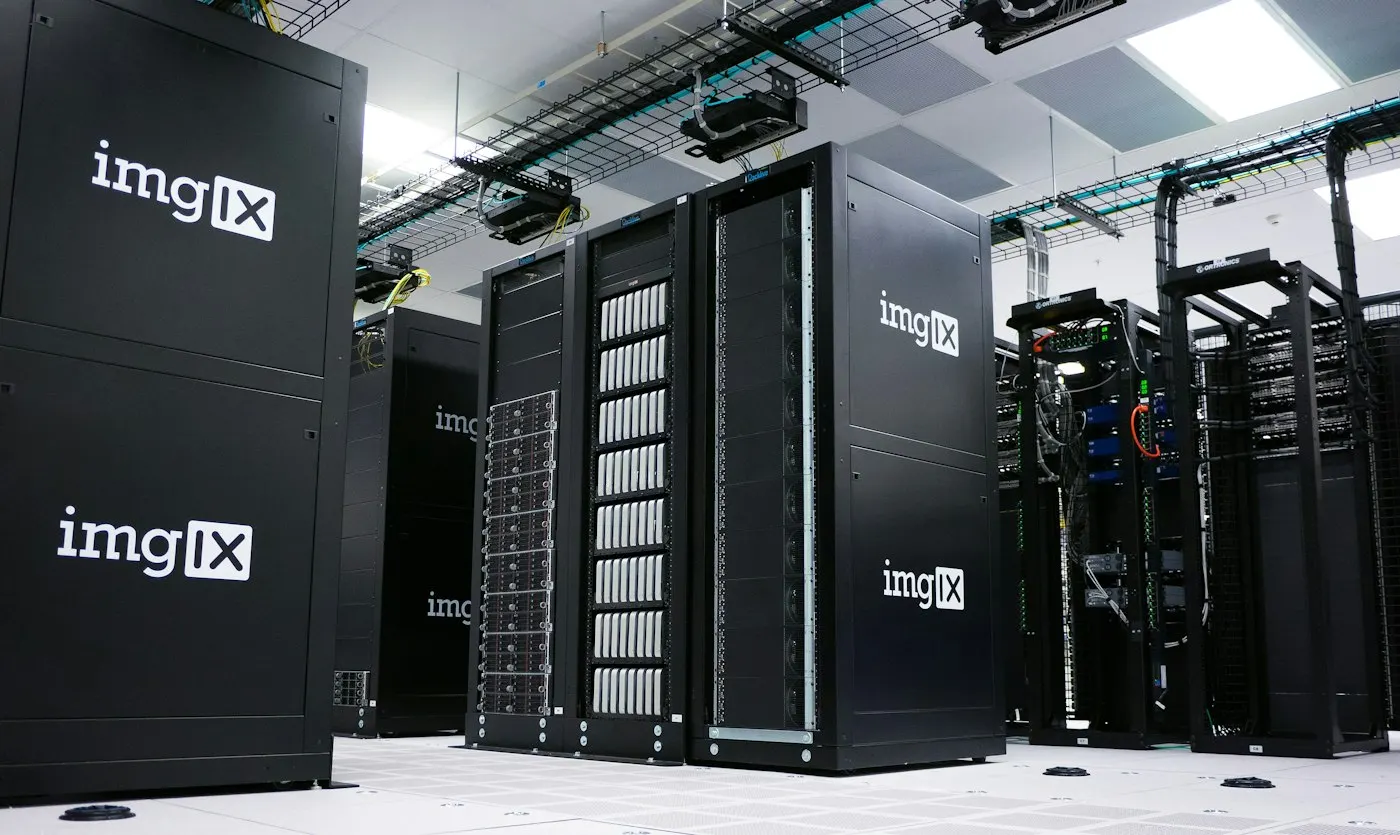
Coverage of the deal has blurred an important line: Marvell is not replacing Google as the maker of its Tensor Processing Unit. Google designs the core TPU compute die itself, working with Broadcom on its higher-performance variants and MediaTek on lower-cost "e" variants, with TSMC and Intel handling fabrication and packaging, according to reporting from The Next Web, Data Center Dynamics and The Decoder. Marvell's agreement instead covers chips that attach to that TPU, described in its own filing language as "custom silicon programs that attach to the TPU ecosystem": AI inference accelerators, storage controllers, network interface controllers, memory interface controllers and near-memory compute.
That is still a meaningful business. Networking and memory-interface silicon around a TPU cluster can represent a large share of a system's total chip cost, and Marvell already won Google's TPUv8e networking chip business before this expanded deal. But it is a different, lower position in the stack than Broadcom's. Readers comparing who makes Google's AI chips should treat Broadcom and Marvell as different layers, not interchangeable rivals for the same socket.
Advertisement
This Is the Second AI Chip Deal Built This Way, Not the First
Marvell-Google is not a one-off. In October 2025, AMD granted OpenAI a warrant for up to 160 million AMD shares, about a 10% stake, at a nominal exercise price of one cent, tied to OpenAI deploying six gigawatts of AMD Instinct GPUs over several years, with later tranches also requiring AMD's stock to hit $600, according to reporting from Anadolu Agency, AnySilicon and Saxo Bank. The mechanics differ (gigawatts deployed versus dollars of revenue booked) but the shape is the same: a vendor hands its largest AI customer a stake in its own stock, payable only as that customer keeps buying.
✦ Free Newsletter ✦
Never miss a story
Tools, tutorials and AI deep-dives - straight to your inbox, every week.

- Both deals use warrants, not outright stock grants, so the buyer only profits if the vendor's stock rises and the vendor keeps delivering.
- Both tie vesting to hard operational milestones (gigawatts deployed, dollars of revenue) rather than time, so the vendor cannot inflate progress with accounting alone.
- Both involve a buyer that could plausibly build the capability in-house, which is likely why the vendor was willing to hand over equity to keep the business.
Seen as a pattern, these deals suggest that in a market where a handful of hyperscalers control most AI infrastructure spending, those buyers now have enough leverage to get paid for their loyalty, not just discounts on price. It is the same leverage Amazon used in its own custom AI chip deal with Qualcomm, just expressed through equity instead of exclusivity.
| Deal | Announced | Supplier stake offered | Vesting trigger | Headline ceiling |
|---|---|---|---|---|
| AMD and OpenAI | October 2025 | Up to 160 million shares (about 10%) | Gigawatts of Instinct GPUs deployed plus AMD stock price | Six gigawatts deployed over several years |
| Marvell and Google | August 2026 | 58.97 million shares (about 7%) | $500 million of custom chip revenue per tranche | $120 billion in cumulative revenue by fiscal 2033 |
Who Should Actually Track This, and Who Can Skip It
This matters most to a specific set of readers. If you hold or follow semiconductor stocks, work in enterprise procurement for data center hardware, or write about AI infrastructure economics, the warrant structure is now a detail worth reading in every major chip supply announcement, not just a footnote. For that audience, a short decision rule helps cut through the headline numbers:
- If a chip deal's dollar figure is described as "lifetime," "cumulative," or tied to a future fiscal year, treat it as a ceiling or target, not current revenue.
- If the customer received a warrant or equity stake, check what triggers vesting (revenue, deployed capacity, stock price) before comparing it to a straightforward purchase order.
- If one customer accounts for a large share of a vendor's pipeline, the vendor's near-term stock performance is now partly a bet on that one customer's own capital spending plans holding steady.
If you are a general consumer trying to decide which phone, laptop or cloud subscription to buy, this specific deal has no direct bearing on near-term pricing or availability, and you can safely skip it. The practical effects, if any, show up years later in whether data center demand keeps squeezing consumer hardware supply, not in anything you would notice this quarter.
Advertisement
The Counterargument: Maybe This Just Means the Deal Is Safer
The strongest pushback to a "concentration risk" framing is that the warrant could just as easily be read as Google de-risking the relationship for Marvell, not exploiting it. Google isn't demanding a cash discount or an unconditional equity stake up front; it only gets paid if Marvell actually performs, tranche by tranche. In that light, the warrant aligns incentives rather than creating fragility: Google has a direct financial reason to keep placing orders, since its own payoff depends on Marvell's revenue climbing.
That argument has real merit, and it is likely part of why Marvell agreed to the structure. But it does not erase the underlying exposure. A warrant protects Google's upside if Marvell succeeds; it does nothing to guarantee Marvell a revenue floor if Google's AI infrastructure spending plans change, whether from a capex slowdown, a shift back toward Broadcom's higher-performance die, or further in-sourcing of the attach chips Marvell currently supplies. Unlike a multi-year take-or-pay supply contract, nothing in the warrant obligates Google to keep buying at a pace that reaches $120 billion. The instrument rewards Google for sticking around; it does not force it to.

What to Watch Next
The clearest signal to track is not Marvell's stock price but its data center revenue mix: how much of that 46% year-over-year growth is custom silicon, and how concentrated it is in Google versus Marvell's other hyperscaler customers. Marvell has said it wants to grow its share of a data center market it now estimates at $94 billion by 2028, targeting a move from 13% share in 2024 to 20% by 2028. Hitting that means winning sockets beyond Google, against margin pressure from Taiwanese ASIC design houses like Alchip and GUC, a dynamic flagged by analysts at Zacks.
Advertisement
For chip vendors whose valuations already ride heavily on one hyperscaler's continued spending, the Marvell-Google warrant is less a new risk than a more visible version of one that was already there. The honest reading of this week's Investor Day is not "Marvell just locked in $120 billion." It is that Marvell's biggest customer now has a financial reason to keep that door open, and an easy way to walk away if it decides not to.
Sources
- Futurum Group: Marvell Attaches Across Google's TPU Stack With a Warrant Vesting Toward $120B
- TIKR: Marvell's $120 Billion Google Deal Is Real
- 247wallst: Alphabet Could Own 7% of Marvell
- The Next Web: Google, Marvell, AI chips and the Broadcom TPU supply chain
- Nasdaq: MRVL's Custom Silicon Business Scales Up
- Anadolu Agency: OpenAI seeks to take 10% stake in AMD
- 247wallst: Marvell CEO pins custom silicon acceleration to second half of fiscal 2027
- Marvell Technology: Reports Second Quarter of Fiscal Year 2027 Financial Results

Advertisement