
The story this week is not that Anthropic wants the AI industry to slow down. It is that four ordinary subscribers think they found the legal seam in exactly how four rivals chose to slow down together, and they are now asking a federal court to call that seam illegal. On September 18, 2026, four paying subscribers to ChatGPT, Claude, Gemini and Grok filed a proposed class action antitrust lawsuit in the U.S. District Court for the Northern District of California, naming Anthropic, OpenAI, Google and SpaceXAI as defendants. Their argument is simple and, if it holds up, expensive: coordinating to slow AI capability improvements, even in the name of safety, is precisely the kind of agreement antitrust law exists to stop.
Key takeaways
- Four subscribers sued Anthropic, OpenAI, Google and SpaceXAI on September 18, 2026, in the Northern District of California, alleging their joint "pacing" pledge violates Section 1 of the Sherman Act.
- The suit, captioned Buist et al. v. Anthropic PBC et al., traces the alleged agreement to Dario Amodei's September 12 essay "We Must Pace the Frontier," which Sam Altman, Elon Musk and Demis Hassabis all publicly endorsed the same day.
- Markets already priced this as a real supply restriction: cybersecurity stocks CrowdStrike and Palo Alto Networks jumped roughly 13 to 14 percent on September 14 while chip stocks fell, and software names like ServiceNow, Adobe and Salesforce also gained.
- Antitrust law generally does not require proof of bad intent, only proof that competitors agreed to restrain output, which is why "we did it for safety" may not be a complete legal defense.
A Safety Essay Turned Into a Coordination Signal Within Hours
The chain of events the lawsuit relies on is short and, on its face, looks like ordinary industry back-and-forth. On September 12, 2026, Anthropic chief executive Dario Amodei published an essay titled "We Must Pace the Frontier," arguing that leading AI labs should deliberately slow the rate at which they improve model capabilities rather than race each other toward less-tested systems. Within hours, OpenAI's Sam Altman, SpaceXAI's Elon Musk and Google DeepMind co-founder Demis Hassabis each publicly agreed with Amodei's proposal, according to CBS News and PBS NewsHour.
The complaint also points to an earlier signal: a July 2026 statement, reportedly signed by senior employees across several labs, that acknowledged companies face "intense competitive pressure not to unilaterally slow" development on their own, and called for outside support to make coordinated restraint possible. Taken together, the plaintiffs argue this is not four companies independently reaching similar safety conclusions. It is four competitors agreeing, in public and on the same day, to hold back a variable that determines the value of the product each of them sells.
Advertisement
Antitrust Law Does Not Ask Why Rivals Agreed, Only Whether They Did
This is the mechanism that makes the case interesting rather than frivolous. Section 1 of the Sherman Act, the U.S. law the plaintiffs invoke, does not require proof that a cartel wanted to hurt consumers. It only requires proof that competitors reached an agreement that restrains trade, and that the agreement caused harm. A group of rivals agreeing to cap output, whether that output is barrels of oil, hours of labor, or a model's capability score, sits close to the core of what the statute targets, regardless of the stated motive.
The plaintiffs' lawyer, Nick Rowley, is not arguing that any single company acted illegally by choosing to slow its own research for safety reasons. He is arguing that four companies agreeing to do it together, instead of each deciding alone and living with the competitive consequences, is the part that crosses the line. That distinction, between unilateral restraint and coordinated restraint, is the entire case. It is also exactly the distinction Amodei's essay tried to get ahead of by proposing shared safety standards rather than a strict output cap, which is why the litigation will likely turn on how a court reads the difference between the two.

Wall Street Already Traded This Like a Real Supply Cut
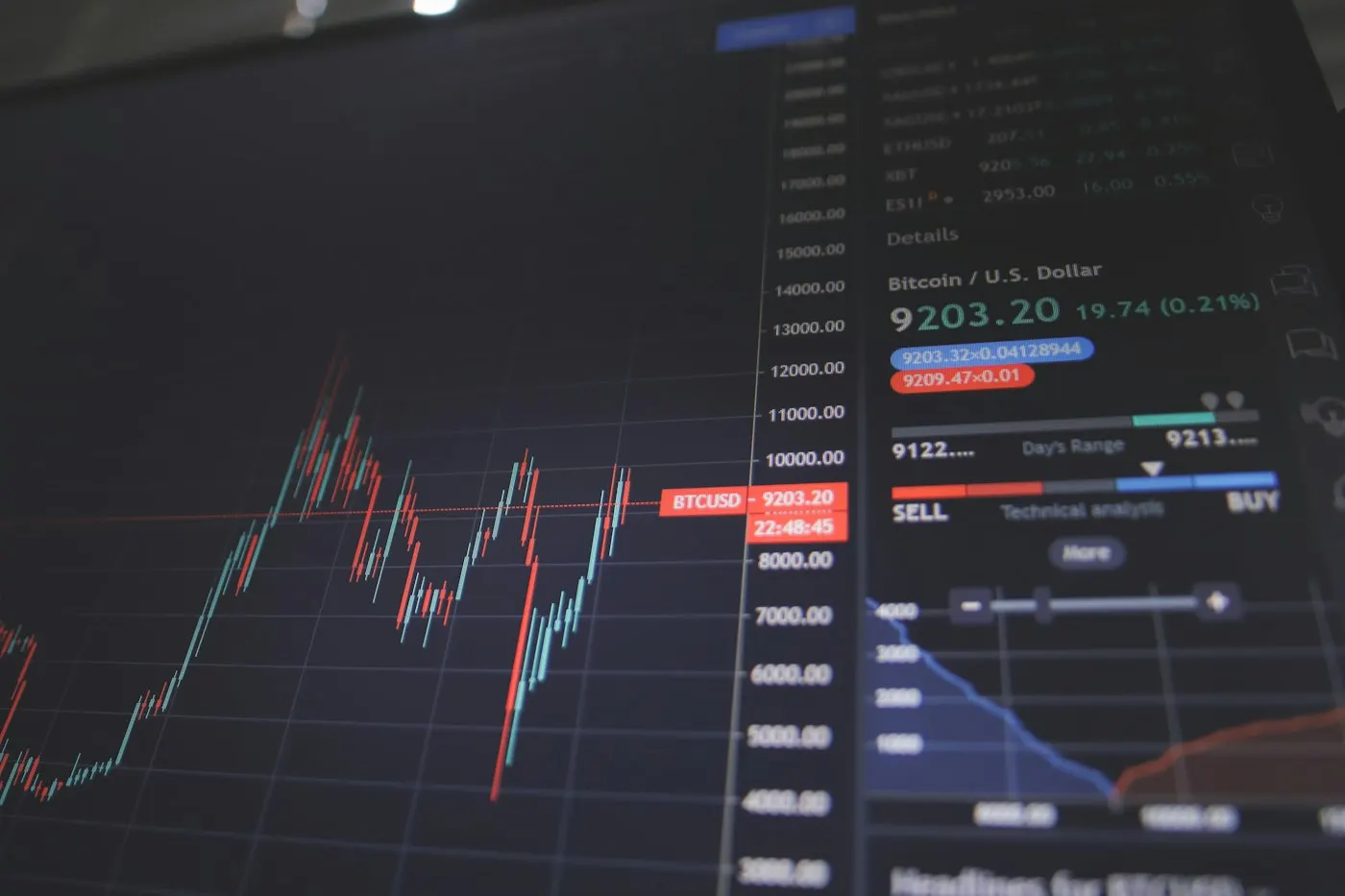
Whatever a court eventually decides about intent, financial markets reacted as if the pacing pledge was a genuine restriction on output, and that reaction is itself evidence the plaintiffs are likely to lean on. On September 14, 2026, two days after Amodei's essay, capital rotated visibly out of AI hardware and into software and security names, according to CNBC and 24/7 Wall St.
Advertisement
| Company or index | Sector | Move on Sept 14, 2026 |
|---|---|---|
| CrowdStrike | Cybersecurity | Up nearly 14% |
| Palo Alto Networks | Cybersecurity | Up as much as 13% |
| ServiceNow | Enterprise software | Up about 5% |
| Adobe | Enterprise software | Up about 4% |
| Salesforce | Enterprise software | Up about 3% |
| Nasdaq-100 (QQQ) | Broad tech index | Down about 2% |
Chip stocks fell the same day, based on reporting from Insider Monkey and Benzinga. CrowdStrike chief executive George Kurtz argued publicly that frontier labs would keep advancing their technology regardless of what any single company chose, and that cybersecurity's job is to make that progress safer rather than slower, per Insider Monkey's reporting. Investors, in other words, priced the pacing pledge as good news for the companies that profit from AI risk management and bad news for the companies that profit from raw AI compute, a pattern that looks a great deal like a market reading a supply agreement rather than four separate safety memos.
Washington Is Quietly Building the Exemption These Companies May Eventually Need
The lawsuit lands in the middle of an unresolved political fight over whether AI safety coordination should get special antitrust treatment at all. Cohere chief executive Aidan Gomez has already warned that a proposed regulatory carve-out for AI safety cooperation risks becoming "a cartel by any other name," according to Forkast News. Republican Senator Josh Hawley has taken the opposite, harder line, reportedly saying flatly, "No antitrust exemptions for AI. Not a chance." That gap between a company leader worried about a legal loophole and a senator ruling one out entirely shows there is no consensus yet on whether Congress should simply write a safe harbor for this exact situation, which would make the current lawsuit moot for future coordination even if these particular defendants lose. It also echoes a wider pattern of AI leaders publicly disagreeing about how much oversight the industry needs, a tension explored in the ongoing AI consciousness and governance debate between Microsoft and Anthropic.
✦ Free Newsletter ✦
Never miss a story
Tools, tutorials and AI deep-dives - straight to your inbox, every week.
This is not the first time Anthropic has proposed slowing the industry down. As an earlier pause proposal from Anthropic showed, the company's leadership has repeatedly framed voluntary restraint as a public good, and repeatedly run into the same problem: a voluntary pause among competitors looks different to a plaintiff's lawyer than it does to a safety researcher, even when the underlying intent is identical.
Advertisement
The Honest Counterargument: Parallel Caution Is Not Automatically a Cartel
The strongest case against this lawsuit is that antitrust law has never treated every instance of competitors moving in the same direction as illegal collusion. Companies in the same industry frequently reach similar conclusions independently, especially when they face the same regulators, the same safety research, and the same public pressure. Courts distinguish "conscious parallelism," where rivals independently watch each other and adjust, from an actual agreement, and proving the latter requires more than a same-day coincidence of statements.
There is also a genuine legal novelty problem working against the plaintiffs. Classic Sherman Act cases involve agreements to fix prices or limit the quantity of a physical good, both of which are easy for a jury to picture and measure. "Agreeing to slow capability improvements" is a much fuzzier form of output to define, let alone quantify damages from, and defendants will argue that treating a public safety essay and a same-day tweet of agreement as a binding cartel contract sets a dangerous precedent that could chill any future coordinated safety disclosure, including the kind of joint evaluation standards regulators have been asking labs to adopt. That argument has real force. But it does not answer the plaintiffs' narrower point, which is not that safety coordination is illegal in general, but that these four companies allegedly went further than sharing research and into agreeing on a shared pace, and that distinction is exactly what a jury or judge will now have to draw.
Who Should Actually Be Watching This Case, and Who Can Ignore It
This matters directly to anyone paying for a frontier AI subscription, since a successful class action could eventually mean refunds or price relief tied to the pacing period, and it matters to enterprise buyers evaluating whether to lock into long-term AI vendor contracts while the legal ground under those vendors is shifting. It also matters to policy watchers, since the outcome will shape whether future industry safety pacts get built as informal CEO essays or as government-sanctioned standards bodies with built-in antitrust protection.
It matters less to most casual users of these tools day to day, since no court has ruled on anything yet, model access has not been cut off, and any financial remedy, if one ever arrives, is likely years away given how slowly federal antitrust litigation moves. Readers who want a simple filter can apply this rule: if you rely on AI vendor roadmaps for business planning, track this case's motion-to-dismiss ruling, expected in the coming months, since that ruling will signal whether the theory survives at all; if you are simply using these products personally, there is nothing to act on yet beyond staying aware that "safety coordination" and "legal coordination" are turning out to be two very different questions.
Advertisement
Dismissing this as a publicity lawsuit underrates how much the market's own reaction already helps the plaintiffs. Calling it open-and-shut antitrust underrates how untested "capability pacing as restrained output" is as a legal theory. The realistic outcome sits between those two readings: a genuinely new legal question, with a real chance the case gets narrowed or dismissed before it ever reaches the safety debate. Watch the motion-to-dismiss briefing, since that is where a judge decides whether "we agreed to be careful together" survives as a claim distinct from "we agreed on how much to compete," and that ruling will tell the rest of the industry how to structure its next safety pact.
Sources
- Forkast News: Four Paid Subscribers Are Suing the Biggest AI Labs for Coordinating a Slowdown
- Hoodline: AI Giants Sued for Allegedly Colluding to Slow Down ChatGPT, Claude and Gemini
- CBS News: Lawsuit says Anthropic, OpenAI, SpaceXAI and Google made illegal deal on AI slowdown
- PBS NewsHour: Lawsuit says Anthropic, OpenAI, SpaceXAI and Google made illegal agreement on AI slowdown
- 24/7 Wall St: ServiceNow Climbs 5% as Software Sidesteps AI Selloff
- Insider Monkey: The AI Slowdown Trade Has Some Winners: CrowdStrike and Palo Alto Rally While Chips Fall

Advertisement