For most of the past two decades, Apple and Google have been engaged in one of the most commercially consequential rivalries in tech history. They compete for the same smartphone users. They compete for advertising dollars. They fight in courtrooms over app store policies, search defaults, and anticompetitive behaviour allegations. Their respective ecosystems are deliberately designed to keep users loyal and switching costs high.
And yet, quietly, at Apple Park in Cupertino on June 8, Craig Federighi stood on stage at WWDC 2026 and announced that the next generation of Apple Intelligence - Apple's core AI platform, the thing that powers Siri, runs across every iPhone, iPad, Mac, Apple Watch, and Vision Pro - was built in deep collaboration with Google, using technology from Google's Gemini family of models.
Apple's most strategically important software initiative is now running on its fiercest competitor's AI.
Advertisement
Take a moment with that.
What Was Actually Announced - In Plain Terms
The technical details matter here because the headlines have been slightly imprecise about what "collaboration" actually means.
Apple has not simply plugged Gemini into Siri the way it previously offered ChatGPT as an optional extension. What was revealed at WWDC is architecturally deeper than that. Apple and Google co-developed a new generation of Apple Foundation Models - the underlying AI models that form the base layer of everything Apple Intelligence does. These are not Google's models with an Apple skin on top. They are models built jointly, adapted specifically for Apple's platforms and Apple's privacy architecture, and deployed in two ways.
The first deployment is on-device. Apple's Foundation Models run locally on your iPhone, iPad, or Mac - processing requests without sending data anywhere, using the Neural Processing Units built into Apple Silicon and recent A-series chips.
The second is through Apple's Private Cloud Compute system - Apple's own cloud infrastructure designed so that when a task is too demanding for the device, it can be offloaded to servers while keeping user data protected and not stored externally.
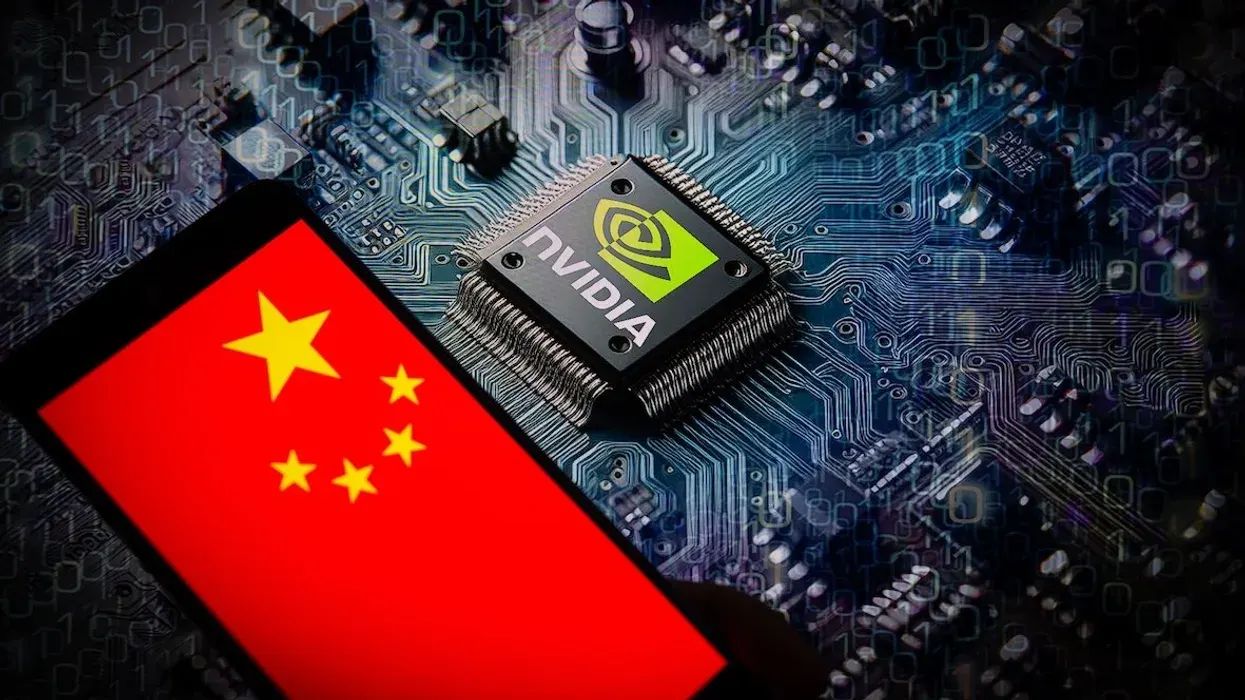
The most advanced tier - called AFM Cloud Pro - handles the most demanding reasoning tasks and runs at a quality Apple says is comparable to Gemini Frontier models. This tier runs on Nvidia GPUs in Google's cloud infrastructure.
So to be precise: Apple's most capable AI features are powered by models co-developed with Google, running on Nvidia hardware, hosted in Google's cloud, accessed through Apple's privacy layer. That is a significant amount of Google infrastructure sitting inside what Apple presents as a seamlessly Apple experience.
Separately, Apple also confirmed that Craig Federighi specifically stated the company uses "none of the Gemini models Google deploys" - meaning Apple is not licensing Gemini wholesale but using the underlying model technology to train and build its own adapted Foundation Models. The distinction is technically important and commercially significant.
Reports suggest Apple is paying Google approximately $1 billion annually for this arrangement. For reference, Apple already pays Google around $20 billion per year to be the default search engine in Safari. The AI deal adds another layer to a financial relationship between these two companies that rivals the GDP of some small nations.
Why Apple Needed to Do This
To understand why this deal happened, you need to understand the position Apple was in heading into WWDC 2026.
Apple's first Apple Intelligence rollout in 2024 was widely criticised. Features arrived late, performed below expectations, and in several cases - most notably the AI notification summaries that produced factually wrong news headlines - caused genuine public embarrassment. The Siri overhaul that was promised for 2025 slipped. Growth markets including China faced delays due to regulatory requirements. The EU's compliance complications meant key features were unavailable to hundreds of millions of iPhone users.
Meanwhile, Google's Gemini had matured into a genuinely capable frontier model. OpenAI's GPT series was becoming a consumer habit. Microsoft had embedded Copilot across its entire product line. The AI capability gap between Apple and its competitors was becoming visible to ordinary users in ways that previous technology gaps rarely were.
Apple faced a choice: spend several more years building foundation model capability from scratch and continue falling further behind, or find a faster path to state-of-the-art model quality that could be integrated with Apple's existing strengths - the device hardware, the privacy architecture, the ecosystem integration.
The Google collaboration is that faster path. Apple's genuine competitive advantages are the Neural Engine in Apple Silicon, the tight integration between software and hardware, the Private Cloud Compute privacy infrastructure, and the ecosystem depth that means Siri can pull context from your Mail, Calendar, Messages, Photos, and third-party apps simultaneously. None of that requires Apple to have trained the world's best foundation model from scratch.
What Apple needed was model quality it could build on top of. Google had it. The rest follows logically, even if the optics are surreal.
The Privacy Contradiction Worth Taking Seriously
Apple has built enormous brand equity on privacy. The "What happens on your iPhone stays on your iPhone" positioning, the App Tracking Transparency framework, the differential privacy initiatives, the Private Cloud Compute architecture - these are not just marketing. They reflect genuine engineering investment and a genuine strategic differentiation from Google, whose advertising business model is structurally dependent on user data.
So it is worth being honest about what the Google collaboration means for that positioning.
Apple's answer is that Private Cloud Compute ensures user data is not stored, logged, or accessible externally - not even to Apple, and not to Google. The architecture is designed so that requests can be processed in Apple's cloud environment without the underlying model provider having visibility into individual user queries.
This is a credible technical claim. Apple has published detailed documentation on how Private Cloud Compute works, and independent security researchers have examined the architecture. The privacy protections are real.
But there is a reasonable question that the architecture does not fully answer: how comfortable are Apple users with the fact that the AI powering their most personal assistant - the one with access to their emails, messages, calendar, photos, and app context - is built on technology developed by a company whose business model is advertising?
✦ Free Newsletter ✦
Never miss a story
Tools, tutorials and AI deep-dives - straight to your inbox, every week.
The technical protections may be sufficient. The trust question is different from the technical question, and Apple's marketing has been careful to blur the line between the two.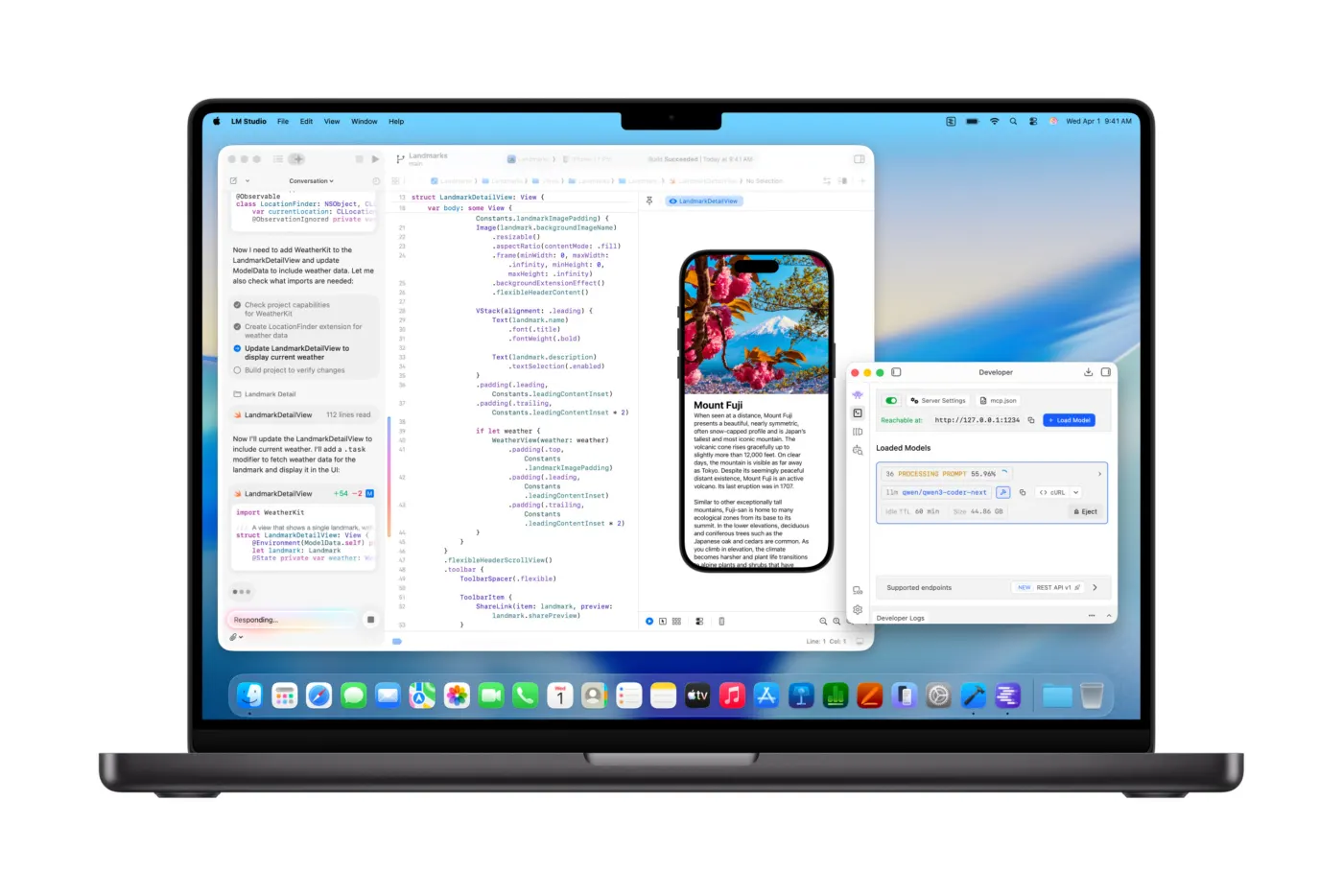
What This Means for the AI Landscape
Step back from the Apple-Google specifics and the broader implication becomes interesting.
The most privacy-focused major tech company on Earth has decided that building its own frontier AI model from scratch is not worth the time and cost relative to collaborating with the world's largest advertising company to use its model technology. That is a significant data point about how hard frontier model development actually is and how large the gap has become between the leading model providers and everyone else.
It is also a signal about where AI competition is actually happening in 2026. The race to train the world's best foundation model is increasingly a race between a small number of extraordinarily well-resourced organisations - Google DeepMind, Anthropic, OpenAI, Meta, and a handful of Chinese labs. Everyone else, including Apple, is making decisions about how to build on top of that tier rather than compete within it.
For Apple, the decision to collaborate rather than compete at the foundation model level reflects a strategic judgment: the value Apple adds is not in the model weights, it is in the integration, the hardware, the privacy architecture, and the ecosystem. Those are genuinely defensible advantages. Raw model capability, at frontier scale, is not something Apple can own through internal investment alone on any reasonable timeline.
This is the same conclusion that most enterprise software companies are quietly reaching. The foundation model layer is consolidating around a small number of providers. Everyone else is building the application layer on top of it.
The Regulatory Complication Nobody Is Fully Addressing
There is an awkward dimension to this story that deserves more attention than it has received.
Apple and Google are currently defendants in antitrust investigations across multiple jurisdictions. The US Department of Justice's antitrust case against Google includes Apple's search deal as a central exhibit - the argument being that paying Apple $20 billion annually to be the default search engine locks out competition in a way that violates antitrust law.
Now those same two companies have deepened their commercial relationship to include AI infrastructure, with Apple paying Google another $1 billion annually. The new deal makes Apple more financially dependent on Google at exactly the moment regulators are arguing the existing financial dependency is already anticompetitive.
The EU, which is already forcing Meta to open its WhatsApp API to competing AI assistants, will be watching this arrangement closely. The argument that the Apple-Google AI deal reduces competition in the AI assistant market - by ensuring that the default AI on over a billion devices is powered by Google's technology - is not a difficult argument to construct.
Whether regulators choose to act on it is a different question. But the irony of a company that markets itself on independence and privacy becoming more structurally dependent on its most significant competitor is not lost on everyone watching.
What Actually Changes for iPhone Users
After all of that context - what does this mean for someone who just uses an iPhone?
Practically: Siri is significantly better. The rebuilt Siri AI is more conversational, understands context across apps, can pull information from your emails to answer questions mid-call, can identify things in photos and Instagram posts and provide relevant actions, and handles complex multi-step requests in ways the previous Siri could not.
The orchestrator system - which understands which app you are using, what task you are working on, and routes requests to the right AI tool automatically - is the feature that will have the most impact on daily use over time. AI that understands context without being told is more useful than AI you have to set up and explain every time.
Visual Intelligence, which lets Siri understand and act on visual input from your camera or screenshots, is the other significant capability addition. Pointing your phone at something and having Siri understand what it is and what you might want to do with that information is a meaningful step beyond what any previous iPhone version could do.
iOS 27 also extends performance improvements further back through the device range than previous updates, supporting iPhones as old as the iPhone 11. That is a genuine commitment to longevity that matters for users who are not on the latest hardware.
The features missing from this upgrade are also worth noting. Siri AI launches in English only initially. EU users cannot access it at launch due to regulatory compliance issues - a limitation that Morgan Stanley estimates affects roughly 35% of iPhone shipments when combined with the China delay. If you are reading this in Europe, the rebuilt Siri is not coming to your device any time soon, regardless of which iPhone you have.
The Farewell That Got Lost in the Noise
There is one more thing worth noting about WWDC 2026 that the AI coverage has somewhat drowned out.
Tim Cook ended his final WWDC keynote with a personal message to the developers who have built their careers and businesses on Apple's platforms. "Over the years, you have helped people connect, create, learn, and experience the world in extraordinary new ways," he said - and then, by all accounts, wiped a tear.
Cook has led Apple for fifteen years, through the Apple Watch launch, AirPods, Apple Silicon, the services transformation, and now the AI pivot that will define his successor's first years. His farewell was gracious and genuinely moving for people who have followed the company closely.
John Ternus, incoming CEO from September, inherits an Apple that is more capable in AI than it was twelve months ago, more deeply intertwined with Google than it has ever been, and facing regulatory complexity in its two largest markets outside the US.
The Apple-Google AI collaboration is the most strategically consequential thing announced at WWDC 2026. It is also, depending on your perspective, either a pragmatic acknowledgment of competitive reality or a quiet concession that Apple's AI ambitions have limits it has not yet figured out how to overcome.
Both things can be true simultaneously. In tech, they usually are.

Advertisement