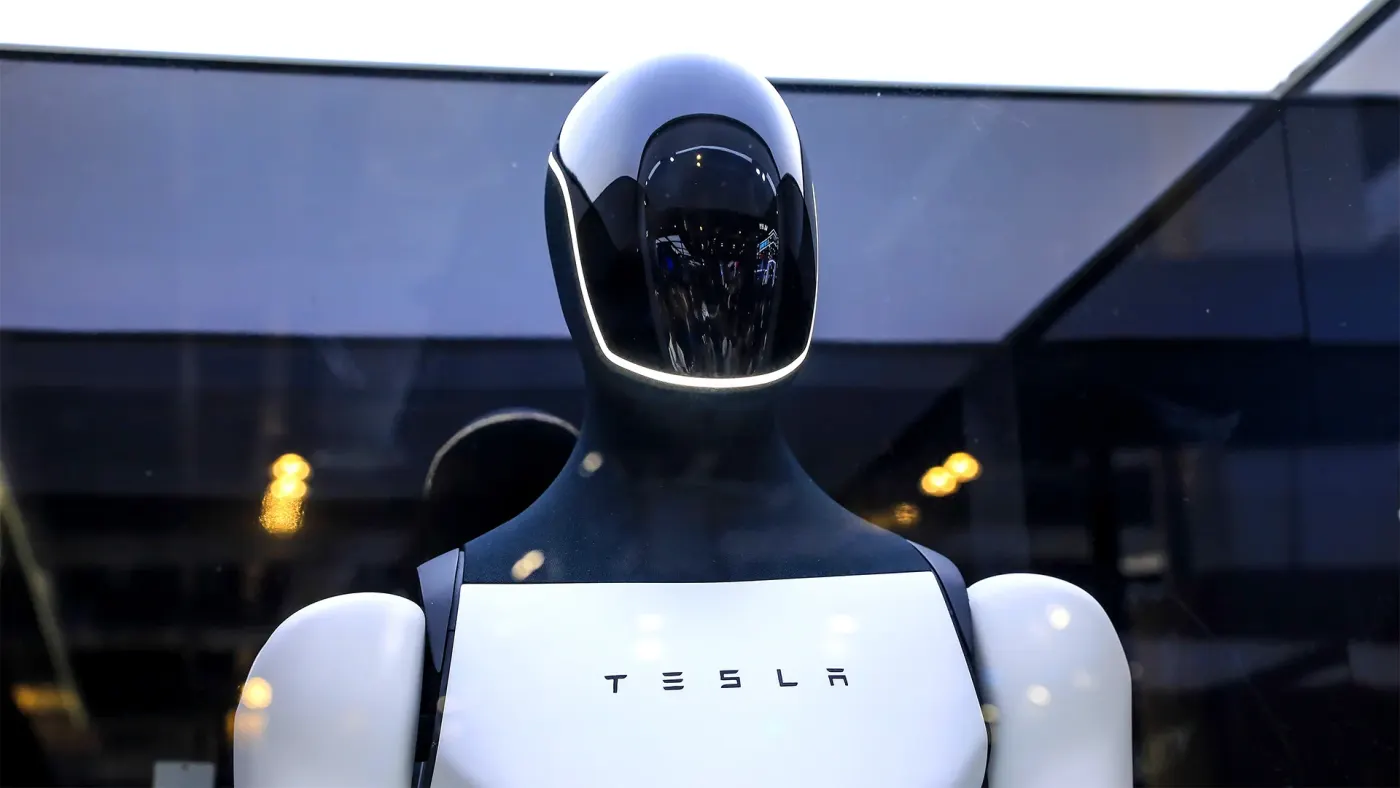
For most of the past decade, humanoid robots existed in one of two forms: viral YouTube videos of Boston Dynamics machines doing backflips, and Elon Musk holding up a vague concept render and promising a $20,000 home helper by "next year."
Neither was quite real. The backflips were real. The commercial viability was not.
2026 is different. Not because the technology suddenly became perfect - it didn't - but because the threshold that actually matters in industry has quietly been crossed. The relevant question was never whether a robot could walk or look impressive on a demo stage. It was whether a robot could do a specific, well-defined physical task reliably enough, cheaply enough, and safely enough that a real company would pay real money to deploy it in a real facility.
Advertisement
That question now has real answers. And the answers are changing faster than most people are tracking.
What Is Actually Deployed Right Now
Let's start with the concrete, because the hype in this space tends to outrun the reality and the honest picture is actually impressive enough without embellishment.
Figure AI's robots have contributed to the production of over 30,000 BMW X3 vehicles at the Spartanburg, South Carolina plant - handling more than 90,000 sheet metal parts over roughly 1,250 hours of active deployment. This is not a pilot in the corner of a factory floor with someone hovering over an emergency stop button. This is an integrated production role in one of the world's most demanding manufacturing environments, with documented output metrics that BMW has signed off on. The pilot has since expanded to BMW's Leipzig facility in Germany.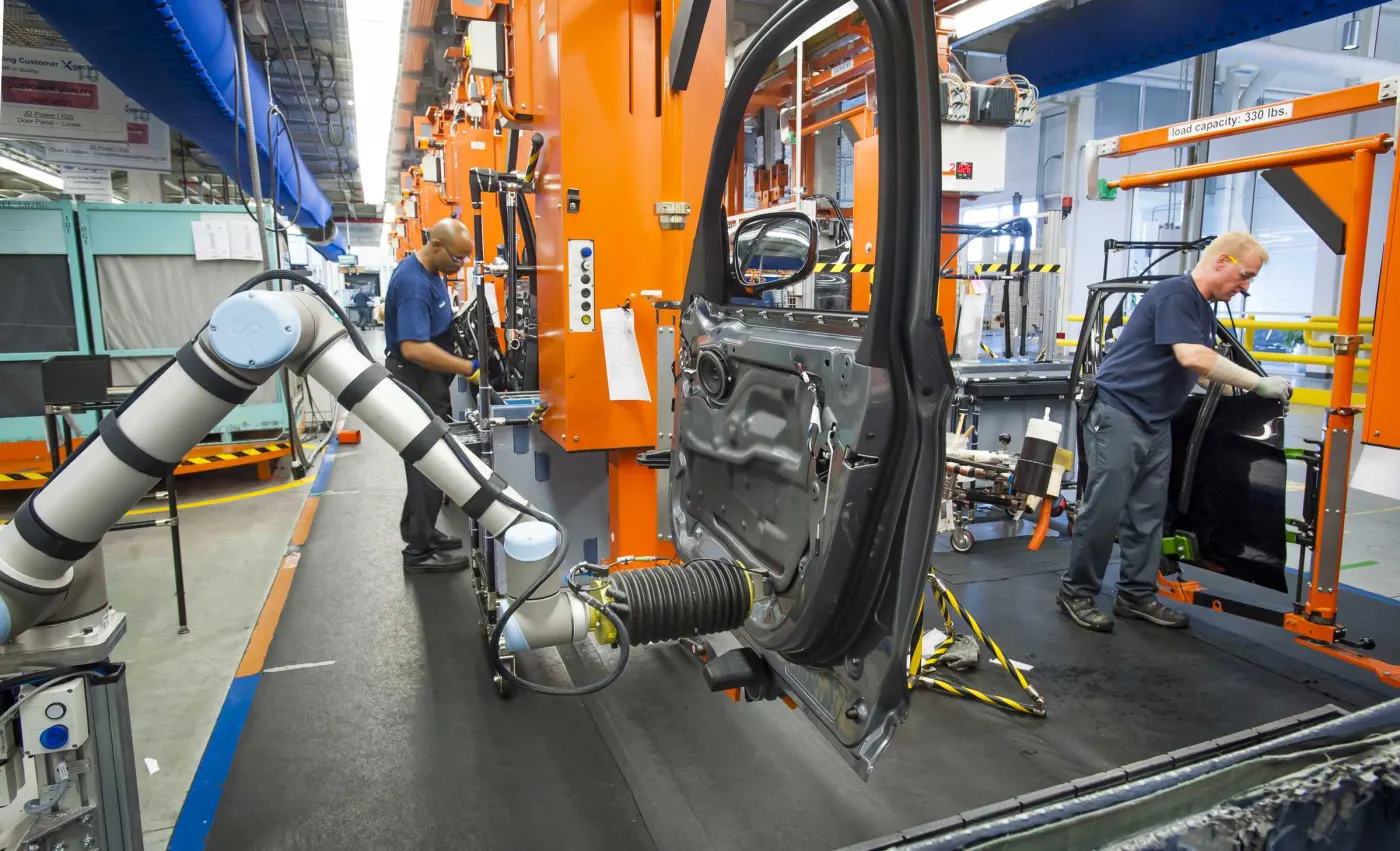
Amazon, through its majority stake in Agility Robotics, has deployed Digit - a bipedal humanoid designed specifically for tote handling - in active fulfilment centre operations. At a GXO-operated Spanx facility in Georgia, Digit units are moving totes between autonomous mobile robots and conveyor systems without operator intervention. In March 2026, Amazon also acquired Fauna Robotics, a 50-person New York startup, absorbing its team into Amazon's Personal Robotics Group. The strategy is explicit and two-pronged: own the industrial robot fleet, and build the home robot platform.
Japan Airlines partnered with GMO AI & Robotics in May 2026 to deploy humanoid robots at airports for baggage loading, container transport, and cabin cleaning. The units are Unitree Robotics-based platforms at approximately $15,400 per unit - a price point that signals something significant about where the market is heading. The humanoid form factor was deliberately chosen for airports for a reason worth noting: airports were built for people, not wheeled machines. A humanoid fits the infrastructure that already exists. It can navigate the same corridors, use the same equipment, and work in the same spaces as the humans it is working alongside.
Boston Dynamics' electric Atlas - the commercial successor to the hydraulic original that was retired in 2024 - has begun initial deployments in June 2026, with its entire 2026 production allocation committed to Hyundai manufacturing facilities and Google DeepMind. Figure 03, the successor to the robot that ran the BMW pilot, is now being produced at BotQ factory at 1 robot per hour - a production rate that would have seemed implausible 18 months ago.
In China, AgiBot produced its 10,000th humanoid in late March 2026, scaling from 1,000 units in all of 2025 to 10,000 within a few months of 2026. Unitree has shipped over 5,500 humanoids already and is targeting significantly higher volumes by year end, with the G1 model available commercially at $16,000 - the lowest price point for a capable humanoid robot anywhere in the world.
Why Factories First - And What That Tells You About What Comes Next
The concentration of early deployment in manufacturing and logistics is not accidental and it is worth understanding why, because it tells you a lot about the trajectory.
Factories are the ideal first environment for humanoid robots for three specific reasons that have nothing to do with the robots being limited.
First, the tasks are defined. A robot assigned to move totes between two points in a fulfilment centre has a clear, measurable job. Success and failure are unambiguous. The variation in inputs - the totes, the conveyor, the environment - is bounded. This is the opposite of a home environment, where every kitchen is different, every request is slightly different, and failure modes range from mildly inconvenient to actually dangerous.
Advertisement
Second, the economics are compelling and calculable. A factory manager can look at the cost of labour, the cost of robot deployment, the error rate, the uptime, and produce a return on investment figure. That calculation is possible in a way that "would this be useful in someone's house" simply is not yet. When a Figure robot costs $150,000 and contributes to 30,000 vehicles over a year of deployment, the maths is doable. When a home robot costs $30,000 and its job is "help around the house," the maths is much harder.
Third, the safety environment is controllable. ISO 25785-1 - the first international safety standard specifically for humanoid robots in workplaces, published in draft form in May 2025 - was written for industrial settings where speed and force limiting, emergency stops, and human awareness systems can be specified and tested. Early safety records from Figure at BMW and Digit at Amazon have been positive, though the sample size remains small.
The factory-first strategy is not a limitation of the technology. It is a deliberate sequencing by every serious company in this space - build the operational track record, the safety data, and the cost reduction curves in controlled industrial environments first, then expand the scope as each of those dimensions improves.
The Price Curve Is the Real Story
Here is the number that matters most and gets the least attention in humanoid robot coverage: between 2022 and 2024, unit costs for capable humanoid robots dropped by at least 40%.
That rate of cost reduction, if it continues, is the thing that changes everything - not any individual robot's capability improvement, but the economics becoming accessible to a wider range of buyers.
The current price range tells the story of where the market sits. The Unitree G1 is commercially available at $16,000. The Figure 03 and Boston Dynamics Atlas sit in the $150,000 plus range. Tesla's Optimus, when it becomes available for third-party purchase - expected in 2027 - is targeting $20,000 to $30,000 at production scale.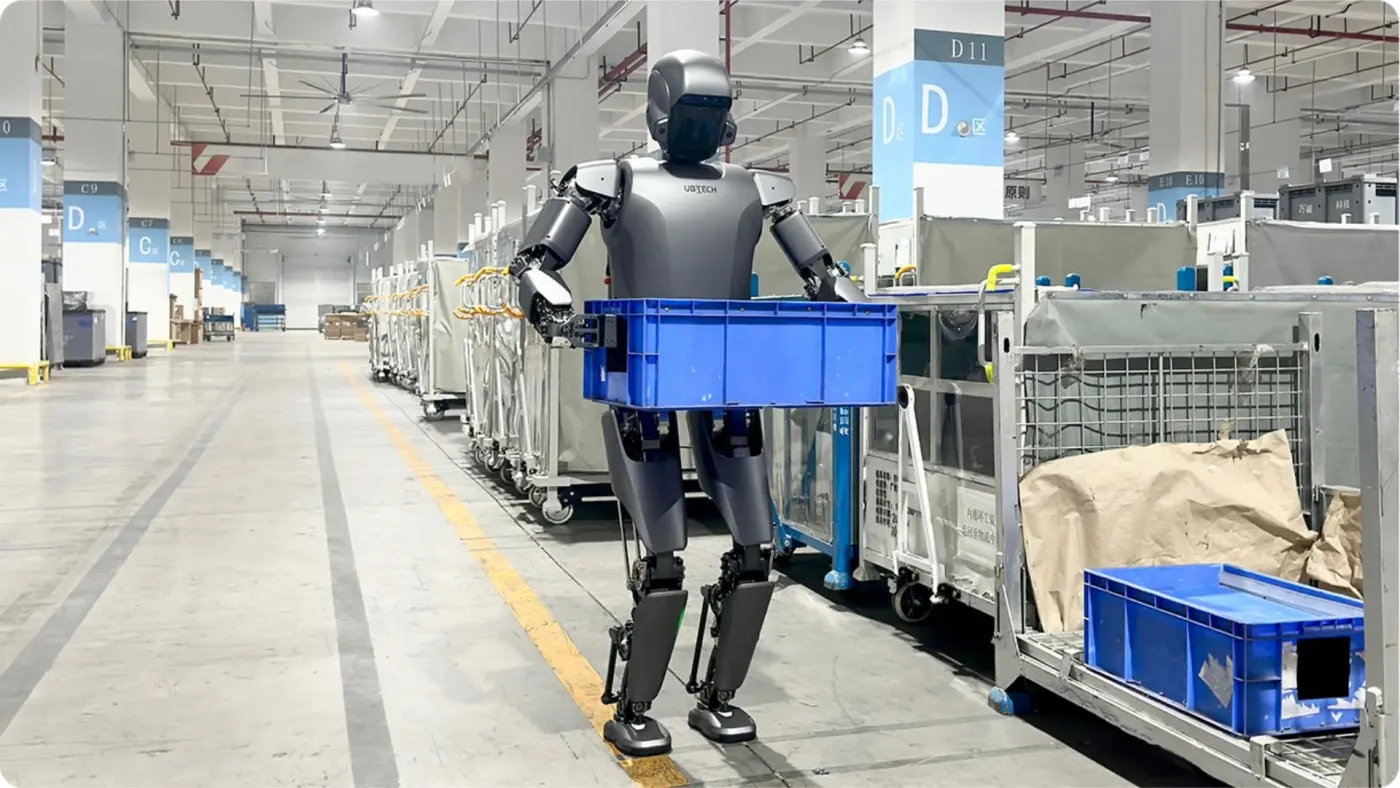
That Tesla price target is the one that, if achieved, changes the addressable market completely. At $150,000, humanoid robots are realistic only for large manufacturers with specific high-value use cases and the operational capability to integrate and maintain them. At $20,000 to $30,000, the calculation opens up for medium-sized manufacturers, logistics operators, retail chains, and eventually consumers.
The challenge is that Tesla's $20,000 to $30,000 target assumes significant manufacturing volume that does not exist yet. Optimus Gen 3 is entering limited production at the Fremont facility this summer for internal Tesla deployment. Third-party commercial availability is 2027 at the earliest, and the volume required for the target price point is further out than that.
✦ Free Newsletter ✦
Never miss a story
Tools, tutorials and AI deep-dives - straight to your inbox, every week.
But the trajectory is clear. The question is not whether humanoid robots will be affordable at scale - it is when.
The Honest Limits - What These Robots Cannot Do Yet
Here is where most coverage of this topic fails readers, because the optimistic framing tends to dominate and the genuine limitations get buried.
Humanoid robots in 2026 are good at structured, repetitive physical tasks in environments that have been set up for them. They are not good at genuinely unstructured environments. The gap between "a robot that can pick up an egg on camera" and "a robot you would trust to unload a dishwasher without supervision" is wider than any press release suggests, and closing it is measured in years, not months.
Dexterity remains the hardest unsolved problem. Human hands are extraordinarily capable instruments with 27 degrees of freedom and tactile sensitivity that current robots cannot replicate. Tasks that require fine manipulation - assembly of small components, handling of fragile or irregularly shaped objects, tasks that require feeling as much as seeing - remain significantly harder than the tasks currently being deployed.
Advertisement
Adaptability to novel situations is the other hard limit. A robot trained to move totes in a specific fulfilment centre layout will struggle if that layout changes in unexpected ways. The generalisation problem - teaching robots to handle situations they have not specifically been trained on - is active research territory. Current deployments work because the environments are controlled and the tasks are bounded. The further you get from controlled environments, the harder the problem becomes.
The honest forecast for end of 2026: thousands of humanoid robots operating in controlled industrial settings globally, predominantly in Chinese factories and warehouses, with smaller deployments at Hyundai, BMW, Tesla, Amazon, and JAL. They will be doing structured, repetitive tasks. They will require significant human oversight. They will not be folding laundry, serving coffee, or doing anything that would surprise a careful observer about what robots can currently do.
That is impressive progress from where this industry was three years ago. It is also a long way from the general-purpose robot that moves through the world the way a person does.
The Companies to Watch
A brief rundown of where the key players actually stand, without the marketing layer:
Figure AI is arguably the most credible commercial story right now, with documented BMW production metrics that no other company can match. Figure 03 is ramping at 1 robot per hour. The expansion to Leipzig suggests BMW is satisfied enough to extend the relationship. Funding of $675 million from Microsoft, Nvidia, OpenAI, and Jeff Bezos gives it the runway to execute.
Boston Dynamics has the most physically capable robot - Atlas's dynamic movement in challenging conditions has no peer. The conservative approach means commercial scale will come later than the startups, but reliability at launch is likely to be higher. All 2026 production is committed; 2027 will be the first real signal of commercial traction.
Tesla Optimus is the wildcard with the most transformative potential if the price target is achieved. Internal deployment at Fremont is the proving ground. Elon Musk's credibility on timelines is not strong, but the manufacturing capability and AI training infrastructure Tesla brings to the problem are genuine advantages.
Unitree is the Chinese company most Western coverage underestimates. At $16,000 per unit, commercially available now, already shipping thousands of units, it is operating at a price point and volume that no Western competitor has approached. The capabilities are more limited, but for tasks where those capabilities are sufficient, the economics are compelling.
AgiBot's scaling from 1,000 to 10,000 units in under a year is the production ramp story of the sector in 2026. Chinese domestic demand is absorbing this volume.
What This Means If You Are Not a Manufacturer
If you work in manufacturing, logistics, or any industry involving repetitive physical labour at scale, the practical question is not whether humanoid robots will be relevant to your operation. It is when and at what cost.
The companies getting ahead of this are not those rushing to deploy immediately - the technology and the economics do not justify that for most organisations outside automotive and large-scale logistics. They are the ones building institutional knowledge now: understanding which tasks in their operations map to what robots can currently do, tracking the cost curves, and building relationships with vendors while the field is still early enough that pilot terms are negotiable.
If you work in a knowledge-based role and are wondering when this affects you - the honest answer is that the near-term impact is indirect. Humanoid robots making physical labour significantly cheaper changes the cost structure of manufacturing, which changes supply chains, which eventually changes the price of goods and the geography of production. The direct displacement of knowledge workers by humanoid robots is further away and requires a different conversation about AI agents, not physical robots.
Advertisement
For everyone else - the home robot timeline is real but further out than the press coverage implies. The $20,000 home assistant that can genuinely help with household tasks is a 2028 to 2030 story at the optimistic end, and probably later than that for anything you would actually trust with your house unsupervised.
The robots are real. The deployments are real. The progress is real and faster than most people expected three years ago.
The gap between "impressive and commercially useful in specific industrial contexts" and "generally capable in unstructured environments" is also real, and it is the thing worth keeping in mind every time you read a headline that makes humanoid robots sound like a problem that is already solved.
It is not solved. It is being solved - and that is actually the more interesting story.

Advertisement