The 2026 FIFA World Cup kicks off today at Estadio Azteca in Mexico City, where Mexico faces South Africa in front of 87,523 people. Somewhere in that crowd and across billions of connected screens globally, Google is running what amounts to the largest real-world demonstration of its AI capabilities in the company's history.
This is not an accident. Google has been assembling this moment quietly since March - signing national team sponsorship deals, embedding Gemini branding on Argentina's training kit, securing YouTube as an official FIFA media partner, and rolling out a coordinated wave of AI features across Search, Maps, Waze, and the Gemini app timed precisely to today's opening whistle.
The features themselves are genuinely interesting. But the strategy behind them is the more important story - and it says something significant about where AI is actually heading in everyday consumer life.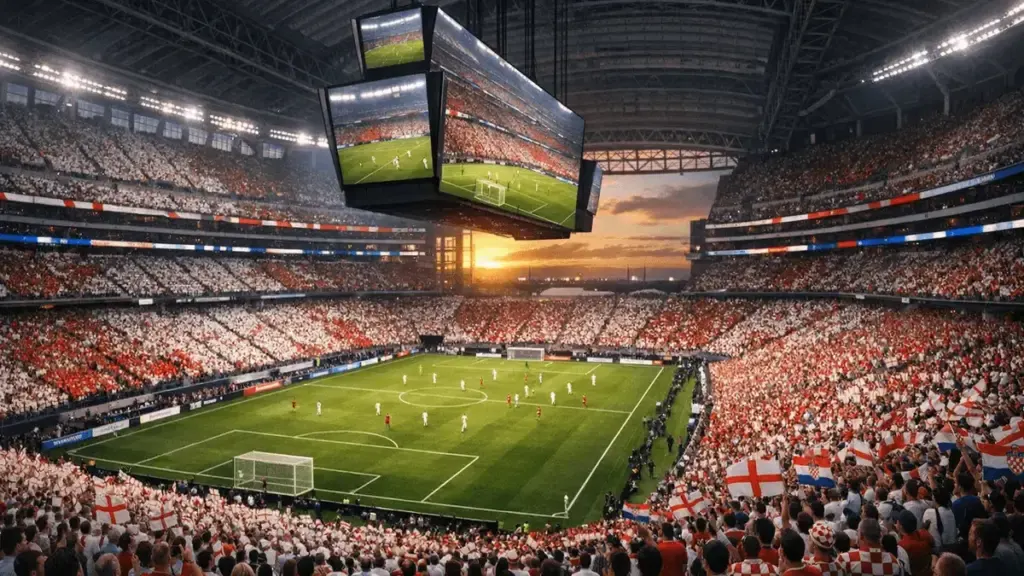
Advertisement
What Google Actually Deployed - In Plain Terms
The feature list Google announced on June 8 is broader than most coverage has captured, so it is worth going through it properly.
The most immediately visible change is to Google Search's sports interface. Live score animations now trigger in real time during matches - goals, red cards, and wins produce quick visual effects directly in the search results without requiring a page reload. A new FIFA-branded match bar appears above individual game results, showing upcoming fixtures and kick-off times across the tournament simultaneously. The TV and streaming card now shows broadcaster icons rather than just text links, which matters in a tournament split across multiple networks.
None of that is revolutionary. Google has done tournament-specific Search features before. The 2022 Qatar World Cup had live scores. What is different in 2026 is what sits underneath the surface results.
Gemini 3 Pro is now powering interactive tactical breakdowns in response to soccer questions. Ask something like "explain what a high press means in football" or "how does a 4-3-3 formation work" and instead of a text paragraph you get an AI-generated interactive visual - a diagram of the pitch with positions, movement arrows, and contextual explanation built on demand for your specific query. The colour scheme and layout are generated fresh each time rather than pulled from a template, which means the output varies - it is not always perfect, and some early tests produced colour schemes that were slightly confusing - but the concept is a meaningful step beyond text-only answers for a genuinely visual subject.
For Android and iPhone users, live scores can now be pinned to the lock screen throughout the tournament - a feature that sounds minor until you consider how often people want score updates without unlocking their phone during a match. The implementation is clean and does not require a separate app.
Waze has added in-car live score updates that appear during vehicle stops, which covers the "stuck in traffic, need to know the score" use case that anyone who has ever driven near a stadium will recognise immediately.
Google Maps has updated Street View imagery around all 16 host stadiums across the US, Canada, and Mexico, and added routing optimisation specifically for transit around match days. Practically: if you are trying to navigate to or from a World Cup venue, Maps should handle the crowd routing better than it would for a normal event.
The Gemini app has added what Google calls Scheduled Actions - an automated morning briefing that delivers a personalised World Cup summary at a time you set, focused on whichever teams you follow, without you having to ask for it. This is a small but genuine example of agentic AI in consumer use - the app doing something useful on your behalf before you have asked.
Finally, a new Images tab in Gemini lets users upload a photo to place themselves inside custom tournament templates - AI-generated fan content that puts your face in team photography scenes. Lightweight, fun, and the kind of feature that generates enormous social sharing without requiring much from the user.
Advertisement
The Deeper Play - Why Google Chose Football
It is easy to read the World Cup features as a nice seasonal update. They are more than that.
The 2026 World Cup is the largest in history - 48 teams, 104 matches, 16 host cities across three countries. FIFA projects over 10 million visitors to North America for the tournament, with global television audiences that will exceed previous records. This is not a niche sporting event. It is one of the largest shared cultural moments the world produces, and it runs for five weeks.
For Google, that duration matters as much as the audience size. The Gemini-powered tactical diagrams, the Scheduled Actions briefings, the interactive match hub - these are not features Google built specifically for football. They are features that exist in other contexts and are being introduced to a mass audience through a football frame.
The generative UI in Search - the interactive AI-generated visuals that respond to tactical questions - is rolling out free to all users this summer. The World Cup provides the practical introduction. Hundreds of millions of people who have never thought about what generative AI search looks like will encounter it for the first time while asking about football formations. That is an enormously efficient onboarding mechanism for a capability Google wants the world to adopt.
The Scheduled Actions feature in Gemini is an early consumer implementation of agentic AI - the "AI that acts on your behalf rather than waiting to be asked" paradigm that Microsoft also pushed at Build 2026 this month. Running it through a football briefing during the World Cup normalises the concept for a mainstream audience before Google deploys it in higher-stakes contexts like calendar management, email summarisation, and task automation.
This is how Google introduces new AI behaviours at scale - not through product launches aimed at early adopters, but through culturally significant events that bring casual users inside the experience naturally.
✦ Free Newsletter ✦
Never miss a story
Tools, tutorials and AI deep-dives - straight to your inbox, every week.
The Part Nobody Is Covering Enough - Biometrics at the Stadium
Here is the World Cup AI story that is getting far less attention than the consumer features, and it deserves more.
Across all 16 host cities, the 2026 tournament is deploying a biometric identity layer that makes your face your ticket. Instead of scanning a barcode or showing a phone, fans walk through gates that match their face to the ticket purchase. It is faster, it is harder to counterfeit, and it works at the scale the World Cup requires.
The technology itself is operationally sound. The concern - and it is a legitimate one - is what happens to that biometric data after the match. More than 120 civil society organisations, including the ACLU and Amnesty International, have issued a travel advisory for the tournament specifically warning about facial recognition, device searches at entry points, social media screening, and racial profiling risks. They have advised some travellers to remove face-unlock from their phones before flying to host cities.
Advertisement
That is a significant warning from a significant coalition and it is worth taking seriously regardless of how you feel about the underlying technology. Biometric data collected at sports events does not stay at sports events - it enters databases, it gets retained under various legal frameworks, and the regulatory environment around what law enforcement can access from event infrastructure is not airtight.
FIFA's body-worn referee cameras are now written into the Laws of the Game - every match will have referee footage processed by AI to reduce motion blur and feed selected moments to broadcasters and stadium screens. That footage captures crowds, not just the pitch. The privacy implications of large-scale AI-processed video at events with 10 million attendees are real and have not been fully publicly debated.
This does not mean the technology should not exist. It means it should be discussed openly alongside the consumer features getting the celebratory headlines.
What Google's Team Partnerships Actually Mean
The sponsorship deals deserve their own section because they go beyond logo placement.
Argentina - the defending champion, the most watched team in the tournament - has Gemini branding on its training kit. That is visibility in every pre-match warm-up broadcast globally. But Google's involvement with Argentina is not purely visual. Gemini is described as supporting the team's preparation, which in practice means AI-assisted analysis, scouting, and potentially fitness monitoring feeding into Lionel Scaloni's selection decisions.
France's squad is using Gemini for team communications and has Pixel as its official smartphone. The "Shot on Pixel" social content programme means that footage appearing on France Football's official channels is being captured on hardware Google makes, showcasing AI photography features to an audience that follows one of the world's most commercially significant national teams.
Google also partnered with the US, Morocco, Turkey, and Iraq national teams. The breadth of the portfolio suggests Google is not just buying visibility with one high-profile team - it is trying to ensure Gemini branding appears regardless of which teams make deep runs in the tournament. Smart hedging for a five-week competition with unpredictable outcomes.
The significance of AI appearing on the training kit of the world's most famous football team is not about marketing reach alone. It is about normalisation. When billions of people see "Gemini" on Argentina's training ground footage and simultaneously experience Gemini features in their phone, the connection between the AI product and positive associations - sport, excellence, global community - compounds in ways that traditional advertising cannot manufacture.
The Bigger Picture - AI Just Got Its Biggest Consumer Stage
There is a useful question to ask whenever a major tech company makes a significant push into a cultural event: what is the five-year version of this?
In 2026, Gemini is helping you find match scores and understand tactical diagrams. That is the entry point. The five-year version is an AI that knows which teams you follow, tracks your emotional investment across competitions, surfaces relevant context before matches, connects your calendar to your interests, and integrates sport into a broader personal assistant layer that spans your whole life.
Advertisement
The football use case is easy and low-stakes. Nobody is harmed if Gemini gets a formation diagram slightly wrong. But the habits being built - the willingness to ask Gemini a question and trust the answer, the comfort with agentic briefings running in the background, the sense that Google's AI understands what you care about - those habits transfer to contexts that are not low-stakes.
Health. Finance. Travel. Professional decisions. The companies that normalise AI assistance through enjoyable, low-consequence consumer experiences are the companies that will be trusted with the higher-consequence ones later.
Google knows this. The World Cup is not a football story. It is a trust-building exercise at global scale, with 104 matches and five weeks to practice.
The opening whistle has already sounded.

Advertisement