
There's a version of this story that gets written as a product announcement recap. Features listed, bullet points, a few quotes, done. You've read it a hundred times.
This isn't that version.
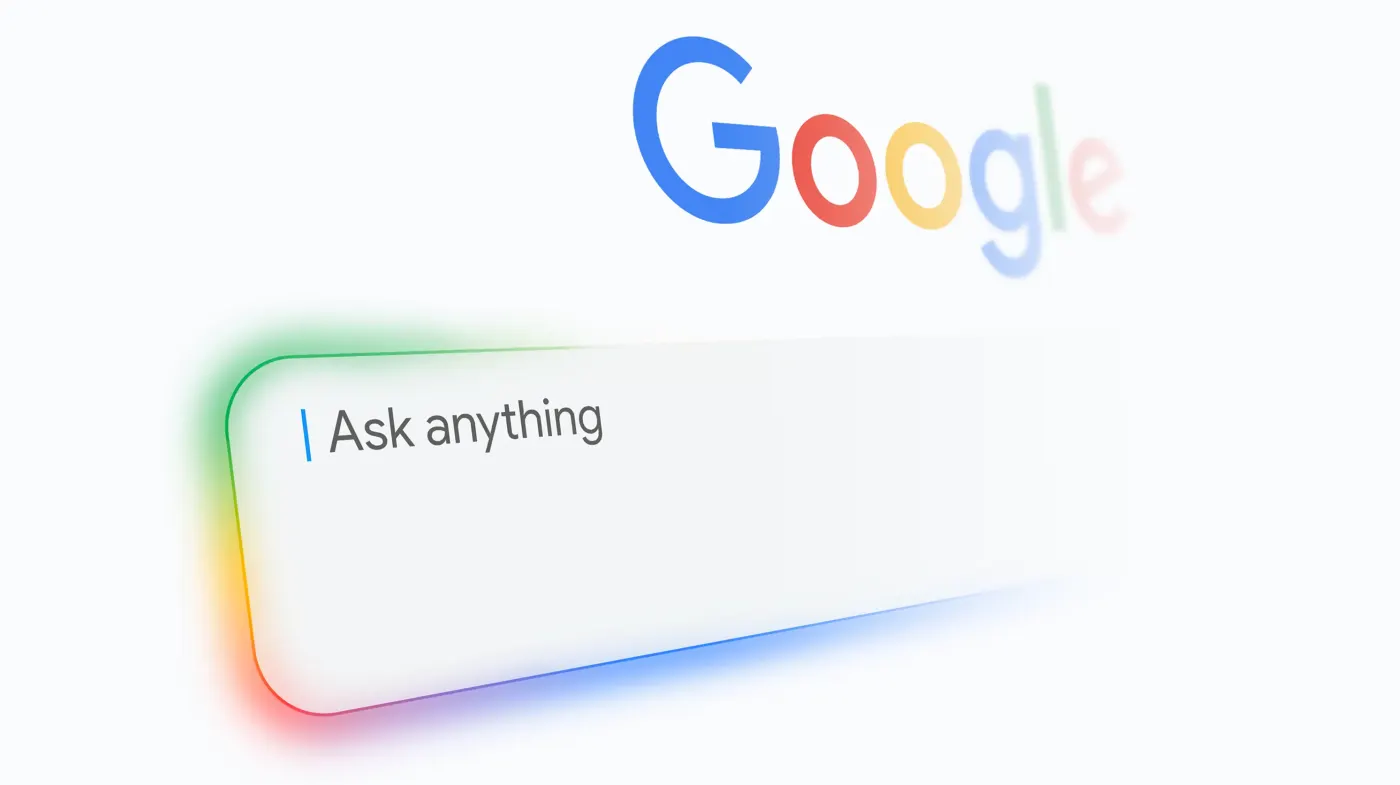
What Google revealed at I/O 2026 is worth sitting with for a moment, because underneath the product launches and the polished demo videos is something more significant: Google has quietly admitted that the search box - unchanged in its fundamental logic for over two decades - was no longer good enough.
Advertisement
That's a big deal for a company that built a $2 trillion empire on a white rectangle and a blinking cursor.
The Box Gets Smarter
Let's start with the most symbolic change. Google has overhauled the search input itself for the first time in 25+ years. The new intelligent search box isn't just cosmetically different - it dynamically expands as you type, anticipates what you're trying to ask, and accepts text, images, files, video, and even open browser tabs as inputs all at once.
 On the surface this sounds like a UX tweak. It isn't. It's Google acknowledging that human intent doesn't always compress cleanly into a three-word query. That we don't always know the exact words for what we're looking for. That the act of searching itself has been, for a long time, a weird skill we've all had to learn rather than something that simply worked the way thinking works.
The fix is overdue. But it's here.
A Billion Users Already Moved On — Google Is Catching Up to Them
Here's a number that should reframe everything: AI Mode, Google's conversational search layer, crossed one billion monthly users in just twelve months. Queries have been more than doubling every quarter since launch.
Read that again. Not growing - doubling. Every quarter.
What this tells you is that users didn't need to be convinced that conversational, AI-powered search was better. They just needed it to exist. The moment Google gave people a way to ask a real question and get a real answer, they stopped using the old version in enormous numbers. The product changed, and demand exploded.
The I/O announcements are Google's response to its own data. Gemini 3.5 Flash is now the default model powering AI Mode globally - a model built specifically for the kind of fast, agentic reasoning that multi-step queries require. Follow-up questions now flow naturally from AI Overviews into full back-and-forth conversations, with context preserved across the exchange. Your search session becomes less like a series of isolated lookups and more like a conversation with someone who has actually been paying attention.
Search Agents: The Part Nobody Is Talking About Enough
Buried in the middle of the announcement is the feature I think will matter most in two years: Search agents.
The concept is straightforward but the implications aren't. You define a task or topic, and a background agent monitors the entire web - news, blogs, social posts, live financial data, sports scores, shopping listings - and notifies you when something relevant happens. Not a Google Alert. Not a keyword match. An agent that reasons about whether something actually fits what you described.
 Google's own example: apartment hunting. You describe your ideal flat in plain language — the area, the budget, the specific quirks you care about - and the agent scans continuously, pinging you only when a listing genuinely matches. No more daily Rightmove refreshes. No more FOMO from missing a listing that appeared and disappeared in hours.
Another example they gave: tracking sneaker collaborations for a specific athlete. Trivial use case on the surface. But it demonstrates something important - these agents can reason about fuzzy, interest-driven criteria, not just hard filters.
Advertisement
For professionals, the possibilities are obvious. Monitoring competitors. Tracking regulatory changes in a specific sector. Watching for coverage of a client. Tasks that currently require a dedicated person, a dashboard, or a stack of RSS feeds could compress into a single configured agent.
✦ Free Newsletter ✦
Never miss a story
Tools, tutorials and AI deep-dives - straight to your inbox, every week.
These launch for paying subscribers first. But this is where search is going.
Google Is Now Writing Code on the Fly to Answer Your Questions
The agentic coding section is the most technically ambitious part of the announcement and the hardest to explain without sounding like marketing copy. So I'll try to be concrete.
When you ask a sufficiently complex question in Search - how does a mechanical watch escapement work, say, or help me visualise orbital mechanics - instead of returning text and diagrams, Search can now generate a custom interactive interface built specifically for that question. Interactive simulations. Live graphs. Custom layouts assembled in real-time using the new Antigravity development platform and Gemini 3.5 Flash.
This is not a template. It's not a widget library. It's the model writing UI to match your specific query, on the fly, every time.
The further step is what Google calls "mini apps" - persistent dashboards built to order for ongoing tasks. Planning a wedding, tracking a fitness goal, managing a home renovation. You describe what you need, Search builds a functioning tool for it, pulling in live data where relevant. You come back to it. You update it. It persists.
This blurs a line that has been fixed for years: the line between searching for information and having a piece of software built to organise that information for you. Google is collapsing that gap.
The Personal Intelligence Expansion Is the Quiet Power Move
The least flashy announcement may be the most strategically significant. Personal Intelligence — the ability to connect Gmail, Google Photos, and soon Google Calendar to your search context — is now rolling out to nearly 200 countries across 98 languages, with no subscription required.
Think about what that means in practice. Search that knows you have a dentist appointment Thursday. That recognises when you ask "that hotel I booked in April" without you specifying which hotel. That can cross-reference your inbox when you're researching something, without you having to think to ask it to.
Google has been cautious about this, and the framing around user control and transparency is prominent. You opt in; you choose what to connect; you stay in control. The sceptic in me notes that this is exactly what you'd say right before becoming indispensable to someone's daily life. But taken at face value, it's a genuinely useful capability being made broadly available.
What This Actually Means
Here's the honest take: Google spent years watching competitors - ChatGPT, Perplexity, a dozen others — chip away at the assumption that Search was a solved problem. For a while it looked like they might be slow to respond.
They weren't slow. They were building.
What landed at I/O 2026 isn't a patchwork of defensive features. It's a coherent vision of what search looks like when you design it around how people actually think - not around how databases are indexed. The search box that adapts. The agents that watch so you don't have to. The interfaces generated on the fly. The personal context baked in.
Advertisement
Whether Google executes on all of it cleanly is a different question. Big product announcements have a way of shrinking on contact with real users. But the direction is clear, the usage numbers are already there, and the underlying technology is genuinely capable.
The white rectangle had a good run. Something more interesting is replacing it.
Advertisement