Updated October 6, 2026
There are roughly four hundred articles online titled some variation of "best AdSense alternatives 2026." Almost all of them are lists. Almost all of them include the same platforms in the same order. Almost none of them tell you what you actually need to know, which is not which platforms exist - but which ones are right for your specific traffic level, why the answer changes significantly as your site grows, and what the honest economics look like at each stage.
What's new (October 6, 2026): On October 1, 2026, U.S. District Judge Amit Mehta dismissed the antitrust lawsuits that Penske Media and the ed-tech company Chegg had filed against Google over AI Overviews, ruling that reduced search traffic from AI-generated summaries does not violate antitrust law because publishers have no formal agreement guaranteeing Google will send them traffic. Mehta nonetheless acknowledged the harm, writing that the court is "not unsympathetic to the situation publishers now find themselves in." For publishers weighing how much to rely on organic search revenue, the ruling closes off the legal route for forcing a change to AI Overviews, which is another reason this guide treats non-ad revenue diversification as a necessity rather than a nice-to-have.
Advertisement
What's new (September 22, 2026): The entry requirements referenced throughout this guide changed after it was first published. Raptive cut its minimum from 100,000 to 25,000 monthly pageviews in October 2025, Mediavine replaced its 50,000-session threshold with a $5,000 annual ad revenue requirement for its main network in January 2026, and Ezoic raised its bar from effectively no minimum to 250,000 monthly active users in February 2026, according to each company's own published requirements pages. The Stage 2 and Stage 3 sections below have been updated to reflect the new numbers, so check the specifics before assuming the traffic ranges you remember still apply.
This is that guide. It is structured around where you actually are as a publisher, not around a comprehensive list of every platform that has ever paid someone money. It covers display advertising, affiliate revenue, and the direct monetisation strategies that experienced publishers use alongside ad networks - because relying on a single revenue stream at any traffic level is a structural vulnerability that the AI-driven traffic decline of the past eighteen months has made more visible, and more painful, than it used to be.
The Honest Context You Need Before Reading Anything Else
Two things have changed the publisher monetisation landscape significantly in 2026, and most monetisation guides written before mid-2025 do not fully account for them.
The first is the AI Overview effect on organic traffic. Google's AI Overviews now appear in roughly 60% of US queries, and Ahrefs data shows a click suppression effect that has grown from roughly 34% in 2025 to 58% in early 2026 - meaning for queries where an AI Overview appears, publishers are receiving less than half the organic traffic they would have gotten before. Technology content specifically has been the hardest-hit category, with 44% of surveyed marketers in tech niches reporting measurable traffic declines.
The practical implication for monetisation: a site that was planning to upgrade its monetisation approach based on hitting a certain pageview threshold may now find those targets harder to reach, or arriving later than projected. Revenue planning that assumed continuous traffic growth needs to account for a more volatile and potentially declining organic channel.
The second change is the continued improvement of AI-powered ad optimisation. The platforms available to publishers in 2026 - Ezoic's machine learning placement optimisation, Mediavine's header bidding setup, Raptive's premium demand partnerships - are meaningfully better at extracting revenue from a given volume of traffic than the equivalent platforms were two years ago. The gap between a well-optimised ad setup and a poorly optimised one, at the same traffic level, has widened considerably. Taken together, these two shifts mean that growing revenue in 2026 requires both a more deliberate approach to traffic quality and a more deliberate approach to which monetisation platform you are on and when to upgrade it.
Stage 1: Under 10,000 Monthly Pageviews - Start Here, Not Where You Want to Be
The instinct when a site is new is to look at the platforms that pay the most per thousand impressions and try to qualify for those immediately. This instinct is almost always counterproductive, for a reason that becomes clear when you look at what optimisation platforms actually do.
Ezoic, Mediavine, Raptive, and the other header bidding platforms that deliver the highest RPMs do so through two mechanisms: access to more premium demand sources than AdSense, and algorithmic optimisation of which ad is served to which user at which moment. The second mechanism requires data - it gets better over time as the platform builds a profile of your audience and learns which demand sources perform for your specific traffic. A new site with 5,000 monthly pageviews gives an optimisation algorithm very little to work with, and the resulting RPMs will be modest regardless of which platform's name is on the dashboard.
Google AdSense at this stage is not a failure of ambition. It is the rational choice. Setup requires minimal technical knowledge, there is no minimum traffic threshold, and for a new site still building audience and content, the marginal revenue difference between AdSense and any alternative platform is small enough to not be worth the distraction of managing a more complex setup.
The one non-display revenue stream genuinely worth building from day one is affiliate revenue - and specifically not the generic Amazon Associates approach that most early-stage monetisation guides recommend. Amazon's commission rates were restructured years ago and are now low enough across most categories that the effort-to-return ratio is poor unless your content is specifically product review-oriented. The more productive approach is identifying two or three software products or services directly relevant to your niche and building affiliate relationships there. Software affiliate commissions are typically 20-40% recurring on subscription products, which compounds significantly over time in a way that one-time product commissions do not.
Advertisement
Realistic AdSense RPM at this stage: $1-5 for general content, $3-12 for technology, finance, or B2B-adjacent content. These numbers sound discouraging because they are. They are also accurate, and planning around them rather than around aspirational figures is what prevents the disappointment that kills many early-stage content sites before they reach the traffic levels where monetisation becomes meaningful.
Stage 2: 10,000 to 50,000 Monthly Pageviews - The First Real Decision
This traffic range is where the first meaningful platform choice opens up, and where the gap between staying on AdSense and upgrading begins to widen enough to be consequential.
Ezoic was, until early 2026, the platform most publishers in this range should have been seriously evaluating. That changed on February 19, 2026, when Ezoic raised its entry requirement from what had effectively become no pageview floor to 250,000 monthly active users, according to Ezoic's own support documentation. Sites already monetising with Ezoic before that date keep grandfathered access as long as they do not stop using the platform for more than seven days, but a new site in the 10,000 to 50,000 pageview range no longer qualifies for the standard program outright; the entry point now is Ezoic's Incubator program, built for sites still working toward the 250,000-user threshold. Publishers who do clear the bar get the same AI-powered ad placement optimisation that connects inventory to Google Ad Exchange demand, and the documented revenue uplift figures from sites that have migrated to Ezoic still range from 50% to 300% over AdSense, depending on how well-optimised the prior AdSense setup was, how much traffic comes from Tier 1 countries (US, UK, Canada, Australia command the highest CPMs), and how much time is invested in configuration rather than treating it as a set-and-forget replacement.
The honest limitation of Ezoic worth naming clearly: poorly configured, it can slow your site down enough to hurt both user experience and Core Web Vitals scores, which affects organic search performance. The platform offers its own speed tools to mitigate this, but it requires active management. If you are not willing to invest time in configuration, the revenue uplift will be smaller and the speed cost may partially offset it.
Monumetric is an alternative worth considering if your content skews toward lifestyle, family, or general interest niches. The 10,000 pageview minimum applies here too, with a $99 setup fee for sites under 80,000 monthly views that is waived above that threshold. Published revenue uplift over AdSense is approximately 25% - more modest than Ezoic's ceiling but typically more predictable, with less configuration risk.
At this traffic stage, affiliate revenue deserves more systematic attention than it usually gets. A site generating 30,000 monthly pageviews with a well-matched affiliate program can generate affiliate revenue that rivals or exceeds ad revenue at this traffic level, particularly if the content is purchase-intent oriented - reviews, comparisons, best-of guides - rather than purely informational.
✦ Free Newsletter ✦
Never miss a story
Tools, tutorials and AI deep-dives - straight to your inbox, every week.
Realistic RPM range with optimised setup at this stage: $8-25 for technology content, $5-15 for general content, with significant variation by traffic geography.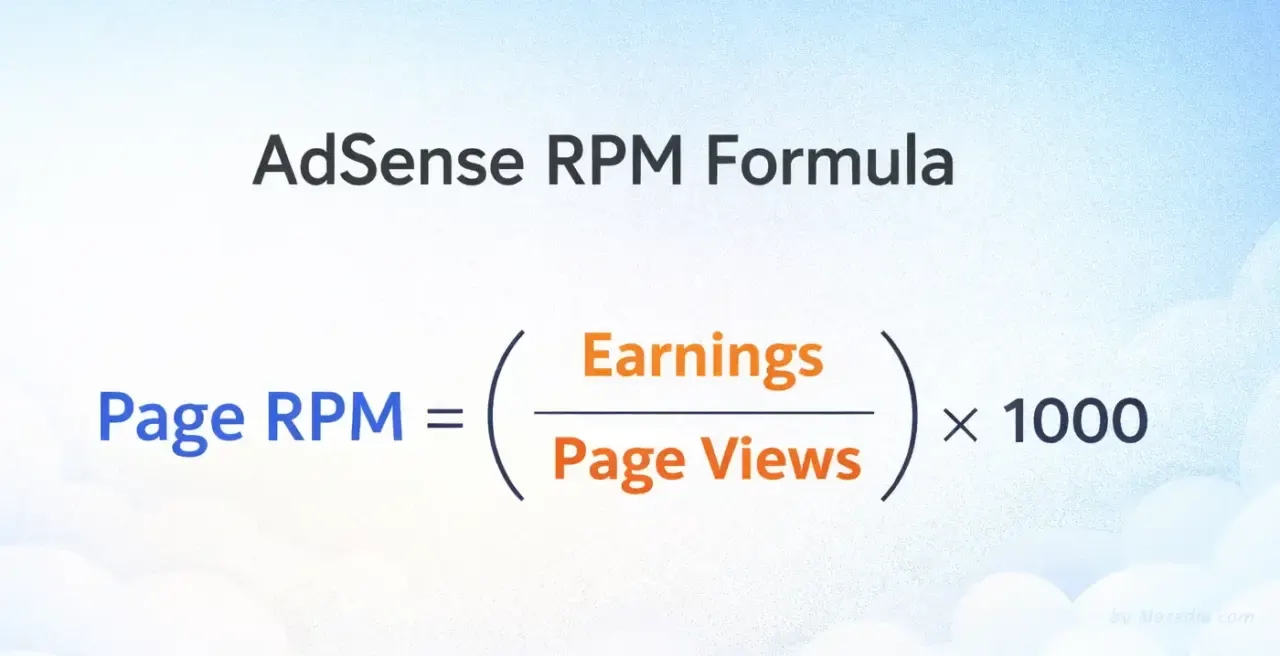
Stage 3: 50,000 to 100,000 Monthly Sessions - Mediavine Becomes Relevant
Mediavine's main network no longer gates entry by session count. In January 2026, Mediavine moved from a flat 50,000-monthly-session requirement to a revenue-based threshold: publishers must show a minimum of $5,000 in annual ad revenue to apply, according to Mediavine's own published requirements. A session can involve multiple pageviews, which is worth knowing if you are trying to gauge how your traffic compares, but ad revenue is the number that determines eligibility now, and the platform has a strong reputation among content publishers for both RPM performance and quality of support.
The entry-level Journey by Mediavine program remains the more accessible on-ramp: it accepts publishers with at least 1,000 sessions from Tier 1 countries (the US, Canada, the UK, and Australia) within a 30-day period, per Mediavine's requirements page. The core Mediavine offering, available once you clear either bar, is a managed header bidding setup that connects your inventory to premium demand partners not available through AdSense or standard programmatic channels, with account management and ongoing optimisation handled by Mediavine's team rather than requiring technical expertise from the publisher.
The documented RPM range for Mediavine publishers in technology and business niches is $20-40, compared to the $3-12 available through AdSense for equivalent traffic. That gap is real and represents the practical difference between a hobby income and a meaningful revenue stream at 50,000-100,000 monthly sessions. The trade-off is a revenue share of your ad earnings - understood by publishers to be in the range of 20-25% of gross ad revenue.
Advertisement
One caveat worth naming clearly: Mediavine's strongest performance is for publishers with US-dominant audiences in lifestyle, food, travel, and personal finance niches. Technology content publishers sometimes find Mediavine's CPMs for their audience lower than expected, because the platform's premium demand relationships are optimised for the advertiser categories that dominate those lifestyle verticals. A technology site with significant international traffic may do better with a platform more specifically optimised for that audience profile.
Raptive, formerly AdThrive, lowered its minimum from 100,000 to 25,000 monthly pageviews in October 2025, folding its old Rise pilot program into a new entry-level Insider tier, according to Raptive's own announcement. Publishers in the 25,000 to 99,999 pageview range need at least 50% of their traffic from the US, UK, Canada, New Zealand, or Australia to qualify, along with long-form, original content with meaningful human involvement across most pages. Raptive still focuses specifically on premium content publishers with US-dominant audiences, and for those who clear the bar, RPMs are among the highest available in the managed service category at $25-50, with the company's positioning around brand-safe, premium inventory meaning the advertiser pool is significantly more valuable than AdSense's open exchange.
Stage 4: Beyond 100,000 Monthly Pageviews - Where the Ceiling Opens Up
At 100,000+ monthly pageviews, the platform landscape widens enough that generalising becomes difficult, because the right answer diverges significantly based on audience geography, content category, and how much you want to manage yourself versus delegate.
For technology-focused publishers specifically, this is the traffic level where Media.net becomes worth serious evaluation. Media.net is powered by Yahoo and Bing's advertising network, which makes it a genuine alternative demand source rather than a complementary layer on Google's existing inventory. It performs particularly well on in-content placements and sticky sidebar units, and for technology and B2B-adjacent content - the kinds of queries that Bing specifically indexes well - it can deliver CPMs that rival or exceed what AdSense provides for the same placements.
Header bidding as a concept rather than a managed service also becomes worth evaluating at this scale. Header bidding allows multiple demand sources to bid simultaneously for each ad impression, rather than running a sequential waterfall where Google gets priority and other networks only bid if Google passes. Implementing this correctly delivers the theoretical maximum yield from your inventory by ensuring every impression is sold to the highest available bidder in real time. The platforms discussed above all implement header bidding in various forms; at 100,000+ pageviews, the marginal gain from a more sophisticated configuration specifically built for your site becomes meaningful enough to justify the investment.
Direct advertising relationships - approaching companies directly for sponsored content, display buys, or content partnerships - also become realistic at this traffic level if your audience is well-defined. A technology site with 150,000 monthly pageviews and a clearly documented audience of developers can command direct advertising CPMs of $40-100 for relevant software or B2B technology advertisers, compared to the $15-30 that programmatic channels deliver for the same inventory. The gap between programmatic and direct advertising rates is the economics that make building a direct advertising channel worth the effort, despite the sales work involved.
The Revenue Streams That Belong in Every Publisher's Stack
A final section worth including, because purely ad-dependent publishers are more exposed to the volatility the past eighteen months have produced than publishers with diversified revenue.
Newsletter revenue has matured significantly as a monetisation channel. A newsletter with genuine open rates in the 30-40% range can generate CPMs from dedicated advertising placements of $40-80 per thousand subscribers, compared to the $10-25 that web display advertising delivers for equivalent scale. The audience relationship that a newsletter represents is also something you own rather than something rented from a search algorithm that can change its mind about you overnight.
Paid content or subscription access - whether through Substack, Patreon, Ghost, or a custom membership implementation - is genuinely viable for publishers who have built real audience relationships rather than traffic-optimised content farms. Conversion rate from free audience to paid subscriber is consistently low, typically 1-5%, which means the economics only work at meaningful scale or with a genuinely distinctive product. But revenue per paid subscriber is dramatically higher than ad revenue per reader, and the relationship is more durable than organic traffic.
Courses, templates, tools, and other digital products create revenue entirely decoupled from traffic volume. A technology publisher selling a course on a specific technical skill, priced at $99-299, converts at meaningful rates from an audience that trusts the publisher's expertise - and generates revenue that does not depend on whether Google's algorithm decides this month to show your articles or show its own AI-generated answer instead.
The practical advice, stated plainly: every publisher should have ad revenue and at least one non-ad revenue stream active simultaneously. The events of 2025 and 2026 in the search ecosystem have made this diversification imperative rather than optional, in a way that was easy to defer when organic traffic was growing reliably and predictably.
Advertisement
The Decision That Matters Most
The single most consequential monetisation decision most content publishers make is not which ad network to use. It is whether to stay on an underperforming network because switching feels complicated.
The data across every case study in this piece is consistent: publishers who have moved from AdSense to an appropriately matched optimised alternative at the right traffic threshold have seen revenue increases of 25% to 300%, depending on their starting point and the match between their audience and their chosen platform. The ceiling of that range reflects the genuine gap between AdSense's default optimisation and what a properly configured header bidding setup delivers in terms of real-time competitive pressure on ad impression pricing.
The floor of that range, 25%, is the realistic minimum expectation for a publisher who makes the switch at an appropriate traffic threshold and invests reasonable time in configuration. At 50,000 monthly sessions, 25% more ad revenue is the difference between a site that covers its hosting costs and a site that covers your time. That is the decision worth making deliberately, and making at the right moment. Everything else in this guide is context for making that decision well.
Sources
- Ezoic: Getting Started, Ezoic's Requirements
- Mediavine: Network Requirements
- Raptive: Opening the Door to More Creators Who Meet Raptive Quality Standards
- Search Engine Journal: Raptive Drops Traffic Requirement by 75% to 25,000 Views
- Medianama: Google AI Overviews Reduce Clicks by 58%, Study Finds
- TheWrap: Penske Media Lawsuit Against Google for AI Search Summaries of Articles Dismissed by Judge
- PYMNTS: US Judge Dismisses Publisher Antitrust Cases Against Google Over AI Search

Advertisement