Every few years someone writes the "PHP is dead" article. It has been written in 2012, 2015, 2018, 2021, and 2024. PHP keeps powering around 77% of the web. The article keeps being wrong.
What changed PHP's trajectory more than anything else was Laravel. Released in 2011 by Taylor Otwell as a more expressive alternative to the CodeIgniter framework, Laravel did not just improve PHP development - it made it enjoyable for a generation of developers who had grown used to treating PHP as a necessary inconvenience rather than a tool they actually wanted to use.
In 2026, Laravel runs on over 1.2 million active websites, holds more than 50% of the PHP framework market, and has grown from a backend framework into something closer to a complete development platform. The "what is Laravel" question is worth answering properly, because the honest answer is more interesting than most introductions give it credit for.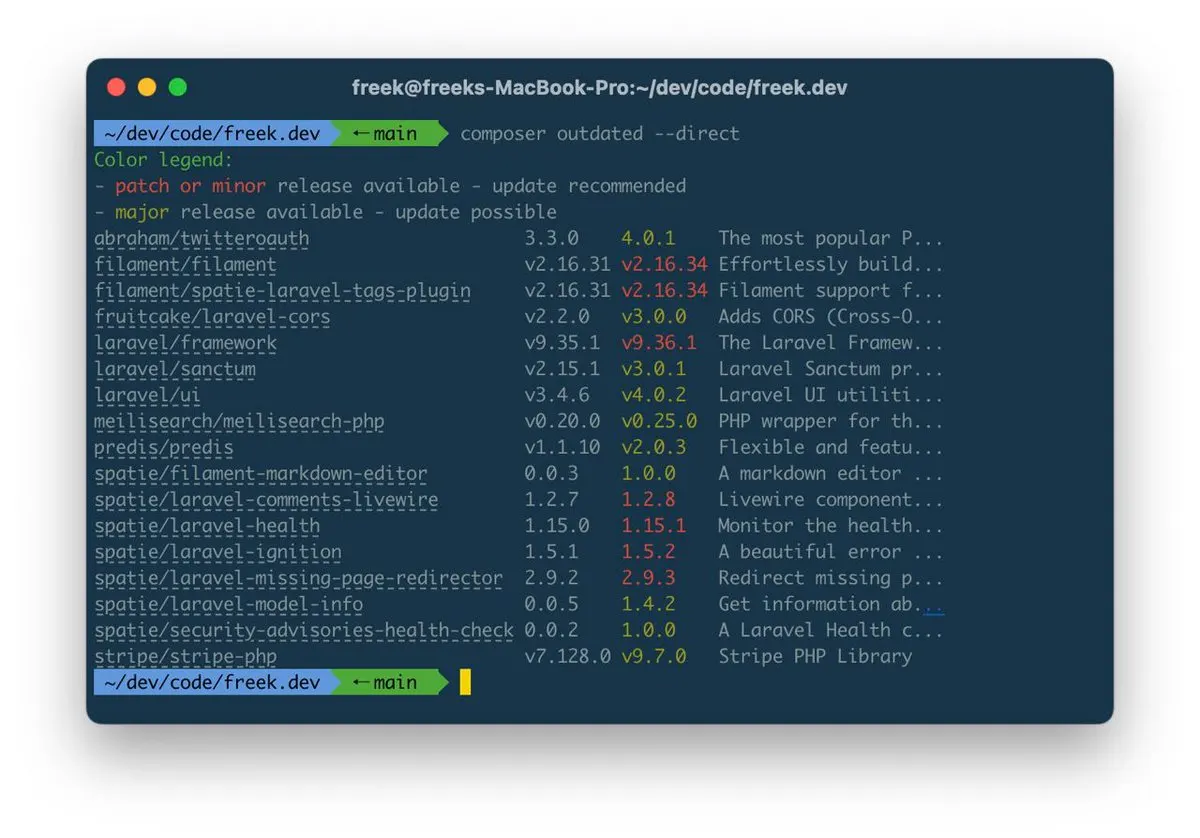
Advertisement
What Laravel Actually Is
Laravel is an open-source PHP web application framework that follows the Model-View-Controller (MVC) architectural pattern. In plain terms: it is a structured set of tools, conventions, and pre-built components that gives PHP developers a consistent, organised way to build web applications without writing everything from scratch.
The MVC pattern - which Laravel is built around - separates an application into three distinct layers. The Model handles your data and business logic: how your application stores, retrieves, and manipulates information. The View handles what the user sees: the HTML, the templates, the interface. The Controller sits between them: receiving requests, asking the Model for data, and sending that data to the View.
This separation matters in practice because it keeps codebases organised as they grow. An application where database logic, business rules, and HTML generation are all mixed together in the same files becomes very hard to maintain after six months. An application where each responsibility lives in a clearly defined place is significantly easier to extend, debug, and hand off to another developer.
Laravel enforces this structure without being rigid about it. Experienced developers can adapt the conventions to their specific needs. Beginners get a clear, well-documented path that leads to maintainable code without requiring deep architectural decisions up front.
The Features That Make Laravel Worth Using
The MVC pattern is table stakes - most PHP frameworks implement it in some form. What separates Laravel is the ecosystem of tools built around that foundation, and how well those tools fit together.
Eloquent ORM is Laravel's database layer and probably its most praised feature. Instead of writing SQL queries to interact with your database, you work with PHP objects that represent your data. A user record becomes a User object. Retrieving all users becomes User::all(). Finding a specific user becomes User::find($id). Relationships between tables - a user has many posts, a post belongs to a category - are defined once and then used transparently throughout your code.
The practical benefit: database interactions that previously required writing and debugging raw SQL become readable PHP code that closely matches how you think about your data. Eloquent also handles SQL injection prevention automatically through PDO parameter binding, which removes one of the most common security vulnerabilities in PHP applications.
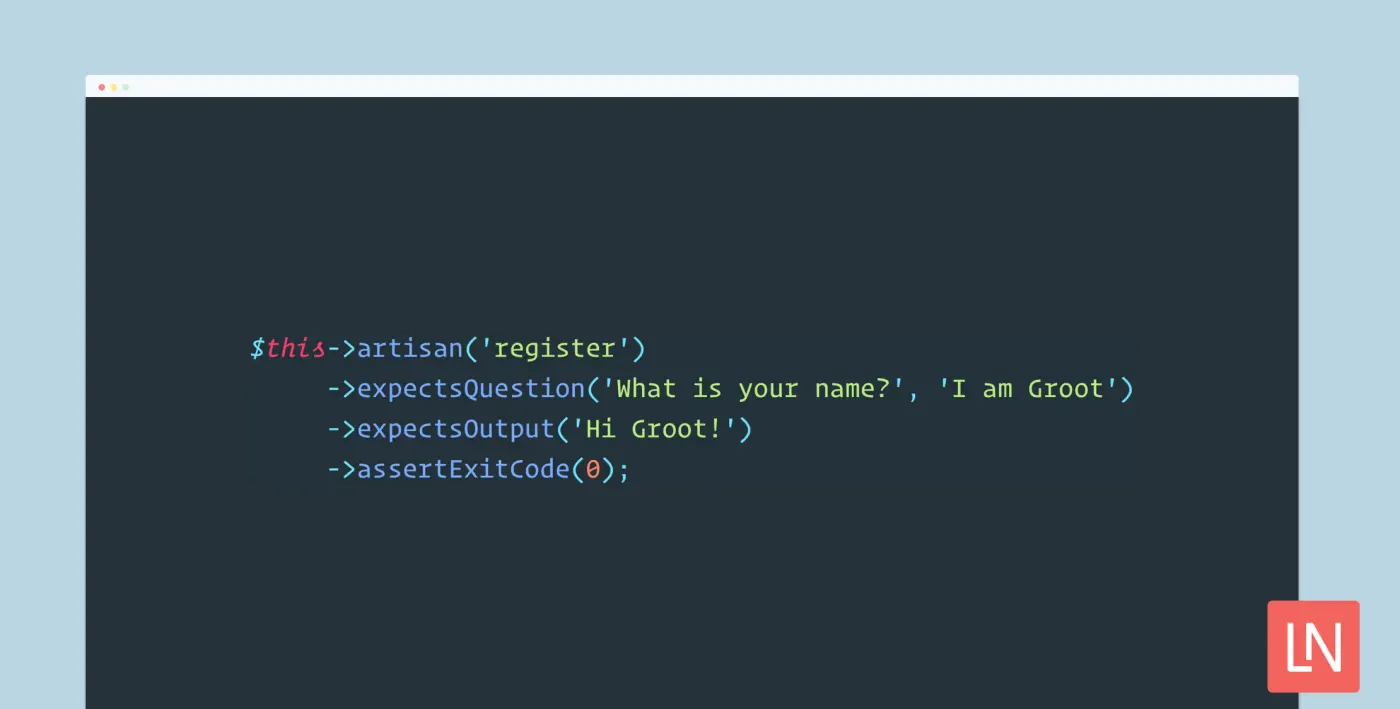
Artisan is Laravel's command-line interface, and once you have used it you will miss it in every other development context. artisan make:model creates a model. artisan make:migration creates a database migration. artisan serve starts a local development server. artisan tinker opens an interactive shell where you can run PHP code against your actual application and database in real time. The commands cover almost every routine development task, and the ability to create custom commands for your own application-specific tasks means Artisan grows with your project.
Migrations solve a problem that trips up most development teams at some point: how do you keep your database schema in sync across development, staging, and production environments, and across multiple developers working on the same project? Laravel migrations are version-controlled PHP files that describe database changes - create a table, add a column, add an index. Running artisan migrate applies all pending migrations in order. Every developer on the project can apply the same migrations and end up with identical database schemas.
The Blade templating engine handles the View layer of MVC with a clean syntax that stays close to PHP without requiring you to write raw PHP tags throughout your HTML. Template inheritance - defining a base layout and extending it in child templates - means you write your header, navigation, and footer once and reference them from every page without duplication. Blade compiles to plain PHP and is fast in production.
Authentication and authorisation come pre-built. A fresh Laravel installation can have user registration, login, password reset, and email verification working in minutes through the Laravel Breeze or Jetstream starter kits. The authorisation layer - defining who is allowed to do what in your application - uses a clean policy and gate system rather than scattered permission checks throughout your controllers.
Queues and jobs let you push time-consuming tasks - sending emails, processing uploads, calling third-party APIs - off into the background so your web requests stay fast. A user uploads a file, the controller pushes a processing job onto the queue, and the response returns immediately while the processing happens asynchronously. Laravel supports multiple queue backends including Redis, database queues, and Amazon SQS, with a consistent API across all of them.
Scheduling replaces cron job configuration with readable PHP code. Instead of managing crontab entries on your server, you define scheduled tasks in a single file: send a daily digest email at 8am, clean up temporary files every hour, run a database cleanup every Sunday at midnight. The Artisan scheduler handles the timing and provides logging, error handling, and task overlapping prevention.
Why Laravel Specifically - And Not Another Framework
PHP has other frameworks. Symfony is mature, widely used in enterprise environments, and much of Laravel's internal plumbing is built on Symfony components. CodeIgniter is lightweight and fast for simple applications. Slim is a microframework for APIs that do not need the full Laravel toolkit.
The honest reason most developers choose Laravel over these alternatives in 2026 comes down to three things: developer experience, ecosystem, and community.
Developer experience is the hardest to quantify and the most consistently mentioned when developers explain why they use Laravel. The API is designed to be readable. Method names describe what they do. Common tasks have obvious, elegant solutions. This sounds like marketing copy until you have worked in a framework where the same tasks require hunting through documentation to find the non-obvious way to do something basic. Taylor Otwell has described his design philosophy as "programmer happiness" - making the code developers write feel good to write - and the consistency of that philosophy across twelve years of development is genuinely unusual.
The ecosystem in 2026 is comprehensive in a way that no other PHP framework matches. Laravel Forge handles server provisioning and deployment. Laravel Vapor deploys applications to AWS Lambda serverlessly. Laravel Nova builds admin panels. Livewire enables reactive, dynamic UIs using PHP and Blade without writing JavaScript. Inertia.js connects Laravel backends to React or Vue frontends without building a separate API. Cashier handles subscription billing through Stripe. Scout adds full-text search. Telescope provides application monitoring and debugging. Horizon manages and monitors Redis queues.
✦ Free Newsletter ✦
Never miss a story
Tools, tutorials and AI deep-dives - straight to your inbox, every week.
Each of these is a separate package that integrates with Laravel specifically - not generic PHP packages adapted to work with Laravel, but tools built to feel native to the framework. The result is that the first-party ecosystem covers most of what most applications need, and the 18,000+ community packages on Packagist cover almost everything else.
The community is the underrated advantage. Laravel's GitHub repository, the Laracasts learning platform with over 2,000 video lessons, the Laravel News site, and the active Discord and Reddit communities mean that when you hit a problem, the solution usually already exists somewhere accessible. For a developer starting with Laravel, the learning resources are significantly better than any other PHP framework provides.
What Laravel Is Built For - And What It Is Not
Laravel is well-suited for a broad range of web applications: content management systems, e-commerce platforms, SaaS applications, REST APIs, real-time applications through Laravel Reverb (the native WebSockets server), internal business tools, and multi-tenant applications. Disney+, Pfizer, and the BBC use Laravel for production applications handling millions of daily users - the framework scales when properly architected and deployed.
Understanding what Laravel is less suited for is equally useful.
Laravel is not the right tool for applications where raw PHP performance is the primary constraint above everything else. The framework adds overhead relative to plain PHP. Laravel Octane - which keeps the application in memory between requests using FrankenPHP or Swoole - eliminates most of this overhead and makes Laravel competitive with Node.js and Go in benchmarks, but it requires a different deployment model than traditional PHP-FPM hosting. For applications where a simpler, more direct approach is sufficient, the full Laravel stack may be more infrastructure than the project requires.
Laravel is also not designed for applications with genuinely extreme performance requirements - real-time trading systems, high-frequency data processing at microsecond scale, applications where every millisecond of latency is critical. These use cases call for specialised tools built for that specific context, not a general-purpose web framework.
For everything in between - which is the vast majority of web applications - Laravel is a well-considered, well-maintained choice that will serve you for years.
Laravel in 2026: What Has Changed
Laravel has evolved significantly beyond its origins as a backend web framework. The 2026 version looks familiar to developers who have used it for years and meaningfully more capable in specific areas.
The shift toward modular, domain-driven structures is the biggest architectural change in recent years. Instead of a single large application folder, teams now commonly split code into logical modules - each containing its own models, migrations, actions, and tests. Laravel's autoloading and container scopes support this style natively, which means large applications can grow without losing structural clarity.
Performance has improved enough to change the conversation about PHP versus other languages. Laravel apps running on Octane with FrankenPHP deliver sub-50ms response times in typical configurations, with benchmarks showing 50% faster responses, 70% better memory use, and up to three times more requests per server compared to traditional PHP-FPM deployments. The "PHP is slow" criticism that had some validity ten years ago is no longer accurate for properly configured Laravel applications.
AI integration has arrived through first-party tooling. Laravel Prism connects Laravel applications to AI providers - OpenAI, Anthropic, Gemini - with a consistent API and native support for tool calling, structured outputs, and multi-step agentic workflows. For developers building applications that incorporate AI features, having an officially supported, Laravel-idiomatic way to connect to AI providers removes significant integration overhead.
Serverless deployment through Laravel Vapor on AWS Lambda has matured into a production-ready option for applications with variable traffic patterns. The economics are compelling for the right use case: you pay per request rather than for idle server capacity, scaling is automatic, and cold start times have improved to the point where they are acceptable for most web application contexts.
Should You Learn Laravel in 2026?
If you are a PHP developer who has not yet worked with a modern PHP framework - yes, Laravel is the right framework to learn first. The learning curve is manageable, the documentation is excellent, the community will help you when you get stuck, and the skills transfer to professional contexts where Laravel is widely used.
If you are coming from another language - Python, JavaScript, Ruby - and need to build a PHP application: Laravel is the framework that will feel most familiar in its design philosophy. The MVC conventions, the ORM, the CLI tooling, and the testing infrastructure will all feel recognisable if you have worked with Rails, Django, or Express.
If you are already a Laravel developer wondering whether to stay with the framework as AI tools change the development landscape: Laravel is adapting. The Prism package, Octane's performance improvements, and the continued investment in the ecosystem suggest the framework is not standing still. The 50%+ market share in PHP frameworks is not the kind of position that erodes quickly.
If you are a business owner or technical decision-maker evaluating whether to build on Laravel: the 1.2 million active sites, the enterprise adoption, the active release cadence (major versions annually, minor updates monthly), and the available developer talent pool all point toward it being a stable, long-term choice. The risk of building on a framework that gets abandoned or stagnates is lower with Laravel than with most alternatives.
The One-Line Answer
Laravel is the framework that made PHP development worth doing again - and in 2026, it has grown into an ecosystem that makes complex web applications significantly faster to build and easier to maintain than the alternatives.
That is not hype. It is the explanation for why it holds half the PHP framework market and why developers who use it tend to keep using it.

Advertisement