

Updated September 24, 2026
For about a decade, every serious React developer has internalised the same exhausting ritual. Write a component. Notice it re-renders more than it should. Wrap a value in useMemo. Wrap a function in useCallback. Wrap the child component in React.memo. Get the dependency array slightly wrong, introduce a stale closure bug, spend an hour debugging it, and quietly resent the fact that performance optimisation in React has always required this much manual, error-prone bookkeeping.
What's new (September 24, 2026): In June 2026, Meta merged a native Rust rewrite of React Compiler into its repository, and by July, InfoQ and other developer-tooling outlets reported it runs roughly 3x faster than the original TypeScript version when used as a Babel plugin, with isolated transformation logic up to 10x faster. Early Turbopack integration testing on Next.js apps showed further gains, with Vercel reporting more than 40% faster end-to-end compilation in some cases. The Rust version is still described in its own pull request as an experimental, work-in-progress port, so teams evaluating it should expect it to mature over the following releases rather than treat it as a finished replacement.
Advertisement
Meta's own internal data, cited by the React team itself, found that 60 to 70 percent of performance issues across their codebases traced back to missing or incorrect memoization - and this is the team that invented the pattern. If the people who built React were still getting it wrong at that rate, the honest conclusion was that the problem was never really about developer skill. It was about asking humans to do, by hand and under time pressure, a kind of mechanical dependency analysis that a compiler should have been doing for them all along.
That is precisely what shipped. React Compiler reached its stable 1.0 release in October 2025, and by the first half of 2026 it has moved from cautious early adoption into something close to a default expectation for new React projects. Here is what it actually does, what the real production numbers say, and - because the bar for this piece is honesty rather than hype - where the evidence is more mixed than the more enthusiastic coverage of this release tends to admit.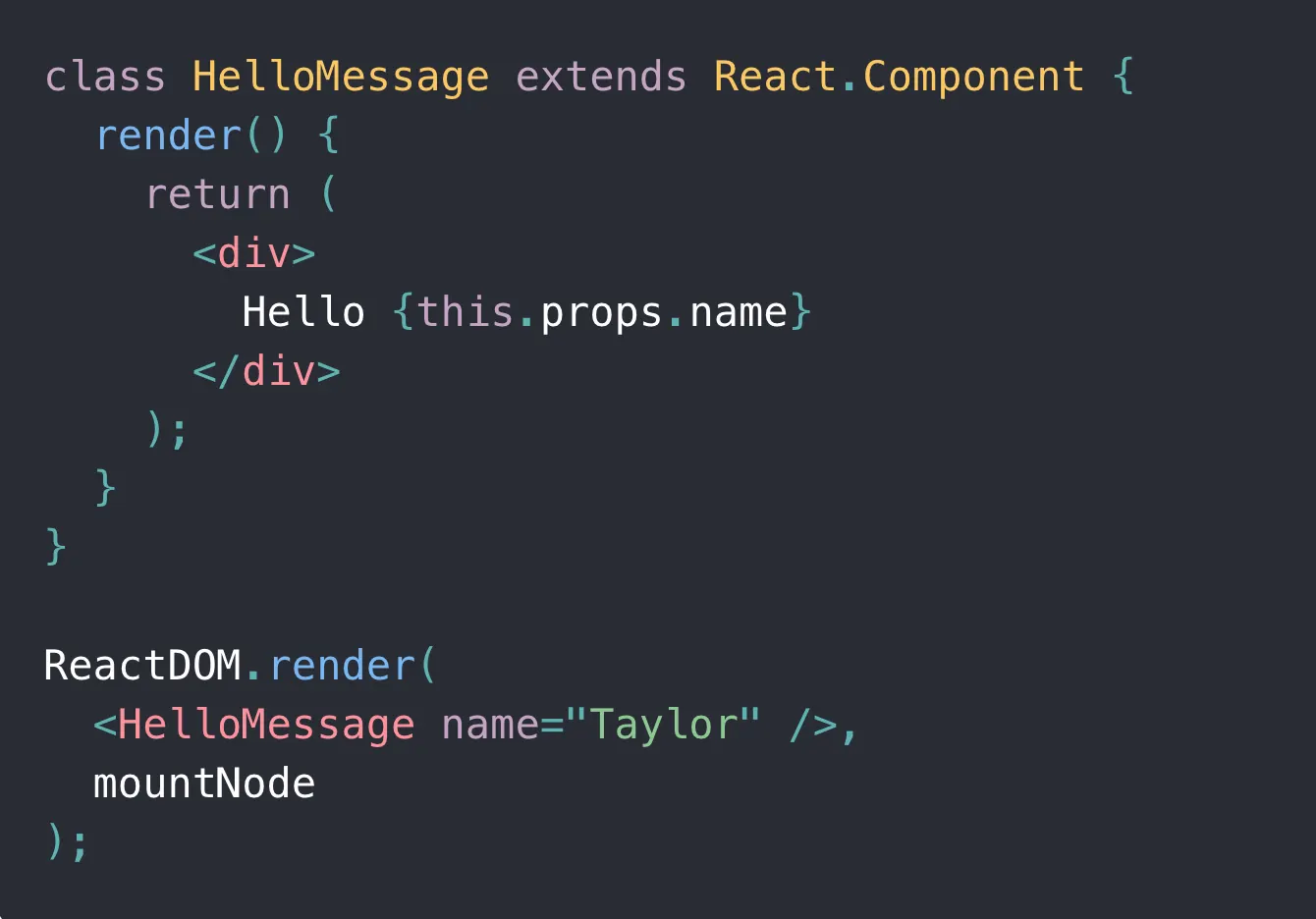
The Problem It Was Built to Solve, Explained Properly
React's core programming model has always rested on a deceptively simple idea: describe what your interface should look like for a given state, and let React figure out how to update the actual DOM to match. That declarative approach is a large part of why React became as dominant as it did. But it carries a structural cost that the framework has never fully hidden, and that every working React developer eventually runs into.
When a component's state changes, React re-renders that component and, by default, every component beneath it in the tree - regardless of whether those child components actually need to change. For a small app, this rarely matters. For anything with meaningful depth and interactivity - a dashboard, a data table, a complex form - those cascading re-renders accumulate into genuinely sluggish interfaces, and the standard fix has always required developers to manually intervene: memoizing expensive calculations with useMemo, stabilising function references with useCallback, and wrapping components in React.memo to prevent unnecessary re-renders from propagating down the tree.
The trouble is that doing this correctly, consistently, across an entire codebase, by hand, turns out to be genuinely hard - hard enough that Meta's own engineers, working inside the framework they built, got it wrong roughly two-thirds of the time. Over-memoize and you add complexity and bundle weight for no real benefit. Under-memoize and the optimisation chain breaks silently. Get a dependency array wrong and you introduce subtle bugs - stale closures, effects that fire too often or not often enough - that can take hours to track down precisely because the code looks correct at a glance.
What the Compiler Actually Does, Without the Marketing Language
Strip away the more breathless framing some early coverage gave this release, and React Compiler is a build-time static analysis tool - conceptually closer to a very sophisticated linter that rewrites your code than to anything resembling actual magic.
It runs as a plugin during your build step, typically through Babel or, for faster build times, an SWC-based integration, and partners with Vite, Next.js, and Expo specifically to make adoption straightforward for new projects. The compiler parses your component source code into an abstract syntax tree, analyses the resulting structure to understand data flow and mutability throughout your components, and then automatically inserts the same kind of memoization a careful developer would have written by hand - just applied consistently, and informed by an analysis more precise than most humans have the patience to perform on every single component in a large application.
Practically, this means code that used to look like a small thicket of useMemo and useCallback wrappers around a config object and a click handler, all to stop a child component re-rendering unnecessarily, can simply be written as plain, idiomatic React - no manual memoization at all - with the compiler inserting the equivalent optimisations automatically during the build. You write what the logic actually is. The compiler decides where memoization will help and applies it for you.
Crucially, and this is the detail most coverage gets right but undersells in its significance, this requires no rewrite. React Compiler works on existing React and React Native codebases without forcing developers to restructure components or adopt new patterns, which is precisely why adoption has moved as quickly as it has - the upgrade cost for an existing project is close to zero in the simplest case, even before considering the longer-term benefit of writing cleaner code going forward.
Advertisement
The Real Production Numbers - Not Just the Demo Numbers
Where this story gets genuinely interesting is in the actual production data that has accumulated since the stable release, because it tells a more nuanced story than a single headline percentage would suggest.
Wakelet, a content curation platform that published one of the more detailed public case studies, rolled the compiler out to 100 percent of their users and tracked Core Web Vitals before and after. Largest Contentful Paint improved by roughly 10 percent, from 2.6 seconds to 2.4 seconds. More notably, Interaction to Next Paint - the metric that directly measures how responsive an interface feels when a user actually clicks or types something, which is precisely the kind of responsiveness automatic memoization is designed to improve - got about 15 percent better overall, from 275 milliseconds to 240 milliseconds. When Wakelet's engineering team looked specifically at components built from purer React patterns, rather than ones tangled up with third-party libraries doing their own internal state management, the INP improvement in those isolated cases approached 30 percent.
A separate case study, covered in detail by InfoQ, documented a migration where 1,231 of 1,411 total components in a large production application had been compiled at the time of reporting, with the remaining 180 still pending refactoring to support auto-memoization fully. That partial migration alone produced a 20 to 30 percent overall reduction in render time and latency across the application - with the team explicitly noting they expected further gains once the remaining components were converted, which is itself a useful signal about how the benefit scales as adoption within a single codebase becomes more complete rather than partial.
These are genuinely strong numbers, and they are not isolated marketing claims - they come from named companies running real production traffic, with specific before-and-after metrics rather than vague directional claims.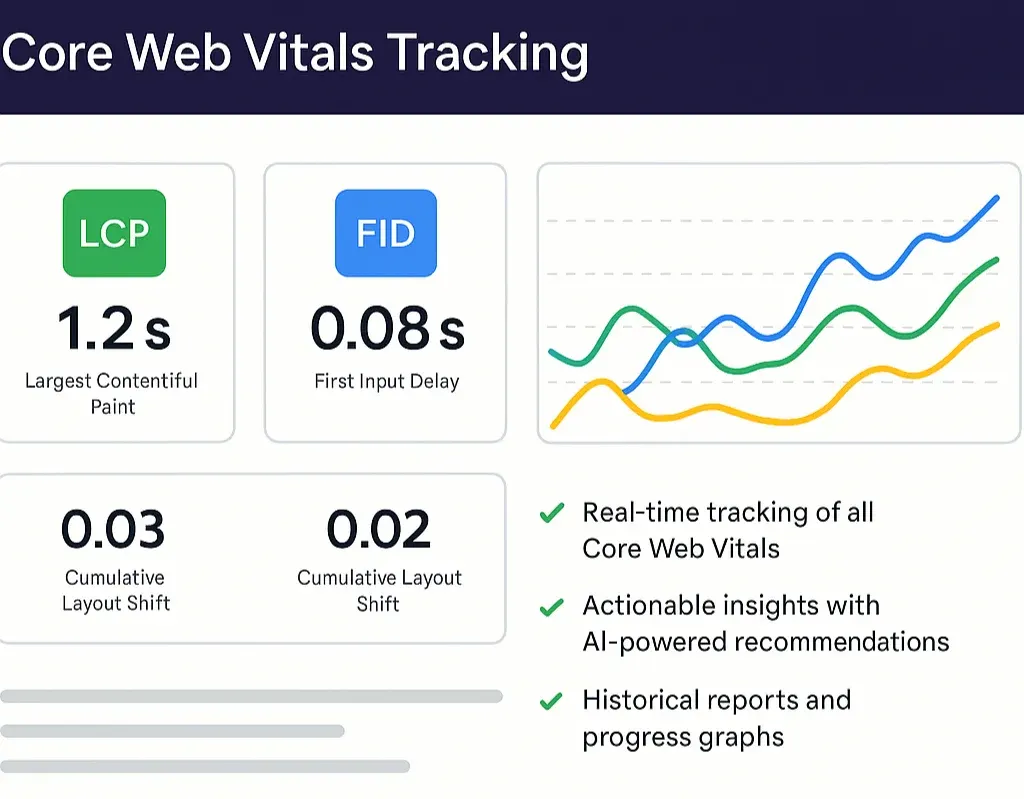
✦ Free Newsletter ✦
Never miss a story
Tools, tutorials and AI deep-dives - straight to your inbox, every week.
The Honest Counterpoint That Most Coverage Skips
Here is the part of this story that deserves far more attention than it typically gets, because a technology release evaluated only through its best-case public case studies is not being evaluated fairly.
Independent developer Nadia Makarevich ran her own test on a real application of approximately 15,000 lines of code - a meaningfully different scale and context from Meta's internal flagship products or a curated case study selected specifically for publication. Her findings were considerably more mixed than the headline figures elsewhere: initial load performance showed minimal measurable impact, with Lighthouse scores remaining virtually identical before and after enabling the compiler.
This is not a contradiction of the Wakelet or InfoQ numbers so much as an important clarification of what the compiler is actually optimising. React Compiler's automatic memoization is specifically targeted at update performance - the responsiveness of re-rendering an already-loaded application when state changes - not initial load performance, which is governed by an almost entirely different set of factors: bundle size, network requests, server rendering strategy, and how much JavaScript needs to be parsed and executed before the page becomes interactive in the first place. An application that is already reasonably well-structured, without the kind of deep, unnecessary re-render cascades the compiler is designed to eliminate, may simply not have much low-hanging fruit for the compiler to capture - which is a very different and more honest framing than "the compiler doesn't work."
The genuinely fair summary, reading the full body of evidence rather than the most favourable excerpt of it: React Compiler delivers real, measurable improvements to interaction responsiveness in applications that have meaningful re-render overhead to begin with, with gains in the range of 10 to 30 percent depending on how cleanly the existing codebase follows React's underlying rules. It is not a universal performance silver bullet, it does not meaningfully touch initial load time, and applications that were already well-optimised by hand should expect a smaller marginal benefit than applications carrying years of inconsistent, ad hoc manual memoization.
What Still Requires Genuine Developer Judgment
The most overstated claim circulating in some of the more enthusiastic coverage is that the compiler eliminates the need to understand React's rendering model at all. The React team's own documentation pushes back on this directly, and it is worth taking that pushback seriously.
Advertisement
useMemo and useCallback have not been deprecated, and they remain necessary as what the React team explicitly calls an escape hatch - a way to assert precise control over reference stability in specific situations the compiler cannot fully reason about on its own. The clearest case is when a memoized value is used as a dependency for a useEffect hook: in that scenario, manual memoization still matters, because you need a guarantee that the effect only re-fires when something has meaningfully changed, not merely whenever the component happens to re-render for an unrelated reason.
There is also a sharper, more consequential limitation worth understanding clearly before adopting this in a large existing codebase: the compiler's correctness depends on your code actually following React's underlying rules - no direct mutation of props or state, no side effects tucked inside the render function itself, predictable and statically analysable data flow. Code that quietly violates these rules in ways JavaScript's own type system cannot catch may compile without any visible error, and yet behave subtly differently once the compiler starts applying memoization to it - exactly the kind of intermittent, hard-to-reproduce bug that is miserable to track down precisely because the code "looks fine." One developer's own account of adopting the compiler on a production app described running into exactly this: a component that was directly mutating state, which the compiler optimised under the assumption of immutability it had no way of verifying, producing a bug that took real debugging time to trace back to its actual cause.
The React team's own recommendation reflects this risk directly and is worth repeating precisely rather than softening: if your application does not have strong end-to-end test coverage, pin the compiler to an exact version number rather than a semver range, and upgrade it manually and deliberately rather than letting it update automatically alongside your other dependencies. That is a meaningfully more cautious recommendation than "just turn it on," and it is coming directly from the people who built the tool.
What This Means for How You Should Actually Write React in 2026
Pulling the genuine signal out from beneath both the hype and the legitimate caveats, here is the practical shift worth internalising.
For new projects, the compiler genuinely does change the default approach worth teaching and adopting. Writing plain, idiomatic component code without scattering manual memoization throughout your business logic, and trusting the compiler to apply it correctly during the build, is now the more defensible default - not because manual memoization is wrong, but because consistent, build-time-applied memoization based on real static analysis is, in the documented majority of cases, at least as precise as what an experienced developer would write by hand, and considerably more consistent across an entire team's contributions than relying on every individual developer to remember to apply it correctly every single time.
For existing, large production codebases, the realistic path is the incremental adoption the React team has explicitly built tooling around, rather than flipping a single global switch. Strong end-to-end test coverage before adopting the compiler is not optional caution - it is the specific safeguard against exactly the class of subtle, rules-violation-triggered bug documented above. Codebases with weaker existing test coverage face a genuinely higher risk profile here than the more celebratory coverage of this release tends to acknowledge.
For the specific question of whether this is worth your team's time at all: the honest answer depends heavily on what your application's actual performance bottleneck currently is. If your interface feels sluggish specifically when users interact with it - typing, clicking, toggling state - and your codebase has years of inconsistent or missing manual memoization, the documented production gains in the 15 to 30 percent range for interaction responsiveness are real and worth pursuing. If your performance problems are concentrated in initial load time, bundle size, or network waterfall rather than re-render behaviour, the compiler is solving a different problem than the one you actually have, and your engineering time is better spent elsewhere.
The Bigger Pattern This Fits Into
Step back from React specifically, and this release is part of a broader and genuinely significant shift in how frontend tooling is approaching performance as a category of problem. For most of the past decade, performance optimisation in JavaScript frameworks has been treated as something developers do - a discipline, a set of patterns to learn, a skill that separates senior engineers from junior ones. React Compiler represents a deliberate bet that a meaningful share of that work is better handled by tooling applying consistent static analysis than by relying on thousands of individual developers, across thousands of individual codebases, to apply the same mental model correctly and consistently by hand every single time.
Advertisement
Whether that bet fully pays off depends on exactly the kind of evidence this piece has tried to lay out honestly: real, but bounded, gains concentrated specifically in interaction responsiveness; genuine remaining edge cases that still require developer judgement and strong test coverage to navigate safely; and a category of performance problem - initial load - that this specific tool was never built to solve and does not meaningfully touch.
That is a more accurate, and ultimately more useful, picture than either "memoization is dead" or "nothing has really changed." Something has changed, the production numbers from companies running this in earnest are real, and the appropriate response for most React teams in 2026 is neither blind enthusiasm nor reflexive scepticism - it is the same thing it always should have been when evaluating new tooling: read the actual evidence, understand precisely what it does and does not solve, and adopt it deliberately rather than by default.
Sources

Advertisement