There's a line from Satya Nadella's Build 2026 keynote that deserves more attention than it got: "We are moving from AI that assists you to AI that acts on your behalf."
That's not marketing copy. It's a precise description of a shift that changes the relationship between you and your computer in ways that are either exciting or unsettling depending on how much you trust Microsoft with your calendar, your files, and your inbox.
The announcements at Build 2026 in San Francisco last week were extensive enough to take a full day to absorb. But underneath the product launches and the developer framework announcements, there's a single idea being assembled piece by piece: Windows is being rebuilt as a platform for autonomous software agents. Not Copilot as a chatbot you ask questions. Not a smarter autocomplete. Agents - software that plans, decides, takes action, and reports back.
Advertisement
Here's what that actually looks like, why it matters, and what the honest concerns are.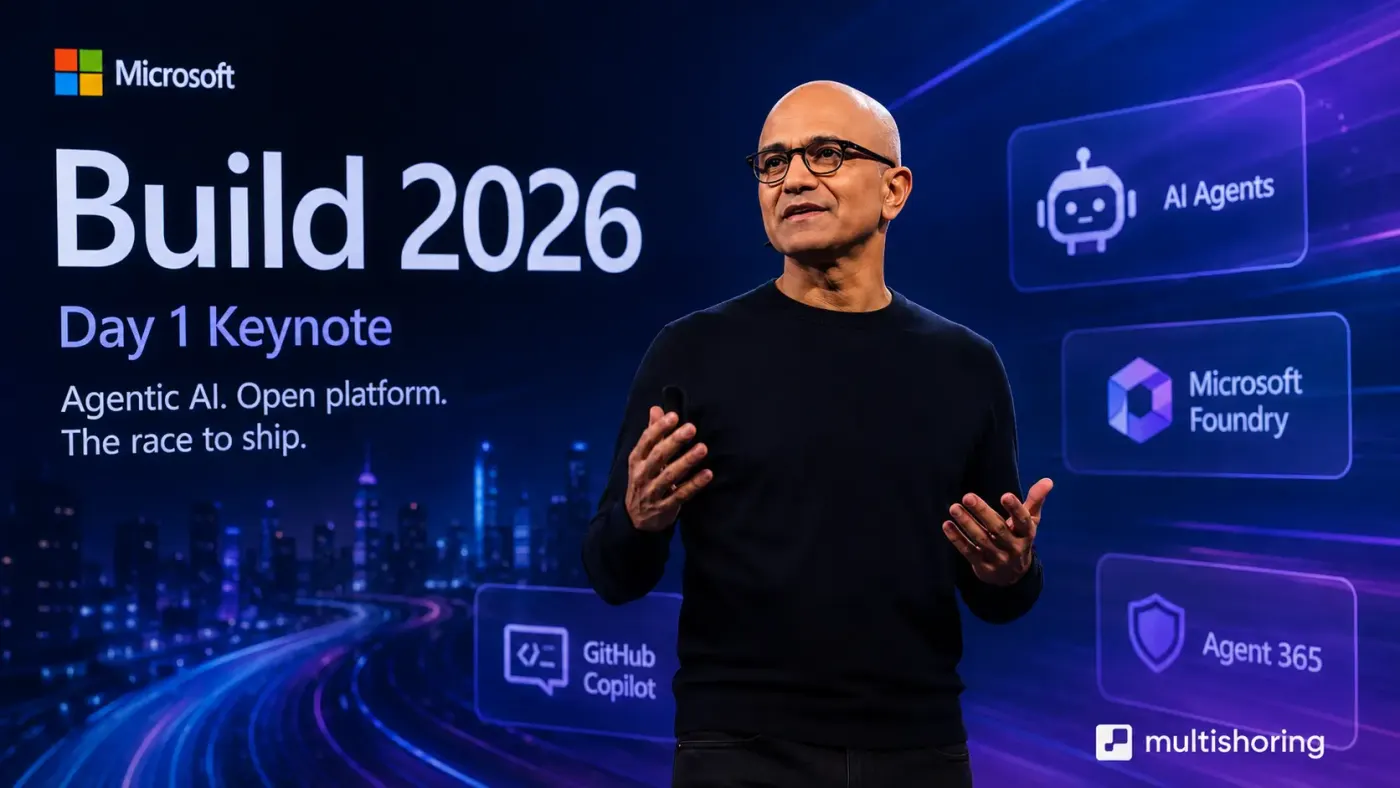
What an Agent Actually Is - and Why It's Different From What Came Before
The word "agent" is doing a lot of work in tech coverage right now, and it's worth being precise about what it means before getting into the specifics.
The AI tools most people have encountered so far are reactive. You type something, they respond. You ask a question, you get an answer. Even Copilot in its early forms worked this way - a sidebar you could consult, a button you could press, a tool that waited for instructions.
An agent is different in a specific way: it takes a goal and figures out the steps to achieve it without you specifying each one. You don't say "open my calendar, find Tuesday afternoon, create an event, invite these three people, send the confirmation." You say "schedule a meeting with these three people sometime Tuesday afternoon" and the agent handles the rest - including negotiating across calendars, handling conflicts, and sending the invites.
That sounds like a small difference. It isn't. Reactive AI is a smarter search box. Agentic AI is a colleague you can delegate to. The gap between those two things - in usefulness, in risk, in what it means to have it embedded in your operating system - is enormous.
What Microsoft Actually Announced
The scale of the Build 2026 announcements is worth acknowledging upfront: this was one of the largest developer conference drops Microsoft has had in years. The headline items, in plain English:
- Windows is now an agent runtime. Microsoft has built what it's calling a Windows Agent Runtime - infrastructure inside the operating system specifically designed for agents to run, take actions, and be controlled. This isn't a third-party app layer. It's baked into Windows itself.
- An on-device AI model ships with Windows. Phi-4-Silicon, a 3.8 billion parameter model optimised for the Neural Processing Units (NPUs) in modern PCs, now ships with the Windows 2026 Update. It handles tasks like email summarisation, document formatting, and schedule management entirely on the device, without sending data to the cloud. Qualcomm, Intel, and AMD all confirmed their current processors support the required NPU throughput. On-device processing means these features work without a network connection and without your data leaving your machine.
- The Microsoft Agent Framework hit version 1.0. After a year in preview, the framework developers use to build agents is now generally available. It supports agents that can exchange structured messages, delegate subtasks to other agents, and coordinate across systems using shared organisational context. The underlying communication protocol is built on top of a spec Google co-developed earlier this year - a rare moment of cross-industry standardisation that suggests the A2A (Agent-to-Agent) protocol may become the industry baseline rather than a proprietary Microsoft format.
- GitHub Copilot got a full app and an agent-first SDK. The new GitHub Copilot app is broader than the existing IDE integration - it's positioned as a standalone agent platform for developers. A new SDK called Rayfin lets developers connect their own agents to it as a backend service. The agentic coding workflow - scaffold, design, build, run, test, package, ship - is now supported end-to-end through a single agent-accessible interface.
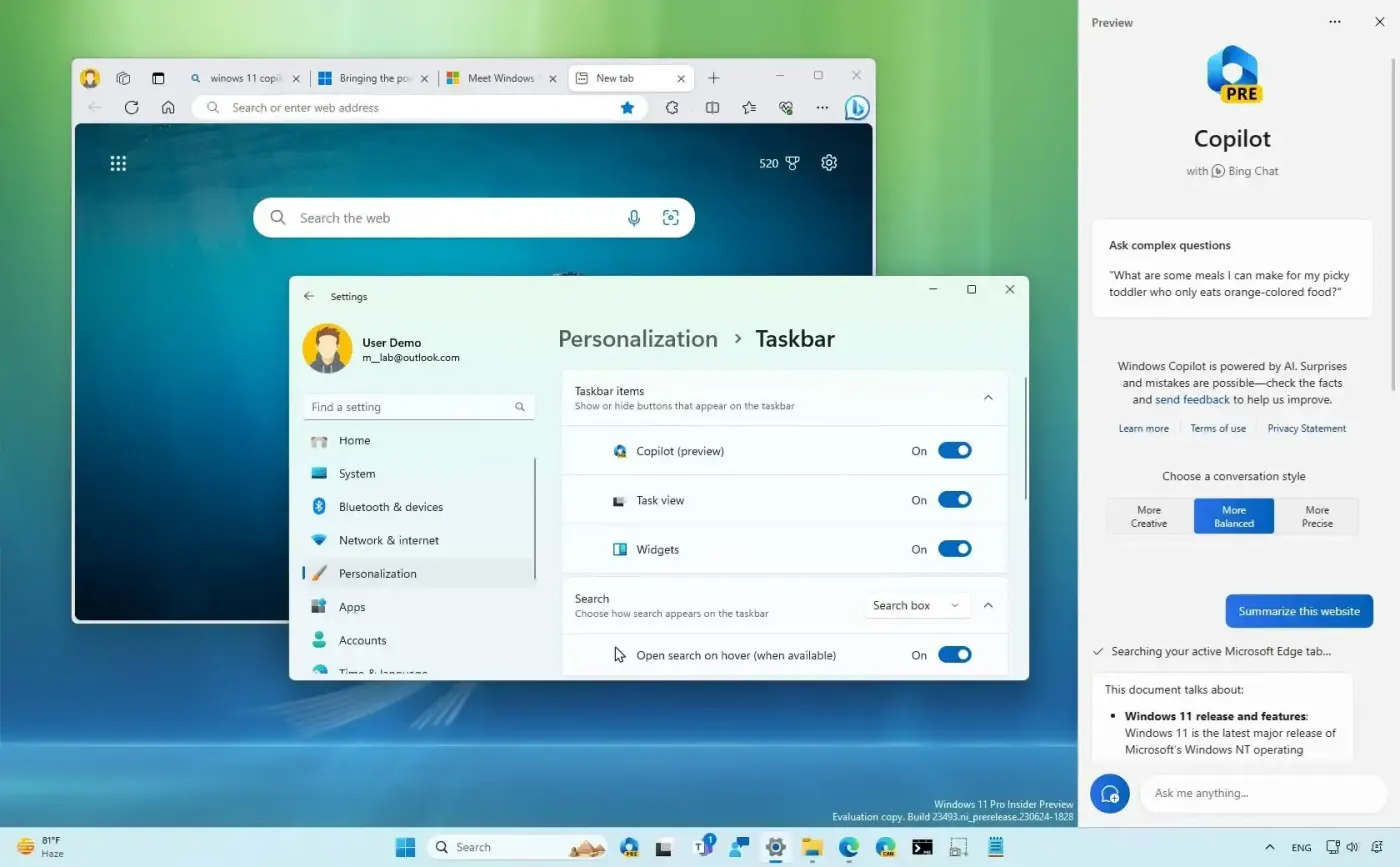
- Copilot Guard was formalised. This is the safety layer - a feature that sandboxes each agent action and prompts for user confirmation before touching system settings or sensitive data. Every agent action is supposed to be auditable, reversible, and permissioned.
The Part That Actually Changes Your Daily Life
Most of the Build announcements are aimed at developers and IT administrators. But the downstream effect - what this looks like for an ordinary Windows user in 12 to 18 months - is worth thinking through.
Advertisement
The scenario Microsoft is building toward: you wake up, your PC has already processed your overnight emails, flagged three things that need a response, drafted suggested replies, identified a scheduling conflict in your afternoon and resolved it, and summarised two documents your team shared overnight. You review, approve or modify, and move on.
None of that involved you opening an app, navigating a menu, or typing a query. The agents ran while you slept, using the context they have about your work - your calendar permissions, your email patterns, your document access - to take action.
For people who spend a significant part of their working day in email and calendar management, this is genuinely useful in a way that "AI can help you write better emails" never quite was. The productivity argument for agentic AI isn't that it makes individual tasks faster. It's that it eliminates entire categories of coordination overhead that eat time without producing anything.
The Honest Concerns - Which Microsoft Is Not Fully Answering
Here's where I want to slow down, because the Build coverage has been overwhelmingly enthusiastic and some important questions are getting lost in the excitement.
The first question is about permissions and trust. An agent that can manage your calendar, send emails on your behalf, and access your documents has a meaningful amount of power over your professional life. Copilot Guard promises sandboxing and user confirmation for sensitive actions. But "user confirmation" in software has a history of becoming "a dialog box you click through without reading." The question isn't whether Microsoft has built a confirmation mechanism. It's whether that mechanism will actually function as a meaningful check once agents become embedded in daily workflows and users start treating the confirmation prompt the way they treat cookie consent banners.
The second question is about failure modes. Agents make mistakes. They misinterpret context, act on incomplete information, or complete the literal task you described rather than the task you meant. When a chatbot makes a mistake, you get a wrong answer. When an agent makes a mistake, it might have already sent an email, moved a file, or scheduled a meeting before you noticed. The auditability and reversibility promises from Microsoft's enterprise pitch need to extend to consumer use cases too - and right now the details on what "reversible" actually means in practice are thin.
✦ Free Newsletter ✦
Never miss a story
Tools, tutorials and AI deep-dives - straight to your inbox, every week.
The third question is about data. Phi-4-Silicon running on-device is a genuine privacy win for the features it handles locally. But agents that coordinate across cloud services - Azure, Microsoft 365, external APIs - are by definition moving data between systems. Microsoft's enterprise customers have compliance teams to think through the implications. Individual users mostly don't.
None of these concerns invalidate what Microsoft is building. But the strongest version of Build 2026 would make the user contract and enterprise contract explicit - what Microsoft will not do with agent access, what remains auditable, what stays under user control. The weakest version treats those as implementation details to be solved after the demos have landed. Based on the announcements, we're somewhere in between.
What This Means for Developers
If you're building software on Microsoft's stack, the implications are immediate and significant.
The Agent Framework hitting 1.0 means you can now build production agents rather than experiments. The A2A protocol being an open standard rather than a proprietary Microsoft format means agents built on different platforms can in theory communicate - which opens up multi-agent workflows that cross organisational boundaries.
Advertisement
The GitHub Copilot app and Rayfin SDK mean that if you're building developer tooling, the question is no longer "should this integrate with Copilot" but "how do I build this as an agent-first experience from the start."
Windows Development Skills being generally available means agents can now scaffold, build, and test native Windows apps - the full development lifecycle - with structured knowledge that understands WinUI 3 and the Windows app platform. For teams that build Windows software, this changes what's possible to delegate to an AI agent and what still requires a human developer making judgment calls.
The practical advice: don't try to adopt everything at once. If you want one place to start, the Agent Control Specification - Microsoft's framework for defining what an agent is and isn't allowed to do in an enterprise environment - is the safest first step. Understanding the governance model before building the agents is the order of operations that will save you headaches later.
The Bigger Picture
Microsoft has been in this AI race since its early investment in OpenAI, but Build 2026 feels like the moment the strategy crystallised into something coherent.
The bet is clear: Microsoft wants to own the agent layer of computing the way it owned the operating system layer in the 1990s. Windows as the runtime. Azure as the cloud backbone. GitHub Copilot as the developer tool. Microsoft 365 as the enterprise surface. Copilot Platform as the connective tissue between all of them. Every one of these products is being repositioned around the same concept - agents that act, not assistants that respond.
Whether that bet pays off depends on two things that Microsoft controls and two things it doesn't.
It controls the quality of the agent runtime and the developer tools. Based on the Build announcements, both look credible. The A2A protocol adoption, the on-device model, the framework hitting 1.0 - these are real engineering milestones, not vapourware.
It doesn't control user trust, which is earned slowly and lost quickly. The moment a widely-used Microsoft agent makes a consequential mistake that real people experience - an email sent to the wrong person, a meeting scheduled at the wrong time with the wrong attendees, a document shared beyond its intended audience - the narrative around "AI that acts on your behalf" will shift sharply. Microsoft knows this, which is why Copilot Guard and the auditing and reversibility promises are prominent in the messaging.
It also doesn't control regulation, which is moving faster than most tech companies would like. The EU AI Act's requirements around transparency and human oversight were written with exactly this category of technology in mind. How agentic AI in enterprise Windows environments fits within those requirements is not a question that's been fully answered.
The agentic era Nadella declared at Build 2026 is real. The technology exists, the frameworks are shipping, and the use cases are compelling. Whether it arrives as the productivity revolution Microsoft is promising, or as a more complicated story about trust, control, and unintended consequences, will depend less on the engineering than on decisions that haven't been made yet.
Advertisement
That's always true of genuinely new technology. It doesn't make the technology less interesting. It makes paying attention more important.
Frequently Asked Questions
- What is the Windows Agent Runtime announced at Build 2026?
- The Windows Agent Runtime is infrastructure baked directly into Windows that gives AI agents a controlled environment to run, take actions, and be managed. Unlike previous AI features that sat on top of Windows as apps or browser extensions, this is built into the operating system itself - meaning agents can interact with files, calendars, email, and system settings in a structured, auditable way.
- What is Phi-4-Silicon and why does it matter for privacy?
- Phi-4-Silicon is a 3.8 billion parameter AI model that ships with the Windows 2026 Update and runs entirely on the device using the NPU (Neural Processing Unit) in modern PCs from Qualcomm, Intel, and AMD. Because it runs locally rather than in the cloud, tasks like email summarisation and document formatting happen without your data leaving your machine - which is a meaningful privacy improvement over cloud-dependent AI features.
- Should I be concerned about AI agents having access to my email and calendar?
- The concern is legitimate and worth taking seriously. Microsoft's Copilot Guard feature is designed to sandbox agent actions and require confirmation before anything sensitive happens. The more important question is whether those confirmation prompts will stay meaningful in practice once agents become routine - there's a real risk they'll get clicked through the way cookie consent banners do. Understanding what permissions you're granting and reviewing agent logs regularly is sensible precaution.
Advertisement