Microsoft's pitch for Project Zenith sounds like a UX story: a cleaner, preconfigured Windows 11 desktop with the taskbar already stocked with Visual Studio Code and Windows Terminal. That framing misses the actual news. The requirement that makes a PC eligible for Project Zenith at all, 64GB of unified memory and at least 250GB/s of memory bandwidth, is the real story, and it quietly draws a line between developers Microsoft is building for and everyone still on ordinary hardware.
Key takeaways
- Microsoft announced Project Zenith on September 4, 2026, a "ready-to-code" Windows 11 experience for developer-class PCs.
- Qualifying hardware needs at least 64GB of unified memory and 250GB/s of memory bandwidth, specs aimed at running local AI models above 30 billion parameters without cloud tokens.
- The first machine that meets the bar is AMD's Ryzen AI Halo Developer Platform, sold through Micro Center for $3,999 with 128GB of LPDDR5X memory, per TweakTown, ServeTheHome and TechPowerUp.
- Developer reaction has been mixed to skeptical: coverage from outlets including Windows Central and Yahoo Tech notes confusion over what Zenith actually is and pushback on Microsoft imposing default configurations.
The visible part of Project Zenith is modest. Windows Terminal and Visual Studio Code are pinned to the taskbar by default, File Explorer is set to show file extensions, hidden files, full paths and a details pane, and long-path support is switched on out of the box. Reporting on the announcement also lists a preinstalled toolchain that includes GitHub Copilot, the Windows Subsystem for Linux with Ubuntu, and current runtimes for Python, Node.js and .NET. None of that is hard to set up manually. Any developer who has configured a fresh Windows machine before could do it in an afternoon.
The Real Requirement Behind Project Zenith Isn't Software, It's 64GB of Fast Memory
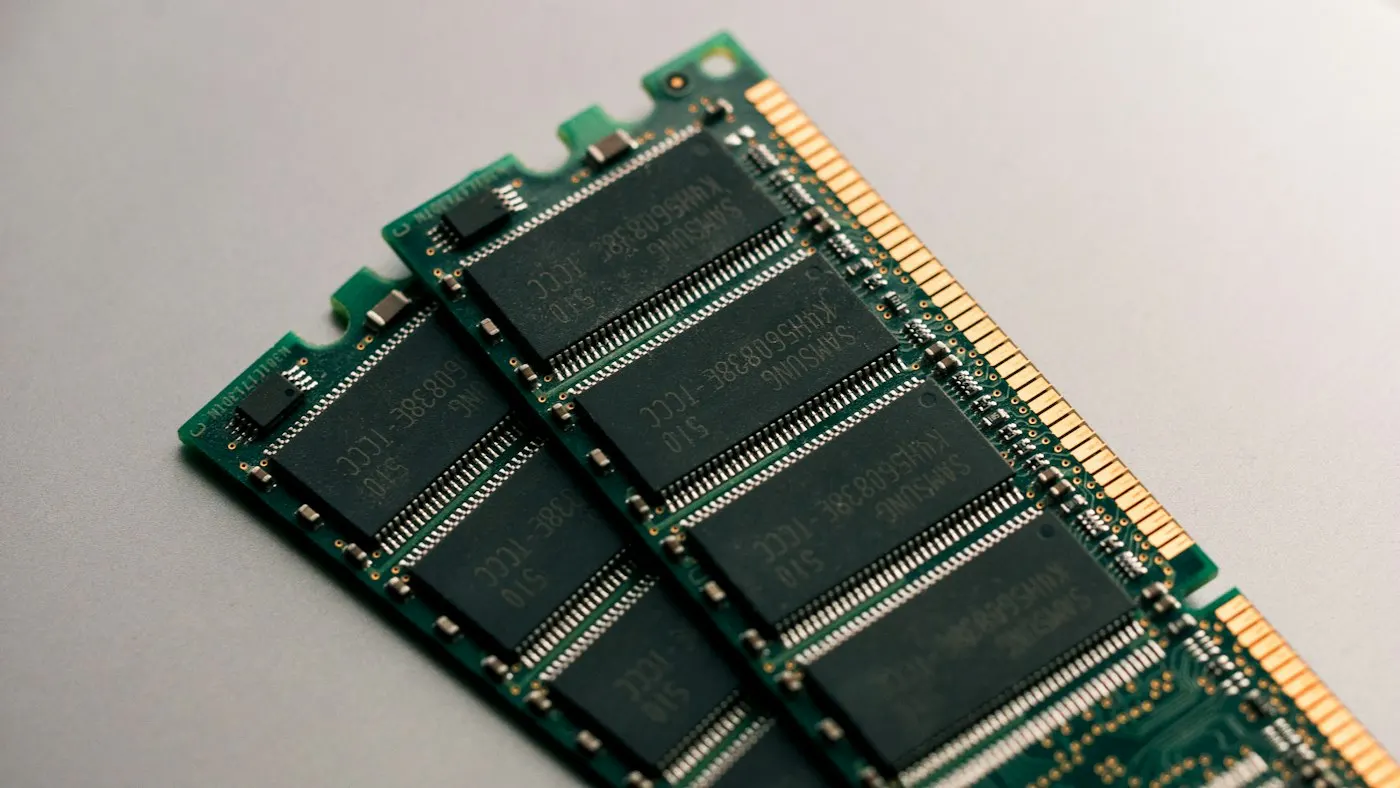
What makes Project Zenith more than a taskbar tweak is the hardware bar behind it. According to Tom's Hardware, a PC only qualifies for the full Zenith experience if it has 64GB or more of unified memory and memory bandwidth of at least 250GB/s. That second number is the one that matters. Ordinary consumer PCs, even ones with 64GB of RAM installed, typically run at a fraction of that bandwidth because standard DDR5 channels are not built for it.
Advertisement
Microsoft's stated reason is local AI inference. Coverage of the announcement describes the goal as running AI models beyond 30 billion parameters directly on the device, without depending on a metered cloud API. That is a meaningfully different pitch from "Windows but tidier." A 30-billion-parameter model needs to move a lot of data between memory and the processor for every generated token, and that is precisely what high memory bandwidth buys you. Microsoft has effectively defined "developer-class" hardware not by CPU speed or GPU power, but by how fast a chip can feed a large language model.
Right Now, There Is Exactly One Way In, and It Costs $3,999
The only hardware currently shipping that meets Zenith's bar is AMD's Ryzen AI Halo Developer Platform, confirmed at IFA to support Project Zenith out of the box. According to matching reports from TweakTown, ServeTheHome and TechPowerUp, the system is priced at $3,999 in the US through Micro Center and pairs 16 Zen 5 CPU cores with 128GB of LPDDR5X memory, Radeon 8060S integrated graphics, and a 50 TOPS NPU in a compact aluminum chassis. Additional OEM and silicon-partner devices are expected in the coming months, but as of this writing that AMD box is the only qualifying machine a developer can actually buy.

That is worth sitting with. A feature Microsoft is marketing to the broad developer population currently has a single, four-thousand-dollar point of entry. Compare that to the memory price spikes techdrifting has covered this year: Microsoft is asking for a large pool of exotic, high-bandwidth memory at the exact moment memory itself has gotten more expensive industry-wide. That timing is not Microsoft's fault, but it does mean the practical cost of qualifying for Zenith is unlikely to fall soon.
This Is the Same Move Apple Made With Unified Memory
The unified-memory framing is not a coincidence. Several outlets, including Windows Central, explicitly compared Zenith's hardware requirements to Apple Silicon Macs, which have used a single pool of high-bandwidth memory shared between CPU and GPU since the M1 in 2020. Apple's unified memory architecture became a genuine draw for developers who wanted to run larger local models or virtual machines without hitting a bandwidth wall, and it is one reason techdrifting's own review of the M5 MacBook Air found it competitive for development work well outside typical "laptop" tasks.
✦ Free Newsletter ✦
Never miss a story
Tools, tutorials and AI deep-dives - straight to your inbox, every week.
Microsoft's Windows partners have never had an answer to that at scale, because the PC ecosystem is fragmented across many chip and memory vendors instead of one company controlling the whole stack. Project Zenith is Microsoft's attempt to manufacture the same effect: a defined, marketable hardware tier that unlocks a specific software experience, the way "Apple Silicon" does on the Mac. It also fits a broader pattern. Microsoft's push to embed AI agents throughout Copilot and Windows, which techdrifting covered around Build 2026, depends on local compute headroom that most existing Windows PCs simply do not have.
Advertisement
Developers Are Pushing Back on Being Told What "Ready" Means
The steelman case against Zenith is straightforward and it comes from the people it targets. Developers already have opinionated configurations, dotfiles, terminal setups, and preferred editors, and a preconfigured environment is redundant work for anyone who already knows how to set up a machine. Windows Central's coverage frames the branding itself as confusing, arguing that what Zenith calls a Windows "experience" is really a hardware requirement wearing a software name, and a piece from Yahoo Tech titled around the idea that "nobody is really sure" what Zenith actually is captures a broader confusion in the initial coverage.

The tension is simple: a default that feels like a helpful head start to one developer can feel like unnecessary interference to another, and Microsoft cannot tune "ready to code" to satisfy both at once. That criticism is fair, and it is worth taking seriously rather than dismissing as noise. Still, the counterpoint from Microsoft's side has some weight too: OEMs already ship developer-unfriendly defaults (bloatware, hidden file extensions, no WSL), and a sanctioned baseline that partner hardware makers agree to ship is arguably better than the status quo, even if power users immediately customize it away. The software layer is genuinely optional in a way the memory requirement is not.
Who Should Pay Attention, and Who Can Ignore This For Now
This matters most to developers doing local AI and machine learning work who are choosing between a high-memory Windows PC and a Mac, teams evaluating whether to standardize developer laptops around unified-memory hardware, and anyone budgeting for a workstation refresh in the next year who wants to know what "AI PC" claims actually require to be true. It is close to irrelevant for web developers, mobile developers, or anyone whose workload does not involve running large models locally: the preinstalled toolchain is convenient but replicable in under an hour, and none of it requires Zenith-qualified hardware to use.
- Choose Zenith-class hardware now if you specifically need to run 30B-plus parameter models locally today and can justify roughly $4,000 for the only currently shipping qualifying machine.
- Wait if your interest is the software experience alone. The taskbar pins, File Explorer settings and preinstalled tools do not require special hardware and can be replicated on any existing Windows 11 PC.
- Skip it entirely if your work is web, mobile or backend development without local model inference. Nothing here changes your day-to-day setup.
What to Watch Next
Two things will determine whether Project Zenith becomes a real category or a marketing footnote. First, whether other OEMs and silicon partners actually ship qualifying hardware at lower price points within the "coming months" window Microsoft and AMD have described, since a single $3,999 machine is not a market. Second, whether Microsoft extends any part of the software experience, such as the preinstalled toolchain or File Explorer defaults, to non-qualifying PCs, which would suggest the memory requirement was always more about marketing a hardware tier than a technical necessity.
Advertisement
For now, treat "Project Zenith" as two separate announcements bundled into one name: a free set of Windows tweaks anyone can copy by hand, and a $3,999 hardware requirement that defines who Microsoft considers a "real" AI developer. Judge each on its own terms, and do not let the friendly branding of the first one talk you into the price tag of the second.
Sources
- Announcing Project Zenith, Windows Developer Blog
- Tom's Hardware: Stripped-down Windows 11 for AI developers
- Windows Central: What is Project Zenith?
- TechRepublic: Microsoft Project Zenith
- TweakTown: AMD Ryzen AI Halo mini PC launches at $3,999
- ServeTheHome: AMD Ryzen AI Halo dev mini PC
- Yahoo Tech: Nobody is really sure what Project Zenith is

Advertisement