Updated September 24, 2026
You've probably seen the headlines. Microsoft guiding investors toward roughly $190 billion in data center spending for 2026, more than double the $80 billion figure that made headlines the year before. Google signing a $30 billion compute deal with SpaceX. Ohio residents voting to ban hyperscale facilities from their counties. Amazon draining local groundwater to cool servers in Indiana. A technology that most people interact with through a chat window is somehow triggering fights over electricity grids, water rights, and community ballots in rural America.
What's new (September 24, 2026): The statewide push to ban Ohio data centers outright has stalled: organizers behind the proposed constitutional amendment missed the July 1, 2026 deadline to gather roughly 413,000 signatures and are now aiming for the 2027 ballot instead, according to the Ohio Capital Journal. The fight has shifted to individual communities: on September 1, 2026, the Ohio Supreme Court ordered the city of Trenton, near Cincinnati, to let voters decide on a local data center ban, and Ballotpedia counts 20 data center-related ballot measures across 17 Ohio jurisdictions for 2026, more than half of the 38 such measures nationwide. For anyone near a proposed site, the fight now runs through city councils and local ballots rather than a single statewide vote.
Advertisement
To understand why, you need to understand what an AI data center actually is - and why it's fundamentally different from every data center that came before it.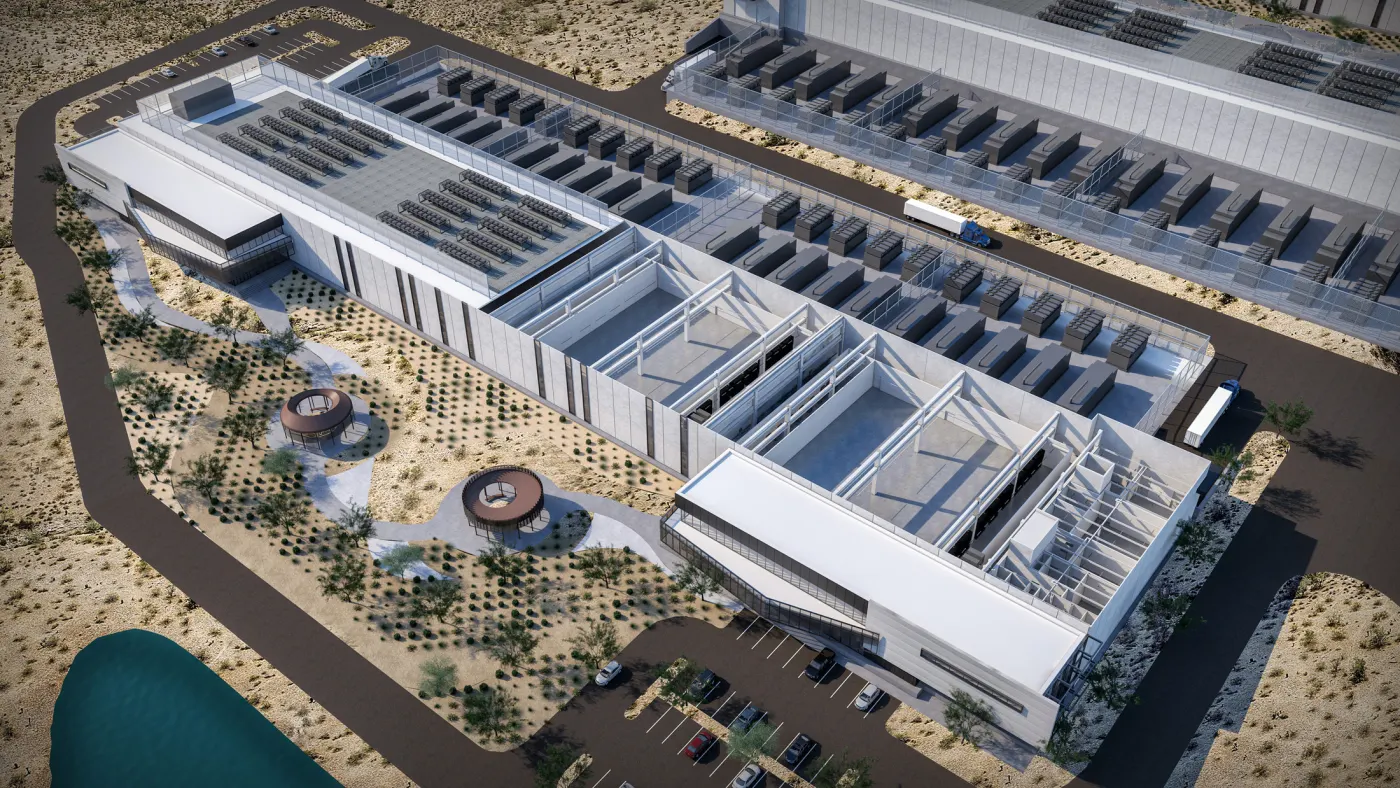
Start With What a Regular Data Center Does
Before getting into the AI-specific stuff, it helps to understand what a traditional data center looks like.
Think of a regular data center as a very large, very organized filing cabinet - one that also does arithmetic. It stores your emails, runs your company's accounting software, serves the web pages you visit, processes your online orders. The work is varied, the tasks are mostly independent of each other, and the hardware doing the work is a room full of standard servers - essentially powerful desktop computers stacked in racks, running continuously.
This model has worked fine for 30 years. The servers are relatively predictable in how much power they consume. The cooling requirements are understood. You can plan, build, and operate one without too many surprises.
AI data centers broke all of that.
What Makes an AI Data Center Different
The core difference is the type of work being done - and the hardware required to do it.
Training an AI model - the process of teaching a system like ChatGPT or Gemini to understand language, generate images, or reason through problems - is nothing like running a spreadsheet or serving a web page. It involves performing billions of mathematical operations simultaneously, over weeks or months, across hardware that has to stay in near-perfect sync throughout.
You can't do that on standard servers. The chip inside a regular server - a CPU (Central Processing Unit) - is designed to handle one or a small number of tasks at a time, very quickly. It's brilliant at sequential work. AI training requires something completely different: the ability to run thousands of calculations in parallel, all at once, continuously.
That's what GPUs (Graphics Processing Units) were originally built for - rendering the pixels of a video game simultaneously rather than one at a time. It turns out the same parallel processing capability that draws game frames is also what you need to train neural networks. Nvidia, which made its name in gaming hardware, became one of the most valuable companies in the world almost overnight because it was already building the chips AI needed.
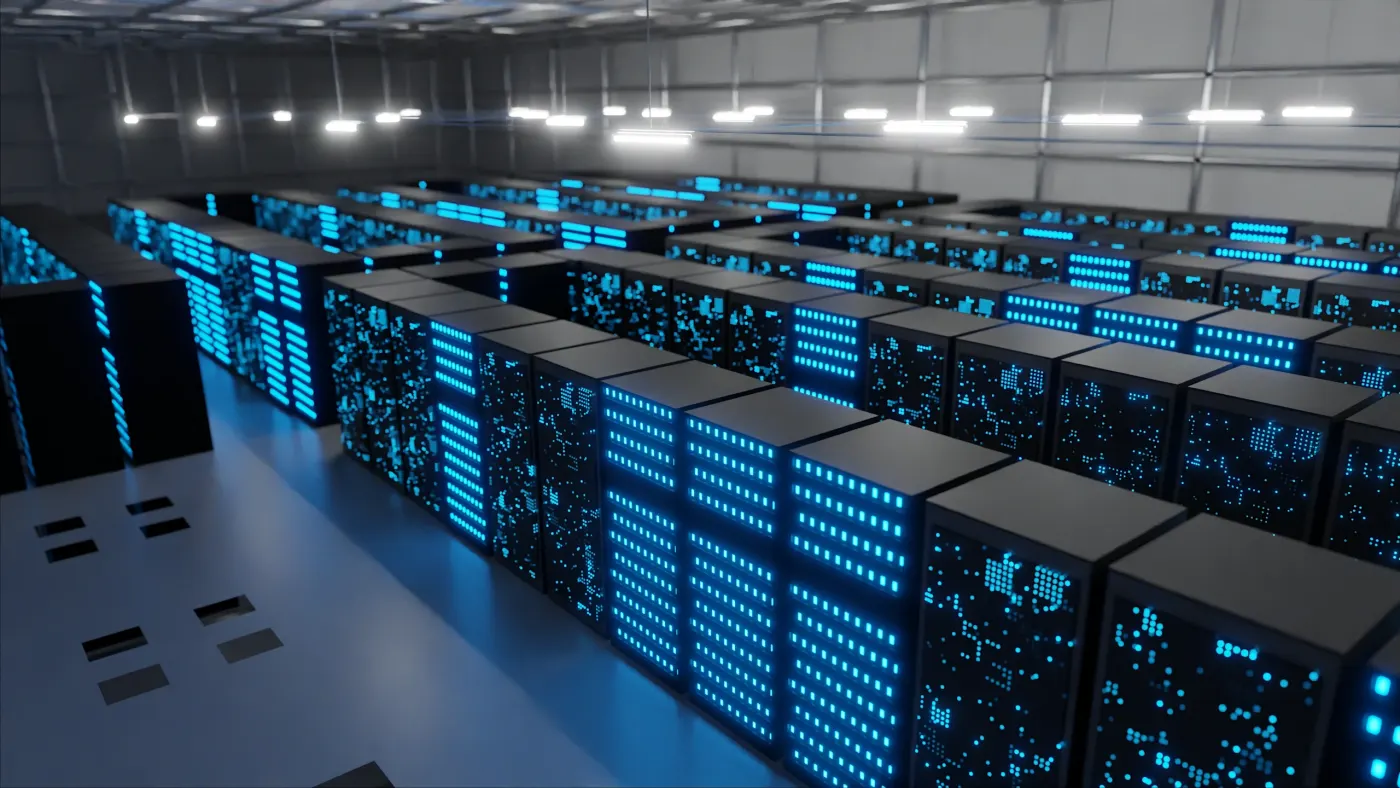
An AI data center is, at its core, a building filled with thousands of these GPUs - networked together, kept cool, and fed enough electricity to run continuously at maximum load.
The Scale Is Hard to Grasp
Here's a way to feel the difference concretely.
A traditional data center might consume 20 to 40 megawatts of power. That's enough electricity to power roughly 15,000 to 30,000 homes.
A modern AI data center - the kind being built right now by Google, Microsoft, Amazon, and Meta - can consume 500 megawatts, 1 gigawatt, or more. Amazon's Project Rainier facility, built to train Anthropic's models, is planned to use 2.2 gigawatts at full operation. That's the equivalent of roughly one million households. From one facility. Running one company's AI workloads.
This isn't a marginal scaling of the old model. It's a different category of infrastructure entirely - one that sits alongside power stations and steel mills in terms of energy demands, not alongside office buildings and server rooms.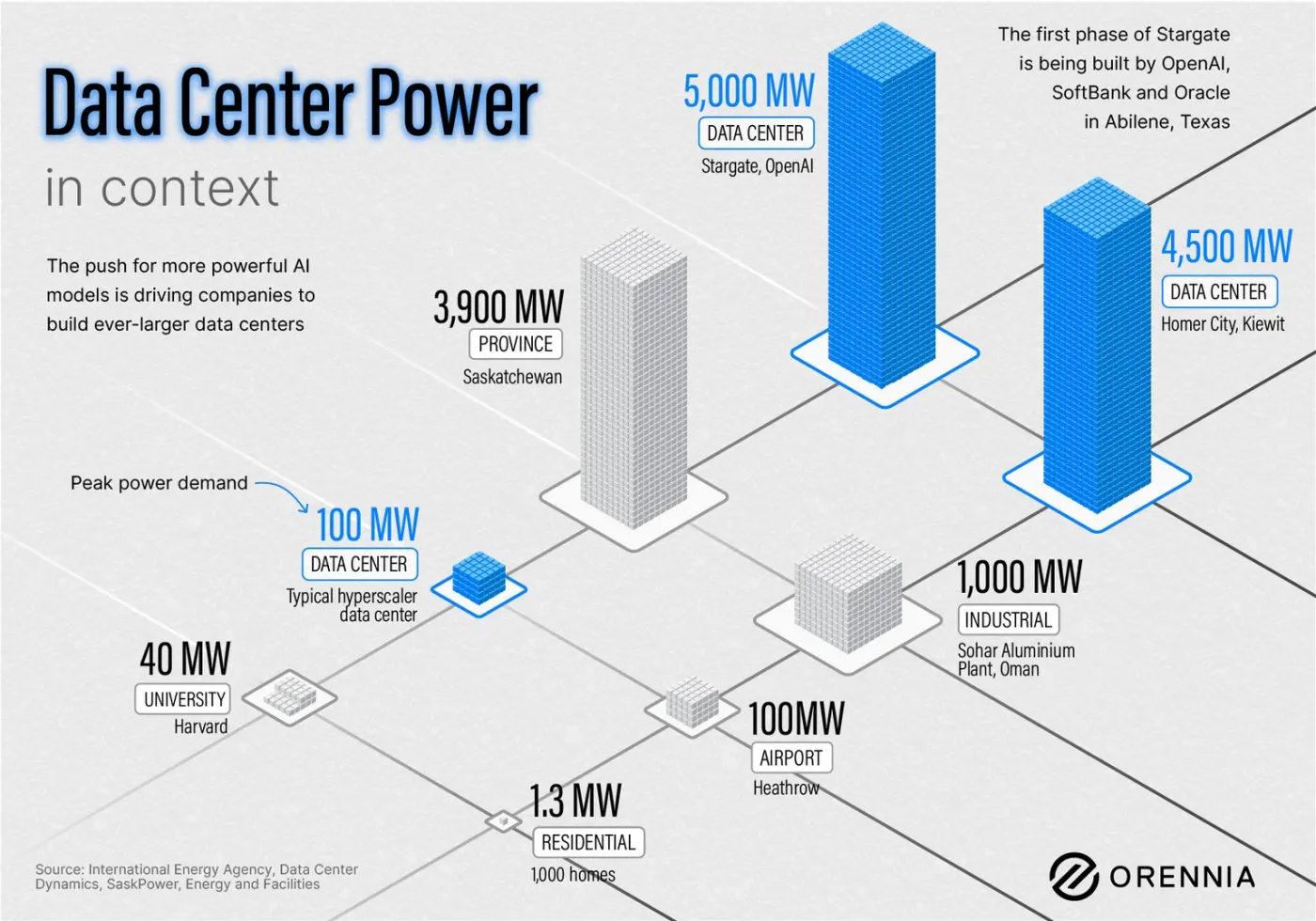
Two Jobs, Two Very Different Problems
Once a model is trained, it has to be used - every time you type a query into an AI chatbot, generate an image, or ask your phone's AI assistant something, a different kind of compute kicks in. This is called inference: the model applying what it learned to answer your specific question.
Training and inference have almost opposite requirements, which creates a design headache that didn't exist in traditional data centers.
Advertisement
Training needs thousands of GPUs tightly connected, running in lockstep, with extremely fast communication between chips - latency of even a few milliseconds can slow the whole process. Location matters less than raw power and connectivity between machines.
Inference needs to respond to millions of users simultaneously, often in real-time, with consistent speed regardless of demand spikes. It's more distributed, more geographically spread out, and optimised for availability rather than raw throughput.
✦ Free Newsletter ✦
Never miss a story
Tools, tutorials and AI deep-dives - straight to your inbox, every week.
Building a facility that handles both - which is increasingly what operators require - means solving two fundamentally different engineering problems inside the same building. Engineers at Oracle, Nvidia, and Google described this exact challenge at Data Center World 2026 in Washington: the shift from general-purpose IT to tightly integrated AI compute systems that have to simultaneously support both models.
Why It Needs So Much Water
This is the part that surprises most people who haven't followed the story closely.
All that computing power generates enormous heat. GPUs running at maximum load in an enclosed space get very hot, very fast - and if they overheat, they slow down or fail. Keeping them cool is one of the central engineering challenges of AI infrastructure.
Traditional data centers mostly used air cooling - big fans, air conditioning, carefully managed airflow. At the power densities AI requires, air cooling becomes inadequate. The heat generated per square foot is too intense.
The solution increasingly used is liquid cooling - either running chilled water through pipes in contact with the chips directly, or using water evaporation systems to shed heat into the atmosphere. Both approaches work. Both use significant amounts of water.
Amazon's Indiana facility drew so much groundwater during construction and early operation that Indiana state officials launched an investigation into whether local residential wells were running dry as a result. This isn't a hypothetical environmental concern - it's a documented consequence of building AI infrastructure in a location that wasn't prepared for the water demands.
As these facilities grow in scale, the water question is becoming as significant as the electricity question.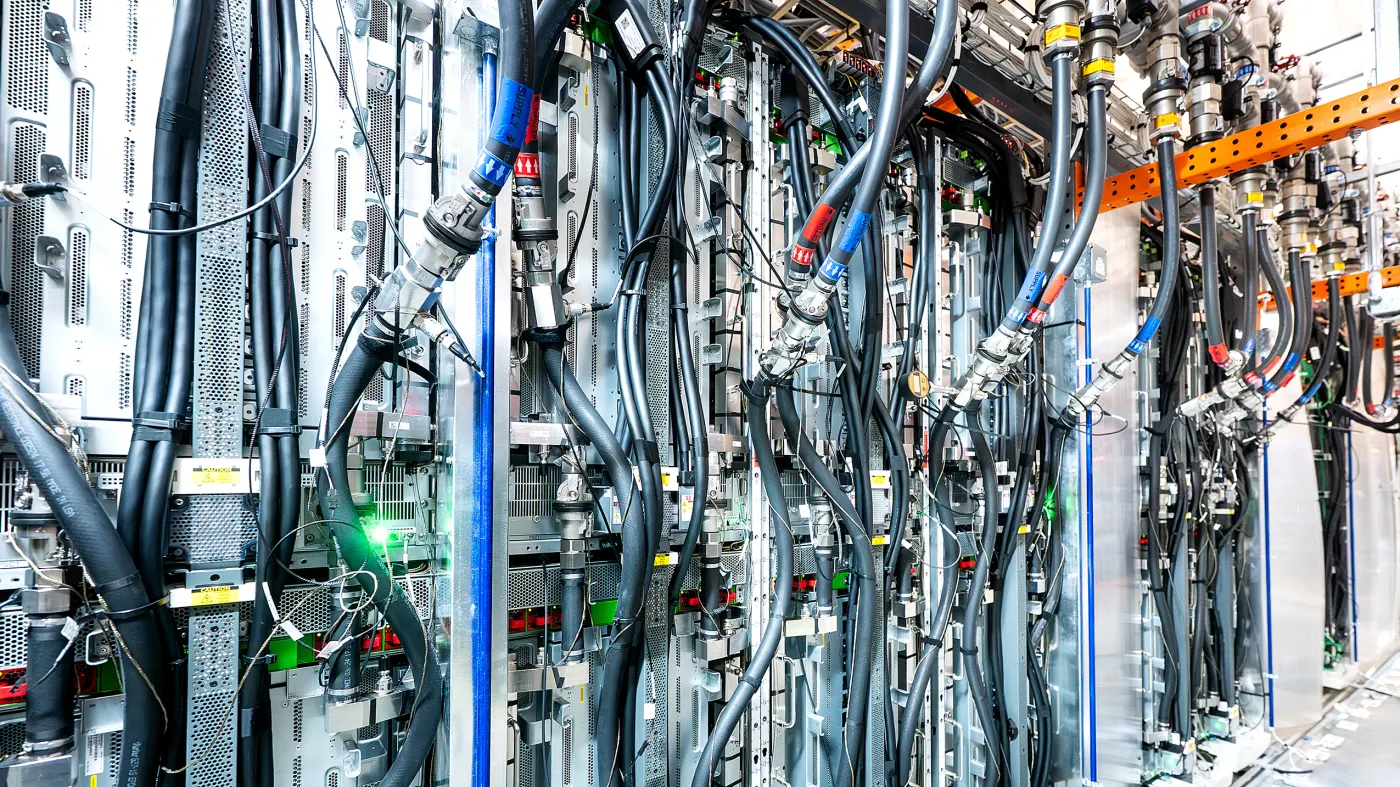
The Three Ways These Facilities Get Built
Not every AI data center is a hyperscale monolith. There are broadly three models:
- Hyperscale facilities - the ones making headlines. Built and owned by the biggest tech companies - Google, Microsoft, Amazon, Meta - or purpose-built for them by specialist operators. These are enormous, purpose-designed from the ground up for AI workloads, and consume resources at a scale that competes with industrial infrastructure. When Ohio suspended data center tax incentives because the projected costs to the state budget became unacceptable, this is the category they were responding to.
- Colocation facilities - shared space, power, and cooling that multiple tenants rent. A company that needs serious AI compute but doesn't want to build its own facility moves its GPU clusters into a colocation center alongside other customers. Lower upfront cost, less control, still significant infrastructure requirements.
- On-premises AI infrastructure - enterprises building their own smaller-scale AI compute environments within their existing facilities. Growing fast in 2026 as data privacy concerns and the cost of cloud compute push companies toward keeping sensitive AI workloads in-house. Smaller footprint, but the same fundamental engineering challenges at reduced scale.
Why Communities Are Pushing Back
The politics around AI data centers have shifted sharply in the past 18 months, and it's worth understanding why.
The original pitch to local governments was straightforward: tax revenue, construction jobs, economic activity. Many states and counties offered generous incentives - tax breaks, expedited permits, utility rate reductions - to attract these facilities.
What communities are discovering is that the ongoing benefits are more limited than promised. AI data centers are heavily automated. A facility consuming hundreds of megawatts of electricity and employing the compute equivalent of a small power station might have a few dozen permanent employees. The tax revenue, in many cases, is going toward incentives that cancel it out. And the burdens - on the power grid, on water supplies, on local infrastructure - are continuous and growing.
Advertisement
Ohio's suspension of data center tax incentives came after state analysts projected that the exemptions would cost the state budget far more than anticipated. Separately, residents in some Ohio counties are advancing ballot measures that would allow communities to ban hyperscale data centers outright. Similar pushback is emerging in Virginia, Texas, and parts of Europe.
This isn't anti-technology sentiment. It's communities doing the arithmetic and concluding that the deal they were offered wasn't as good as advertised.
What's Actually Being Built Inside One
Walk into a modern AI data center - conceptually at least - and here's what you're looking at:
- GPU clusters - the core compute. Thousands of Nvidia H100s, H200s, or Blackwell-generation chips (or their AMD and custom-silicon equivalents), networked together with high-speed interconnects. The networking between GPUs is as important as the GPUs themselves - a bottleneck in data transfer between chips can throttle the entire cluster.
- High-speed networking - InfiniBand or ultra-high-bandwidth Ethernet connecting the GPU clusters, allowing them to communicate fast enough to train models at scale. The networking infrastructure in a serious AI facility is itself a significant engineering project.
- Storage systems - fast, high-capacity storage to feed training data to the GPUs continuously. AI training is data-hungry; storage bottlenecks can waste expensive compute time.
- Power infrastructure - substations, redundant feeds, uninterruptible power supplies, backup generation. A facility consuming a gigawatt of power needs its own power infrastructure that rivals what a small city requires.
- Cooling systems - liquid cooling loops, evaporative cooling towers, precision temperature management. The cooling infrastructure in a large AI facility is a serious engineering system in its own right.
- Software and orchestration - the systems that manage workloads across thousands of GPUs, allocate compute to different tasks, monitor hardware health, and keep everything running efficiently. This layer is less visible but operationally critical.
The Bigger Picture
Here's what all of this adds up to.
AI is not primarily a software story. It never really was. The chatbots and image generators and coding assistants that people interact with are the visible surface of an infrastructure investment that is reshaping how power grids are planned, where water is consumed, which communities get economic activity and which get externalities, and how much capital the biggest companies in the world need to stay competitive.
When Alphabet raises $80 billion in equity to fund AI infrastructure, it's not buying software licenses. It's building physical facilities that consume resources at industrial scale. When SoftBank commits $52 billion to European data centers, it's a land and power play as much as a technology one.
The AI race has moved from who has the smartest model to who controls the atoms: the chips, the gigawatts, the water, the land, the grid connections, and increasingly the regulatory relationships that determine whether any of it can actually get built.
Understanding what an AI data center is - really is, not just in abstract terms - is the starting point for making sense of most of the biggest technology stories of the next decade. The infrastructure being built right now will determine what AI can do, who can afford to do it, and at what cost to the places where it gets built.
Advertisement
That's worth knowing, even if you never work in tech.
Frequently Asked Questions
- What is the difference between an AI data center and a regular data center?
- A regular data center runs varied, mostly independent tasks - email, web pages, accounting software - on standard servers built around CPUs. An AI data center is built around thousands of networked GPUs designed to run massive parallel calculations in lockstep for weeks at a time, and as a result consumes power and water at a scale closer to industrial infrastructure than to a typical office server room.
- Why do AI data centers use so much water?
- The GPUs inside an AI data center generate far more heat per square foot than standard servers, and air cooling can't keep up at that density. Operators increasingly rely on liquid cooling - chilled water piped directly to the chips, or evaporative cooling towers - both of which consume significant volumes of water. Amazon's Indiana facility, for example, drew enough groundwater to trigger a state investigation into local well levels.
- Why are communities trying to ban or restrict AI data centers?
- Many local governments offered tax breaks expecting jobs and revenue in return, but AI data centers are heavily automated and often employ only a few dozen people despite consuming hundreds of megawatts of power. Residents in Ohio and elsewhere have found that the incentives can cost more than the facilities bring in, while the strain on power grids and water supplies is constant - prompting ballot measures and tax-incentive reversals.
Sources
- Ohio Capital Journal: Ohio proposed constitutional amendment to ban data centers will not be on this year's ballot
- The Statehouse News Bureau: Data center ban in southwest Ohio city must go before voters, says Ohio Supreme Court
- Ballotpedia News: Ohio leads states in number of local ballot measures on data centers for 2026
- CNBC: Microsoft calls for $190 billion in 2026 capital spending on soaring memory prices
- The Register: Microsoft lifts 2026 CapEx by $25B to cover price rises
Advertisement