Updated October 2, 2026
Let's be honest about something. The annual iPhone upgrade cycle has become a bit of a ritual in self-deception. You read the leaks. You watch the keynote. You convince yourself that this year is the year. Then three weeks after unboxing, the phone feels exactly like the one it replaced - just slightly lighter, with a different shade of titanium and a camera that takes marginally better photos of your lunch.
What's new (October 2, 2026): Apple officially unveiled the iPhone 18 Pro and Pro Max on September 9, 2026, with both models going on sale September 18 at $1,199 and $1,299 respectively, $100 more than their predecessors. The standard Pro's battery landed almost exactly as leaked at 4,056mAh, but the Pro Max's cell came in far bigger than rumored at 5,391mAh according to teardown-based reporting, an 11.7% jump over the 17 Pro Max, and the variable aperture camera shipped on both models simultaneously rather than launching on the Pro Max first as component leaks had suggested. If you were waiting to see how these predictions panned out, most of them held up, except the Pro Max's battery turned out to be a bigger win than anyone had forecast.
Advertisement
The iPhone 18 Pro might actually break that pattern. Not because it looks different - it almost certainly won't. Apple has clearly decided that the current Pro design is close enough to perfect that messing with it would be pointless. Same 6.3-inch and 6.9-inch panels. Same general form factor. Probably the same Dynamic Island, despite three years of rumours promising otherwise.
But underneath that familiar shell, something more interesting is happening. The three most credible upgrades for the 18 Pro all target the same thing: the moments in daily life where your current iPhone quietly lets you down. Battery anxiety at 6pm. Portrait shots where the software guesses wrong about what should be blurred. A chip that's technically brilliant but not yet doing anything you'd notice without running a benchmark.
That's a more coherent upgrade story than Apple has told in a while. Here's why it might actually hold up.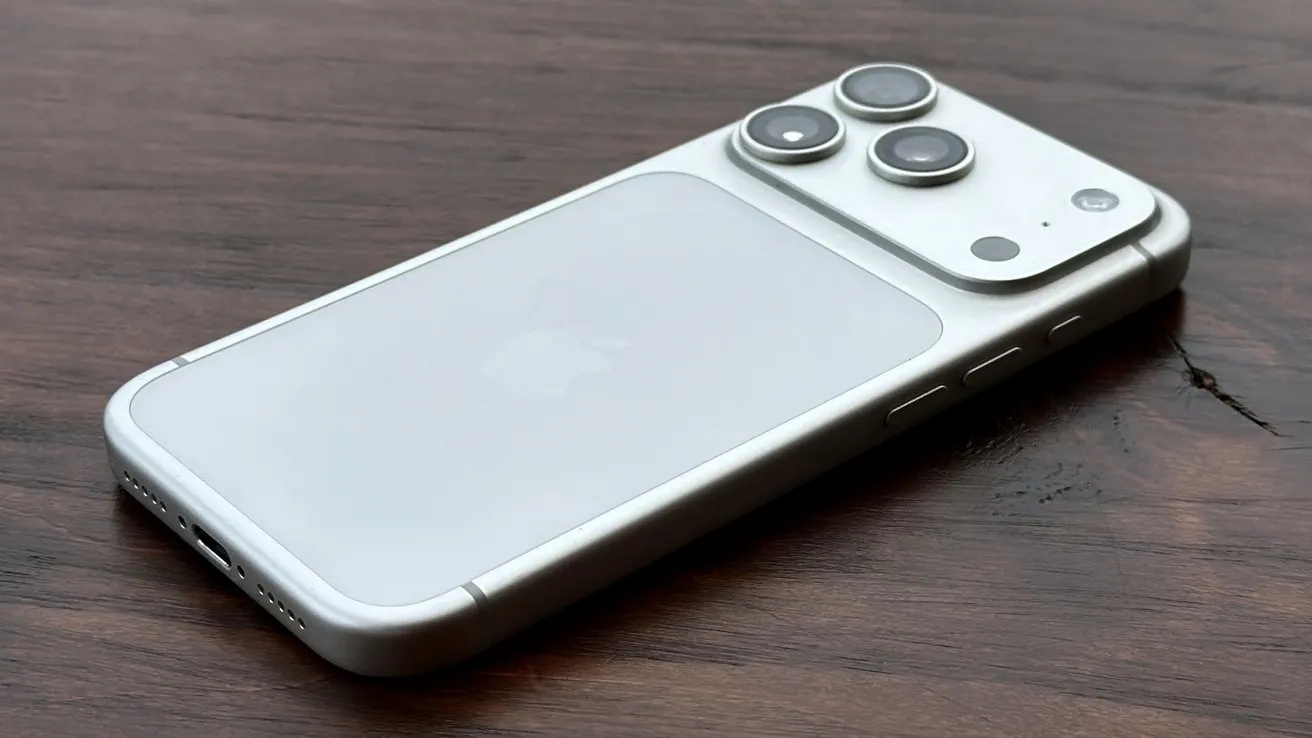
First, a Word About iPhone Rumours in General
Before diving in, it's worth saying something that most Apple coverage won't: the rumour cycle is unreliable in specific, predictable ways, and you should calibrate your excitement accordingly.
The Dynamic Island is the clearest example. For three consecutive years, credible sources have promised it would shrink dramatically - become a pinhole, disappear entirely, do something interesting. For three consecutive years, it shipped unchanged. At this point, "Dynamic Island redesign rumoured" should trigger the same response as "this time England will win the Euros" - technically possible, historically dubious.
The three upgrades below are different. They're corroborated by multiple independent sources across months of consistent reporting. They don't require new infrastructure to exist (looking at you, satellite 5G), and they're refinements of things Apple has already proven it can build. That's the filter worth applying: is this something Apple has already done, done better? Or is it something entirely new that would require the stars to align?
Battery, A20 Pro chip, variable aperture camera. All three pass that test.
1. Battery: Apple Is Finally Attacking the Problem From Every Direction at Once
Here's the thing about smartphone battery life that the specs never quite capture: it's not just about the number of milliamp-hours in the cell. It's about the relationship between the battery, the chip, the screen, and every background process fighting for a slice of power at 5pm when you're trying to get home.
Apple has always known this. They've improved individual variables year after year. Better efficiency from each chip generation. Smarter background app management. Display optimisations. But the improvements have been incremental because they've generally been targeting one variable at a time.
The iPhone 18 Pro looks like the year they go after several simultaneously.
Official specs now confirm a 4,056mAh cell in the standard Pro, almost exactly matching the pre-launch leaks, while the Pro Max landed far bigger than rumored at 5,391mAh. Both would be meaningful steps up from the previous generation. On their own, bigger numbers in a box. But pair them with a chip built on TSMC's 2nm process - which doesn't just make things faster, it makes things faster while drawing less power - and the maths gets genuinely interesting.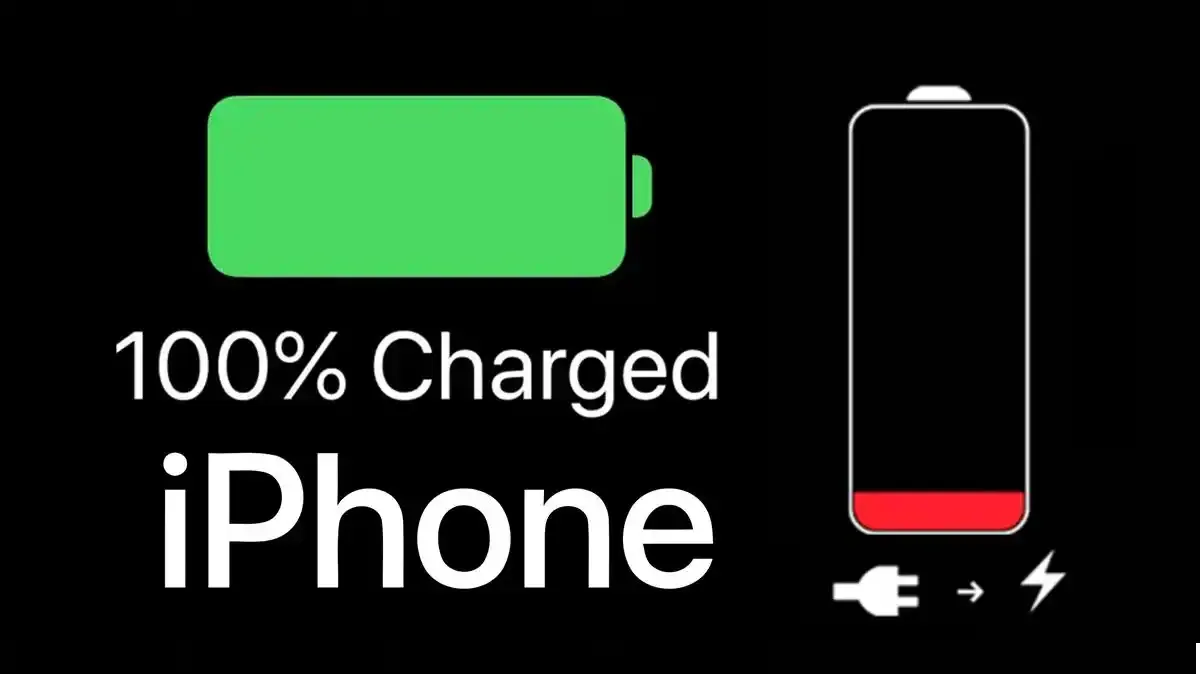
Here's how to think about it: if the A20 Pro uses, say, 15% less power than the A18 Pro for the same tasks, and the battery is also 10% larger, you're not just adding those gains together - you're compounding them. The battery lasts longer because it's bigger AND because it's being drained more slowly. That's the kind of improvement that shows up in a real day rather than just a lab test.
The specific scenario I'm hoping this fixes: the day that used to require rationing. Long commute, heavy Maps use, a video call in the afternoon, maybe some actual camera use. The day where you're doing mental battery arithmetic by lunchtime. If the 18 Pro pushes that threshold back a few hours, it changes something real about how you use the phone.
Advertisement
One caveat that's now resolved: the bigger battery jump really did land on the Pro Max. Official figures put the standard Pro's gain at a modest 1.7% over the 17 Pro, while the Pro Max jumped 11.7%, so if battery life was the deciding factor between models, the Pro Max was the right call.
2. The A20 Pro Chip: Speed Isn't the Story Anymore - Efficiency Is
I'll confess that the chip section of iPhone articles is where I usually start skimming. Not because the silicon isn't impressive - it genuinely is, and Apple's chip team is doing things that the rest of the industry is still trying to catch up to. But "faster than last year" has stopped meaning much in practice. The A17 Pro was fast. The A18 Pro was fast. The A20 Pro will be fast. At some point fast enough is just... fast enough.
So let me make the case for why the A20 Pro matters despite that, and try to do it without leaning on benchmark numbers.
The shift to 2nm manufacturing is significant not primarily because of speed gains, but because of what Apple can do with the power headroom it frees up. A chip that does the same work with less power has options. It can run more ambitious software without throttling. It can run AI models locally that previously needed a cloud connection. It can sustain peak performance for longer before heat becomes a constraint - which matters for video work, gaming, and any task that runs for more than a few minutes.
✦ Free Newsletter ✦
Never miss a story
Tools, tutorials and AI deep-dives - straight to your inbox, every week.
That last point - on-device AI - is quietly the most important thing Apple's chips will enable in the next two years. Apple Intelligence runs substantially on the device itself, which is both a privacy feature and a practical one: it works without a signal, it responds faster, and it doesn't depend on a server somewhere deciding you're not a priority right now. The A20 Pro's neural engine being faster and more efficient means Apple Intelligence can do more things, more quickly, without making you wait or draining the battery to do it.
The honest summary: you won't feel this chip in the ways that get marketing copy written about them. You'll feel it in the AI responses that don't make you wait, the video exports that finish before you've lost interest, and the battery that's still breathing at 9pm.
3. Variable Aperture Camera: This One Is Actually New
The first two upgrades are Apple doing familiar things better. This one is Apple doing something it has never done before on an iPhone - and I think it's the most significant of the three.
Let me explain what variable aperture actually means, because "variable aperture camera" is one of those phrases that sounds technical enough to make people's eyes glaze over.
Your iPhone's camera currently has a fixed aperture. Think of aperture as the size of the hole that lets light into the camera. Bigger hole: more light, blurrier background. Smaller hole: less light, more of the scene in focus. Your iPhone's hole doesn't change. It's fixed. Everything you see described as "portrait mode" or "cinematic mode" or depth-of-field effect on an iPhone is software pretending the hole changed. It looks at the scene, makes an educated guess about what's foreground and what's background, and blurs the background accordingly.
This works remarkably well - until it doesn't. The software guesses wrong on complex edges: hair, glasses, a subject standing near a fence. It struggles in mixed lighting where the depth estimation gets confused. And there's a fundamental ceiling on what it can do, because you can't computationally replicate the way light actually behaves when it passes through a physically different-sized opening.
Advertisement
A variable aperture lens has a mechanical iris - like a proper camera - that physically changes the opening size. The depth of field effects are real, not simulated. The low-light performance improves because you're actually gathering more light rather than asking software to manufacture detail that wasn't captured. The behaviour in complex scenes is more predictable because physics, unlike algorithms, doesn't get confused by a backlit subject standing near a chain-link fence.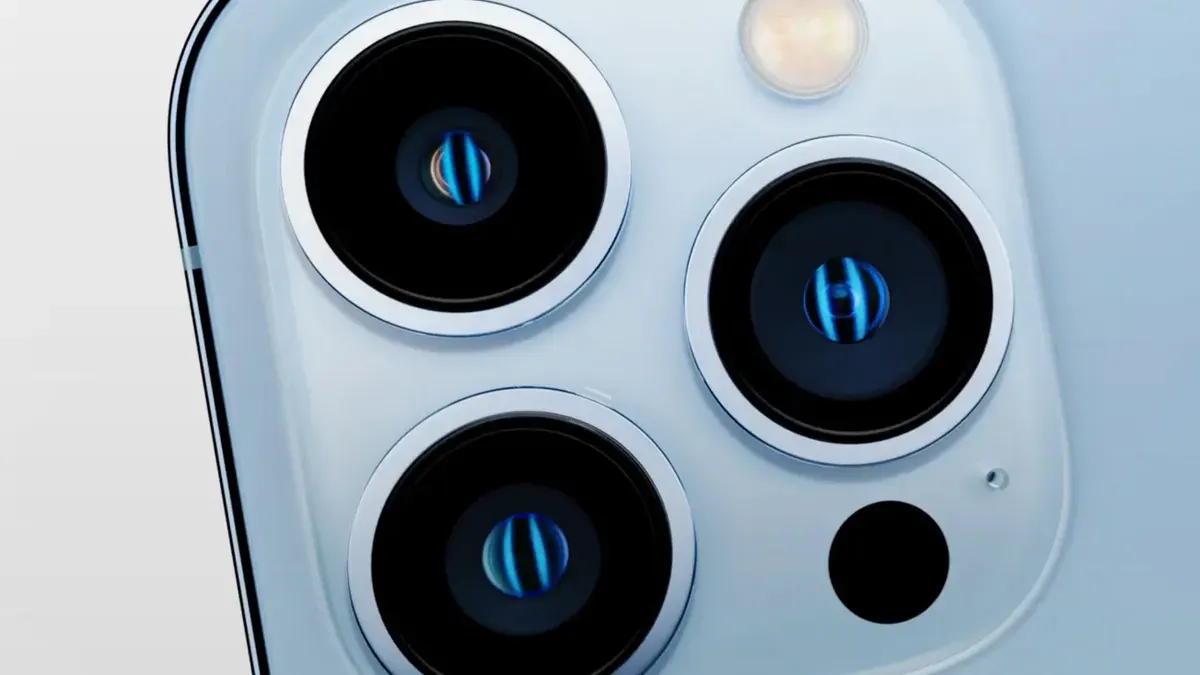
To be honest, I expected Apple to implement this as a gimmick - a slider in the camera app that does something barely distinguishable from the current portrait mode. What the supply chain reporting suggests instead is a genuine engineering investment in hardware that physically works differently. Samsung experimented with this years ago; results were mixed because the implementation was rushed. Apple's approach, if the component order timelines are accurate, has been in development long enough to be more than a checkbox feature.
If this ships as described - and it's currently the most consistently reported new hardware capability in the 18 Pro cycle - it will be the most meaningful camera upgrade since Apple introduced the telephoto lens. It changes what's physically possible on the device, not just what the software can pretend is possible.
Good news: it shipped on both the Pro and Pro Max simultaneously, not Pro Max first as the supply chain reporting had suggested. If you primarily use your phone as a camera and the variable aperture is the feature you've been waiting for - this might finally be the year the Pro Max justifies its size.
The Features You Can Ignore Until There's More Evidence
Separating signal from noise is genuinely useful in Apple coverage, so here's the honest rundown on what else is circulating:
Dynamic Island changes - This is the one prediction in this roundup that did not hold: the Dynamic Island shrank on both the 18 Pro and Pro Max and gained a third Live Activity widget slot, breaking the three-year streak of this specific rumour being wrong.
Satellite 5G - Real technology, does not exist at consumer scale, will not exist at consumer scale by September 2026. File this under "2028 at the earliest."
New Samsung image sensor - Shows up in supply chain reporting but reads like something Apple is testing for future generations rather than committing to this cycle. Don't factor it into your decision.
So Who Should Actually Buy This Thing?
If you're on an iPhone 15 Pro or older - yes, the 18 Pro is probably worth it. The compounded improvements across chip, battery, and camera over two-plus generations are substantial. More critically, the variable aperture camera represents something your current phone genuinely cannot do, which is a clearer reason to upgrade than "it's faster."
If you're on an iPhone 16 Pro or 17 Pro - probably not, unless the camera upgrade is specifically what you've been waiting for. Apple Silicon is already fast enough, your battery life is already reasonable, and the incremental gains won't change your daily experience in ways you'd actually notice.
If you're thinking about the foldable iPhone Ultra launching alongside the 18 Pro in September at north of $2,000 - that's a genuinely difficult comparison, and a different article. But I'd suggest that a phone which does three things significantly better than your current one is a more reliable purchase than first-generation foldable hardware at twice the price.
The iPhone 18 Pro won't look different. It probably won't even feel dramatically different in your hand. But if the A20 Pro, the battery improvements, and the variable aperture camera all land as the supply chain suggests - and the consistency of the reporting gives me more confidence than usual that they will - this will be the iPhone that quietly makes the one it's replacing feel like it was missing something.
Advertisement
That's a better upgrade story than most.
Frequently Asked Questions
- What is a variable aperture camera and why does it matter for the iPhone 18 Pro?
- A variable aperture camera uses a mechanical iris that physically changes how much light enters the lens, producing real optical depth-of-field effects instead of the software-simulated blur current iPhones rely on. It would be the first time Apple has shipped this on an iPhone, and the most significant camera change since the telephoto lens was introduced.
- How much bigger is the iPhone 18 Pro's battery expected to be?
- Apple's official specs confirm a 4,056mAh cell in the standard Pro, in line with pre-launch leaks, and a 5,391mAh cell in the Pro Max, an 11.7% increase over the 17 Pro Max and a bigger jump than leaks had suggested.
- Should I upgrade to the iPhone 18 Pro from an iPhone 16 or 17 Pro?
- Probably not, unless the variable aperture camera specifically is the feature you've been waiting for. Chip speed and battery life on recent Pro models are already solid, and the incremental gains likely won't be noticeable in daily use. The upgrade case is much stronger if you're coming from an iPhone 15 Pro or older.
Sources
- Apple Newsroom: Apple debuts iPhone 18 Pro and iPhone 18 Pro Max (official)
- Apple: iPhone 18 Pro (official product page)
- MacRumors: iPhone 18 Pro Battery Capacities and RAM Revealed
- MacRumors: iPhone 18 Pro Dynamic Island to Shrink, Add Third Live Activity
- Notebookcheck: Apple unveils iPhone 18 Pro Max with pro camera upgrades at higher price
Advertisement