Updated September 22, 2026
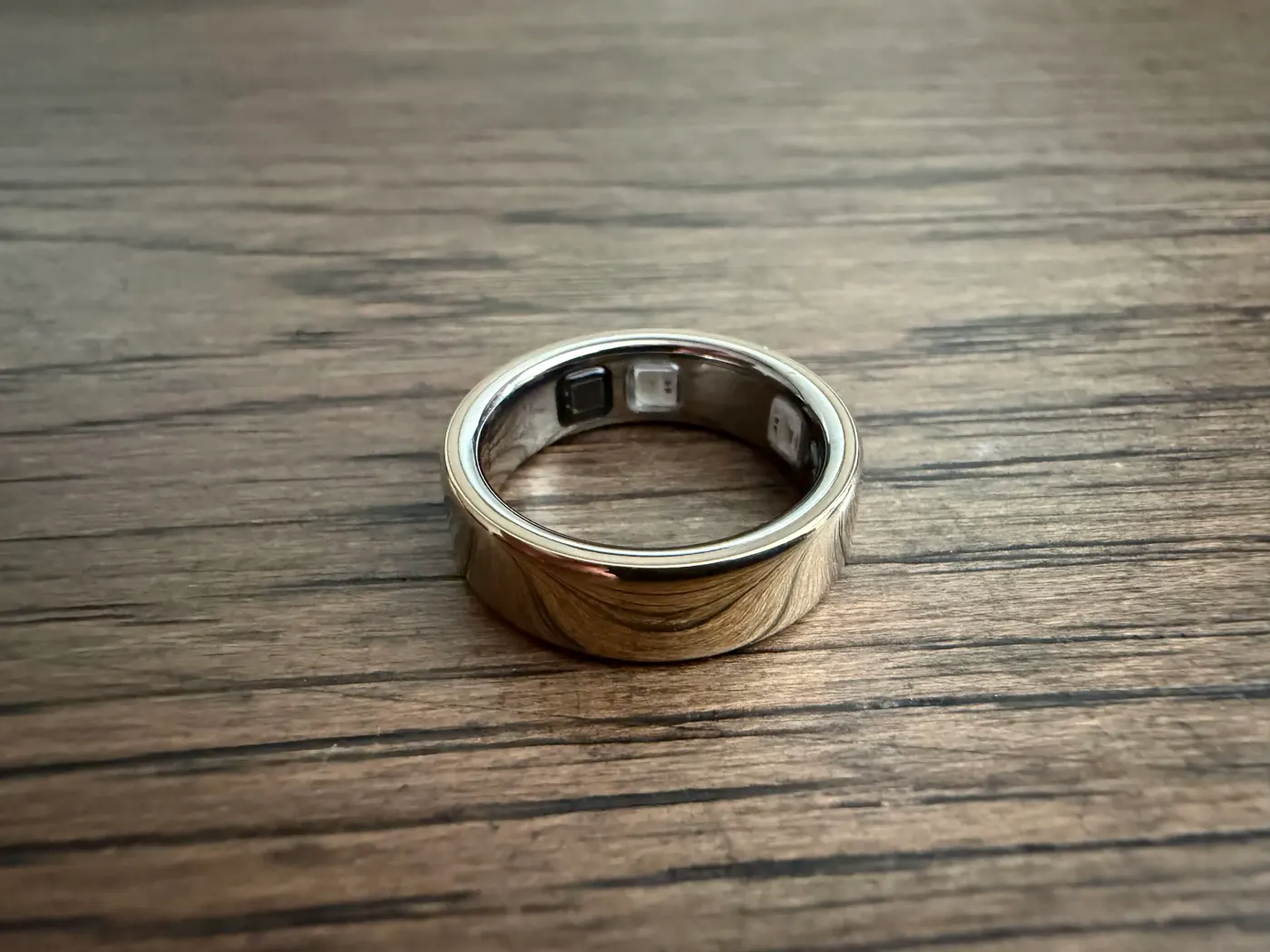
There's a quiet shift happening in consumer tech that doesn't get nearly the same airtime as AI chatbots or foldable phones. It's happening on your finger. Specifically, on the fingers of roughly 20 million people who've decided that a ring - not a watch, not a patch, not a chest strap - is the best place to track what their body is doing 24 hours a day.
What's new (September 22, 2026): Samsung confirmed at its July 22 Galaxy Unpacked event that the Galaxy Ring is getting FDA-cleared sleep apnea risk detection this fall, after the FDA determined the feature substantially equivalent to a legally marketed device on July 20. It arrives as a software update with no new hardware required, and Samsung is billing it as the first FDA-cleared sleep apnea detection on an over-the-counter smart ring. That is a more modest win than the cuffless blood pressure clearance this article speculated about below: Samsung's separate Galaxy Watch blood pressure tool launched in the US in March 2026 without FDA clearance, sold explicitly as a "wellness" feature rather than a medical one, according to Samsung's own newsroom.
Advertisement
The smart ring market sat at around $310 million in 2025. By 2026 it's already past $378 million, and projections have it crossing $3 billion within the decade. That's not a niche product category quietly finding its audience. That's a category about to go properly mainstream - and the hardware is finally catching up to the ambition.
Why the Wrist Lost
For years, the assumption was that the smartwatch owned health tracking. It made sense on paper. Watches are familiar. Displays are useful. Apple Watch and Fitbit trained an entire generation of consumers to glance at their wrist for step counts and heart rate.
But watches have a problem that never fully got solved: people take them off. They come off at night, when charging, when the strap gets sweaty. And it turns out that some of the most important health data - sleep stages, resting heart rate variability, nighttime blood pressure trends, breathing disturbances - happens precisely when you're most likely to have removed your watch.
Rings don't have this problem. They're small enough to forget you're wearing one. They don't need to be charged every night. And because they sit directly against skin without a gap, their optical sensors pick up cleaner signal data than a watch that shifts position on your wrist when you move.
This isn't a minor advantage. It changes what you can actually measure.
The Oura Ring 5: Where the Category Is Right Now
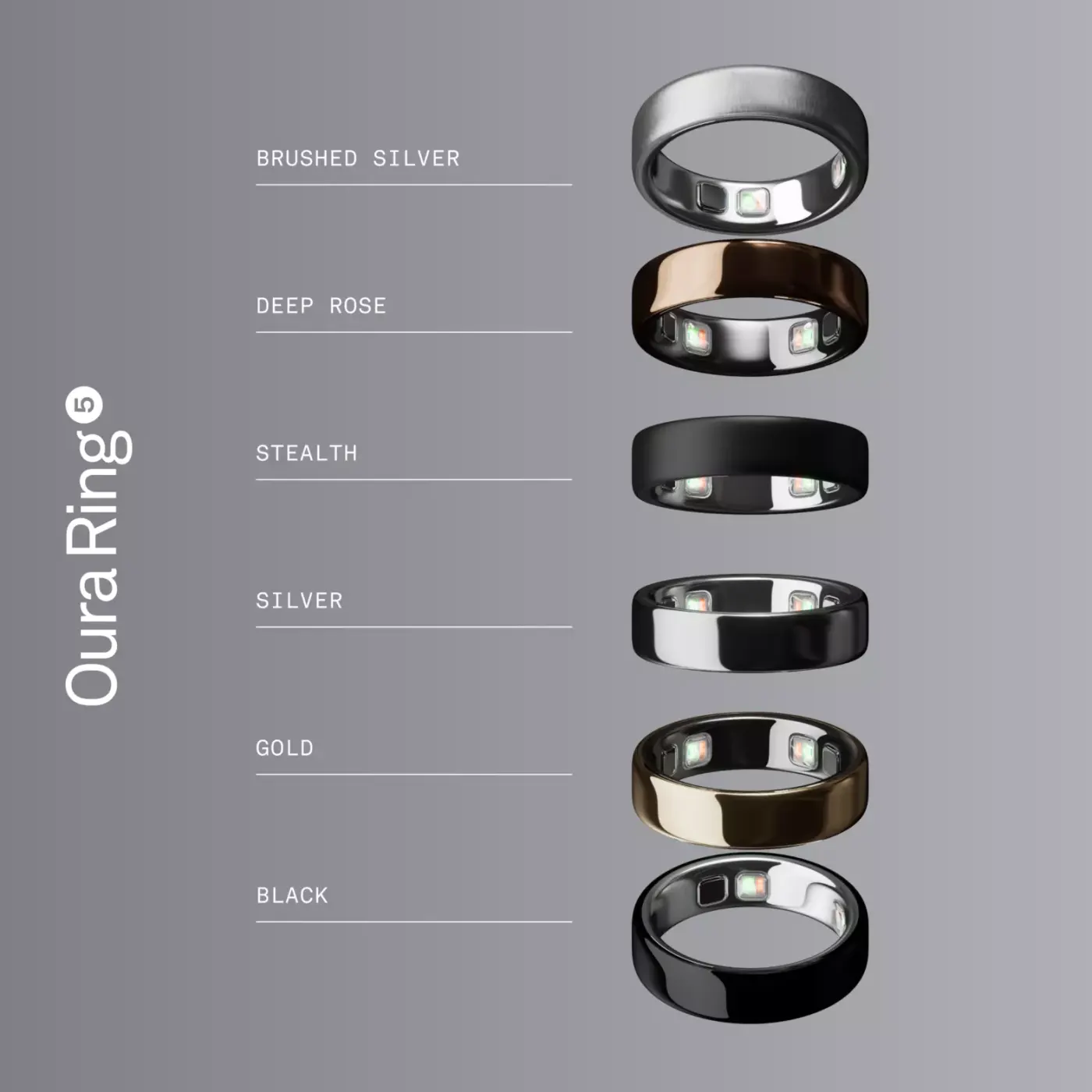
The clearest snapshot of where smart rings stand in mid-2026 is the Oura Ring 5, which launched late May and immediately dominated the conversation in wearables.
The headline spec is thickness: at 2.28mm, it's one of the slimmest wearables on the market. That matters less for vanity reasons and more for what it signals about the underlying engineering - fitting that many sensors into a smaller, lighter body without sacrificing accuracy is genuinely difficult.
But the hardware story is secondary to what Oura is doing with the data. The Ring 5 introduces what the company calls Health Radar - a background monitoring system designed to surface patterns before they become symptoms. The two initial capabilities are Blood Pressure Signals and Nighttime Breathing.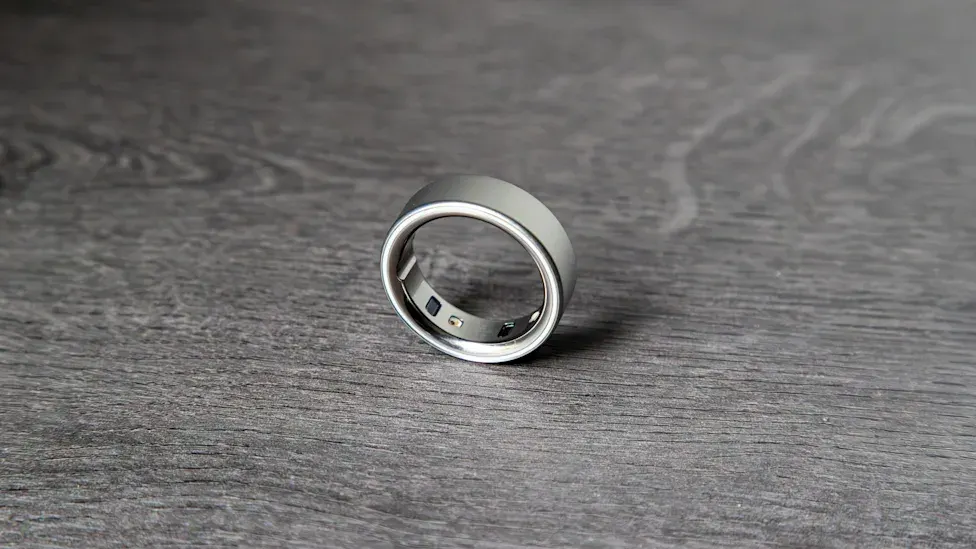
Worth being precise about what Blood Pressure Signals actually does, because the marketing can blur this. The ring doesn't measure blood pressure the way an arm cuff does - it can't inflate, it has no reference point for systolic and diastolic numbers in the traditional sense. What it does instead is track changes in blood flow and blood vessel behaviour that correlate with cardiovascular strain, focusing specifically on overnight readings when those patterns are most stable and meaningful. Oura calls this out explicitly rather than hiding it in small print, which is more than can be said for some competitors.
Alongside this, the Ring 5 adds a rebuilt sensor architecture - precision-engineered sensor domes for better skin contact, more powerful LEDs, and twelve signal pathways that Oura says improves accuracy across more finger types and skin tones. The skin tone point matters more than it might seem: optical health sensors have historically performed worse on darker skin, and the industry is only recently starting to take that seriously.
Advertisement
New software features round out the package: Health Records lets US users import diagnosed conditions, medications, and lab results directly into the app. A partnership with Counsel Health means eligible users in 43 states can consult licensed physicians without leaving the platform. GLP-1 Insights - tracking for people managing weight-loss medication - is a telling addition that shows exactly what demographic Oura is expanding toward.
Pricing sits between $399 and $499 depending on finish. Full access to the software features requires an Oura membership, which costs $5.99 a month or $69.99 a year in the US, according to Oura's own pricing page.
The Honest Catch With Blood Pressure Monitoring
Here's where it's worth slowing down, because this is the area where consumer enthusiasm is running slightly ahead of clinical reality.
Cuffless blood pressure monitoring is one of the most sought-after features in consumer health tech - and one of the hardest to do accurately. The physics are genuinely challenging. Traditional blood pressure measurement works by cutting off and then restoring arterial blood flow and measuring the pressure at which that happens. A ring sitting on your finger can't do that. What it can do is use optical sensors and bioimpedance to infer blood pressure trends from proxy signals - pulse transit time, blood volume changes, vessel wall behaviour.
These methods work. Research published in npj Digital Medicine demonstrated that ring-based bioimpedance sensors can provide continuous cardiovascular monitoring with meaningful accuracy. Samsung's Galaxy Watch line launched a cuffless blood pressure tool in the US in March 2026, but as a wellness feature rather than a medically cleared one, and Samsung has not said whether it intends to pursue FDA clearance for it. Oura is careful to frame its feature as Blood Pressure Signals rather than blood pressure measurement - a distinction that reflects genuine epistemic honesty about what the technology can and can't do.
✦ Free Newsletter ✦
Never miss a story
Tools, tutorials and AI deep-dives - straight to your inbox, every week.
The practical upshot: these rings are excellent at spotting trends and flagging when something looks different from your baseline. They are not replacements for clinical blood pressure measurement if you have hypertension or cardiovascular disease. Used correctly - as early warning systems and trend trackers rather than diagnostic tools - they're genuinely valuable. Used incorrectly, with the assumption that the number on the app is clinical-grade, they could give false confidence.
This nuance tends to get lost in product launches. It shouldn't.
The Competition: You Have More Options Than You Think
Oura dominates the conversation, but it doesn't dominate the market in quite the way the coverage implies. Several alternatives are worth knowing about.
RingConn - The RingConn Gen 2 impressed reviewers with longer battery life than Oura, no subscription required to access your data, and a range of premium finishes including ceramic options. RingConn has since released the Gen 3 (from $349), which pushes battery life to up to 14 days on a single charge and adds blood pressure trend tracking, according to RingConn's own product page. The absence of a subscription carries over from the Gen 2 - a genuine differentiator, since Oura's membership model adds up over years of use.
Ultrahuman Ring AIR - Aimed squarely at fitness-focused users. Strong workout tracking, metabolic health insights, and again no ongoing subscription. The app is more sports-oriented than Oura's, which skews toward sleep and recovery.
Advertisement
Circular Ring 2 - A smaller player but one of the few rings offering ECG capability, which puts it in a different health monitoring tier. Still finding its feet on software, but the hardware ambition is real.
Samsung Galaxy Ring - The wildcard. Samsung has the distribution, the ecosystem integration with Galaxy devices, and the resources to make a serious push. Its next hardware refresh isn't expected until early 2027, but the FDA-cleared sleep apnea detection arriving this fall shows Samsung is willing to pursue formal medical clearance where Oura and most rivals have stuck to unregulated "wellness" framing.
The Bigger Picture: Health Tech Is Getting Personal in a Meaningful Way
Step back from any individual product and the trend is clear. We're moving from wearables that count steps to wearables that build a personalised health baseline and flag deviations from it. From devices that tell you what happened to systems that try to tell you what might happen.
Oura's AI health coach - rolling out to Ring 5 users this summer - is the early version of this. An AI model trained on clinical research into female physiology (a specific acknowledgment that health data has historically been skewed toward male subjects) that provides proactive advice rather than just logging numbers. Lab Uploads that let you import blood biomarker results and see them alongside your ring's biometric data. Physician access built into the app.
The vision being assembled here isn't a fitness tracker. It's a persistent, low-friction health monitoring layer that sits on your body and learns what normal looks like for you specifically - not for a population average, for you - and surfaces meaningful signals when something drifts.
Whether the current hardware fully delivers on that vision is debatable. The blood pressure nuance discussed above is real. Third-party accuracy testing of the Ring 5's sensors is still coming in. Not every health claim from every ring manufacturer survives contact with independent researchers.
But the direction is right. The form factor is right. And for a category that was niche hardware for sleep-obsessed quantified-selfers three years ago, the pace of progress is striking.
Should You Buy One?
If you're already wearing an Apple Watch and satisfied with it, probably not yet. The Watch has better workout tracking, a display, and deep iOS integration that rings can't match.
If you've struggled to keep a watch charged and on your wrist consistently enough to build useful data - rings are genuinely better for continuous monitoring. The data you collect sleeping is often more revealing than anything you collect during the day.
If blood pressure is a health concern for you, understand what you're getting: trend awareness, not clinical measurement. Use it alongside proper monitoring, not instead of it.
If you're curious about your body and want a passive, always-on baseline that requires almost no attention to maintain - this is probably the best consumer health tech available right now for that specific use case.
The smart ring isn't going to replace your phone or your doctor. But as a quiet, persistent layer of self-knowledge sitting on your finger while you sleep - it's doing something no previous consumer device has quite managed.
Advertisement
That's worth paying attention to.
Frequently Asked Questions
- Can a smart ring actually measure blood pressure?
- Not in the clinical sense. Rings like the Oura Ring 5 track changes in blood flow and vessel behaviour that correlate with cardiovascular strain - useful for spotting trends, but not a replacement for a clinical blood pressure cuff if you have hypertension or heart disease.
- What's the main advantage of a smart ring over a smartwatch for health tracking?
- Rings are worn continuously, including overnight, which is when some of the most valuable health data - sleep stages, resting heart rate variability, breathing disturbances - is generated. Watches are frequently removed for charging or comfort, creating gaps in that data.
- Do all smart rings require a subscription?
- No. Oura requires a membership (currently $5.99 a month or $69.99 a year in the US) for full feature access, but competitors like RingConn and Ultrahuman Ring AIR provide complete access to your data with no ongoing subscription fee - a meaningful cost difference over several years of use.
Sources
- MobiHealthNews: Samsung announces FDA-cleared smart ring for sleep apnea risk
- Tom's Guide: The Samsung Galaxy Ring is about to be the world's first FDA-cleared smart ring for sleep apnea
- Samsung Newsroom: Samsung's blood pressure monitoring feature now available to US users
- Android Authority: Samsung brings BP monitoring to Galaxy Watches in the US
- Oura: Membership pricing
- RingConn: Gen 3 product page
- Digital Trends: RingConn's Gen 3 smart ring launches with haptic alerts and 14-day battery life
Advertisement