Something interesting happened at the start of 2026. For the first time in the history of the App Store and Google Play, an AI app overtook TikTok as the most downloaded application on the planet.
ChatGPT hit 55.9 million downloads in January 2026 alone. TikTok came in second with 43.1 million. The app that dethroned the most addictive social platform ever built was not a game, not a social network, not a dating app. It was a text box that answered questions.
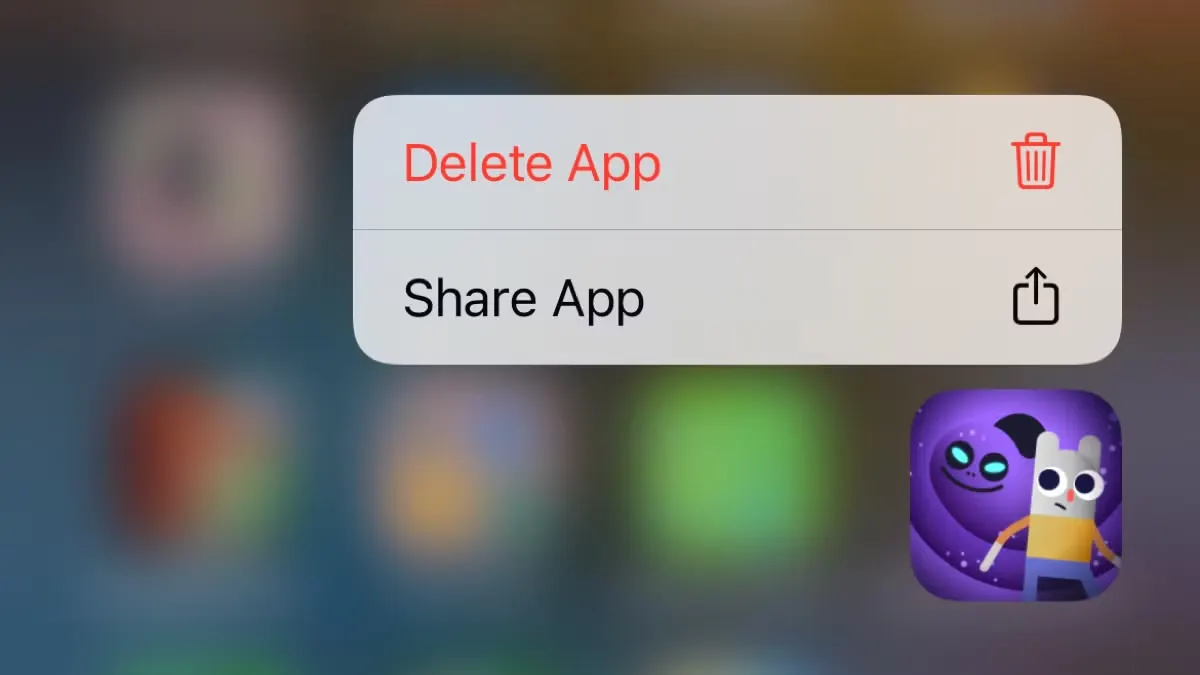
That shift in what people are actually downloading - and equally important, what they are deleting - tells you more about how people are changing their relationship with their phones in 2026 than any trend report. The phone used to be primarily a consumption device. It is becoming something more like a tool. The apps winning are the ones that do something genuinely useful. The apps losing are the ones that exist primarily to hold your attention without giving much back.
Advertisement
Here is what is actually getting deleted, what is replacing it, and why the shift is more significant than a simple "AI is taking over" story.
What's Getting Deleted: The Attention Economy Is Losing
Standalone news apps are the quietest casualty of the AI transition. The New York Times app, BBC News, CNN - apps that built their mobile presence on the assumption that people would open them daily to scroll headlines are seeing engagement metrics that have been declining for two years. The reason is not that people stopped caring about news. It is that AI briefing tools - Perplexity, ChatGPT's browse mode, Google's Gemini morning summaries - give people a personalised, synthesised briefing in sixty seconds that covers more ground than thirty minutes of headline scrolling.
The deletion pattern is specific: people are not cancelling subscriptions to journalism they value. They are deleting the apps that existed to deliver commodity news through a designed-to-be-sticky interface. The replacement is an AI tool they ask "what do I need to know today" and get an answer calibrated to their actual interests.
Separate to-do list apps are getting merged and deleted as AI-native productivity tools absorb their function. Things 3, Todoist, Microsoft To Do - all solid apps that do exactly what they say. All losing ground to tools like Notion AI, Reclaim.ai, and the AI scheduling features built into Apple's iOS 27 that automatically prioritise, schedule, and resurface tasks based on your calendar and patterns rather than requiring you to manually maintain lists. The app that requires you to add and update and sort your own tasks is losing to the app that figures out what you should be doing and tells you.
Translation apps have been in decline for two years and the process accelerated in 2026. Google Translate still has enormous download numbers driven by new users, but retention metrics are suffering as the translation functionality built into ChatGPT, Claude, and Google's own Gemini makes a standalone translation app feel redundant. Why open a separate app when the AI you already have open handles translation better in context?
Single-purpose utility apps more broadly are being absorbed. The separate grammar checker, the separate summariser, the separate flashcard app, the separate habit tracker - all getting deleted as AI assistants handle these tasks on demand without requiring a dedicated app for each one. The phone home screen that used to have thirty single-purpose apps is being consolidated around five or six multi-purpose tools.
Facebook - not deleted by everyone, but the demographic erosion is real and accelerating. Daily active usage among under-35s has been declining for years. What is new in 2026 is that the replacement is not just TikTok or Instagram (which Meta owns anyway). It is AI tools, messaging apps, and niche community platforms. People are not moving to a different social network. They are partly leaving social network consumption as a primary phone activity.
What's Replacing Them: The Useful App Era
ChatGPT is the obvious one and the data backs it up. 55.9 million downloads in a single month. But the more interesting story is retention - not just download numbers. ChatGPT's daily active usage is growing faster than any app in the category has grown at this scale. The reason is not novelty. It is utility. People are keeping ChatGPT because it keeps being useful. That is a different dynamic from social apps, which are kept through habit and network effects rather than direct value delivered.
The use cases driving daily retention are mundane in the best possible way: drafting emails, explaining things, answering specific questions, writing first drafts of documents, helping with decisions. Not the dramatic AI demos. The quiet daily usefulness that compounds over months of use.
Perplexity is the app that news apps should be most worried about. Positioned as an "answer engine" rather than a search engine, Perplexity synthesises current information from across the web and delivers sourced, direct answers rather than a list of links to visit. The use case it is stealing is exactly the "let me quickly check what's happening with X" behaviour that used to open a news app. Perplexity gives you the answer directly. The news app gives you a curated feed of articles designed to maximise time in app.
Claude has been building a loyal daily-use base among professionals - writers, developers, analysts - who find it more reliable than ChatGPT for extended, nuanced work. The longer context window and more consistent reasoning on complex tasks has built a reputation in professional circles that drives retention even among users who also have ChatGPT installed.
Notion is the productivity consolidator that is winning the "delete three apps, install one" trade. Teams and individuals who used to have separate tools for notes, project management, wikis, and databases are consolidating into Notion, whose AI layer in 2026 has matured enough that the AI blocks genuinely add value rather than feeling like a feature checkbox. The mobile app specifically has improved dramatically - offline editing, home screen widgets, faster sync - which matters for an app people open dozens of times a day.
Bitwarden is the unsexy winner of 2026's security awareness moment. As AI-powered phishing attacks have become more convincing and more targeted, password manager downloads have surged. Bitwarden specifically - free, open source, audited - is picking up users who previously used built-in browser password storage and are now concerned enough about security to use a dedicated manager. The free tier is genuinely excellent rather than a gimped demo.
Revolut and Wise continue to absorb banking app market share from traditional banks among younger users. The specific feature driving 2026 growth is AI-powered spending insights that categorise, analyse, and explain your financial behaviour without requiring manual input. A traditional bank app shows you transactions. Revolut shows you patterns, flags anomalies, and tells you whether you are on track for the month. The comparison is not close.
✦ Free Newsletter ✦
Never miss a story
Tools, tutorials and AI deep-dives - straight to your inbox, every week.
CapCut remains one of the most interesting app success stories of the past three years. 29.4 million downloads in January 2026, making it the sixth most downloaded app globally. The reason it keeps growing while other content creation tools plateau: it keeps shipping genuinely useful AI features - background removal, auto-captions, voice cloning, style transfer - at a pace that competitors are not matching. The app that used to be "the TikTok editing app" is becoming a serious creative tool that people use for content far beyond TikTok.
The Pattern Underneath the Deletions
Looking at what is getting deleted and what is replacing it, there is a consistent pattern worth naming explicitly.
The apps losing ground are the ones that were designed around engagement metrics - time in app, daily active users, notification opens - as the primary measure of success. The apps built around maximising the time you spend in them. They were not built to help you accomplish something and then let you leave. They were built to keep you there.
The apps winning are the ones where the primary value metric is task completion. Did you get the answer you needed? Did the email get drafted? Did the translation work? Did the task get done? These apps succeed when they help you accomplish something quickly and then let you put the phone down.
This is a meaningful shift in what mobile software is for. The smartphone era was largely defined by the attention economy - the competition between apps for your time and focus, the notification badge designed to create anxiety about what you might be missing, the infinite scroll engineered to keep you moving through content without a natural stopping point. A significant cohort of people are actively moving away from that model toward tools that give them something useful and get out of the way.
Whether that shift is permanent or whether new attention-grabbing experiences (spatial computing, AR, whatever comes next) pull people back into consumption mode is genuinely uncertain. But the download data, the deletion patterns, and the retention numbers for AI utility tools all point in the same direction for now.
The most downloaded app on the planet is a text box that answers questions and then lets you close it.
That is a different relationship with a phone than the one the past decade was built on.
The Apps Worth Keeping an Eye On
A few that are not yet household names but are growing fast enough to be worth watching:
Reclaim.ai - AI calendar management that blocks focus time, reschedules meetings intelligently, and protects personal habits automatically. The kind of app that working professionals discover and wonder how they managed without.
Obsidian - note-taking built around local storage and a linked knowledge graph. The anti-Notion for people who want their data on their own device. Growing steadily among developers and researchers who have grown uncomfortable with everything living in someone else's cloud.
Artifact - personalised news that uses AI to surface articles across sources based on your actual reading patterns rather than what an algorithm determines will maximise engagement. The anti-news-app news app.
Kagi - a paid search engine with no advertising, no tracking, and no SEO gaming. Growing among the cohort of users who have concluded that ad-supported search is delivering results optimised for advertisers rather than searchers. At $10 a month, it is asking people to pay for something they expect to be free - and a meaningful number of people are saying yes.
None of these are top-ten apps. All of them are growing because they solve a problem that existing apps created. That is generally how the next generation of indispensable apps starts.
The pattern is consistent: the apps people are deleting tried to be everything and optimised for time. The apps replacing them do one thing well and optimise for usefulness.
In 2026, that turns out to be the harder thing to build - and the more durable competitive advantage to have.

Advertisement