
Updated September 21, 2026
Somewhere in the last three years, the question "how will you pay for that" quietly stopped being about cash versus card. It became a question about which app, which wallet, and which biometric scan stands between you and a completed transaction.
What's new (September 21, 2026): India's National Payments Corporation will start charging merchants a 0.4% fee, capped at 300 rupees, on UPI payments above 2,000 rupees starting October 15, 2026, ending years of free processing for larger transactions; smaller vendors handling under 1 lakh rupees a month and person-to-person transfers stay exempt, according to multiple independent Indian finance and payments outlets. For any business relying on UPI, which now processes more than 24 billion transactions a month, this is the first meaningful cost added to a network that has been free for merchants since launch, and it is worth budgeting for if you sell into the Indian market.
Advertisement
Digital wallets crossed a genuine milestone in 2026: they now account for the majority of global eCommerce transaction value, and more than half the world's population uses some form of wallet-first checkout. That is not a niche behaviour anymore. It is the default. Here is what the actual data shows about which payment methods are winning, where, and why - without the marketing gloss that usually accompanies this topic.
Note on the numbers: Apple and Google do not publish precise user figures for their payment platforms, so most statistics in this space are estimates from research firms rather than official company disclosures. Where sources disagree meaningfully, that is noted below rather than papered over.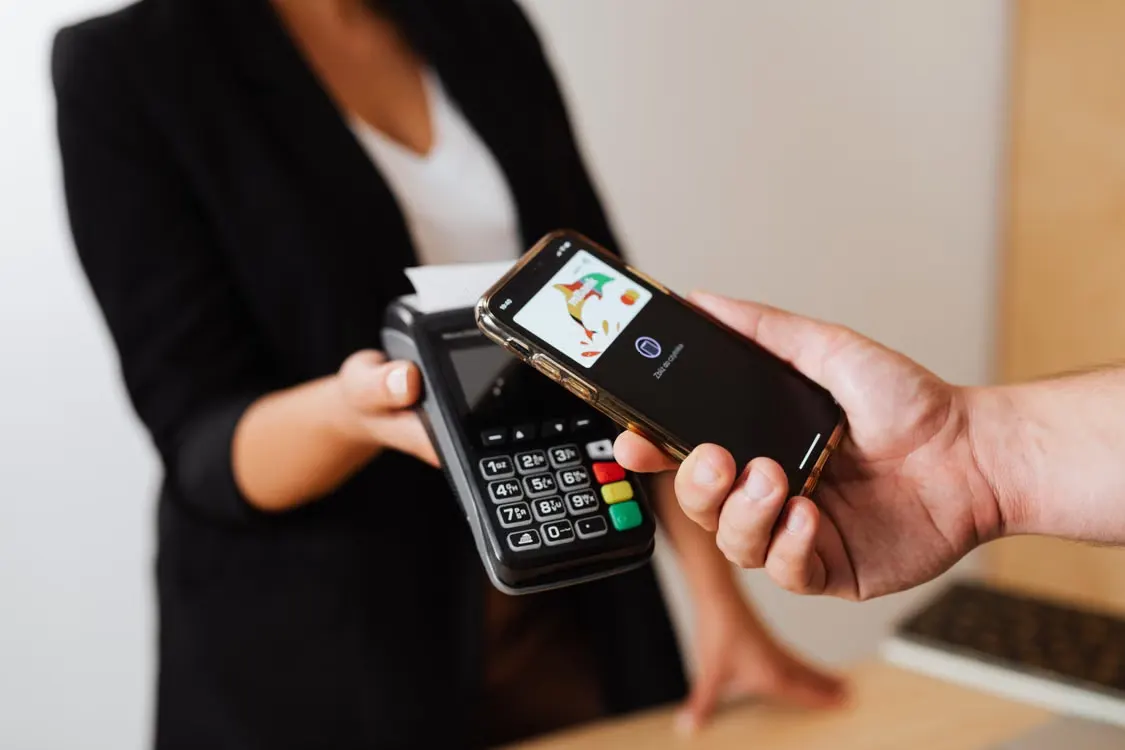
Apple Pay: The Dominant Force in In-Store Payments
Apple Pay remains the single most-used digital wallet for in-person, point-of-sale transactions, and the gap between it and its closest competitors is not close.
Global user estimates for Apple Pay in 2026 cluster between roughly 744 million and 818 million people, with most research firms projecting the platform will pass 1 billion users by the end of the decade. Apple Pay is supported by more than 11,000 banks worldwide and is accepted at over 90% of US retailers, with availability spanning more than 90 countries.
The scale of actual transaction volume is substantial. Apple Pay processed over $6 trillion in payments in 2023, with estimates for more recent activity running considerably higher as adoption continues to climb. In the US specifically, Apple Pay is estimated to hold somewhere in the range of 49% to over 90% of in-store mobile wallet transactions depending on which research methodology is used - a wide range that reflects genuine measurement difficulty in a market where the underlying companies do not share precise figures, but every estimate agrees Apple Pay leads the category by a wide margin domestically.
The demographic pattern behind this dominance is consistent across nearly every dataset: Gen Z and Millennials together make up roughly 70% of Apple Pay's user base, and multiple surveys put Apple Pay as the preferred wallet for a strong majority of Gen Z digital wallet users specifically. Among users aged 55 and older, adoption has been rising as well, climbing meaningfully in 2025 as familiarity with wearable technology like the Apple Watch has spread beyond younger users.
Apple Pay's real-world usage pattern skews heavily toward in-person transactions rather than online checkout. London's transport network is a frequently cited example: Apple Pay reportedly accounts for around 90% of contactless payments across the city's transit system, illustrating how dominant the platform has become for the kind of frequent, low-friction, everyday transactions that build genuine daily habit rather than occasional use.
Where Apple Pay is comparatively weaker is online checkout, where it consistently trails PayPal. Estimates put Apple Pay's share of online digital wallet transactions in the range of 13% to 14%, against PayPal's much larger share of the online checkout market specifically - a useful reminder that "most popular digital wallet" depends heavily on whether you are measuring in-store or online behaviour.
Google Pay (Google Wallet): Strong Globally, Secondary in the US
Google Pay - rebranded and expanded into Google Wallet - tells a different geographic story than Apple Pay.
User estimates for 2026 range from roughly 200 million to 600 million globally depending on the source and methodology, a wider spread than Apple Pay's figures, reflecting both genuine growth volatility and the inherent difficulty of measuring a platform that, like Apple Pay, does not release official user numbers. What is consistent across sources is the geographic pattern: Google Pay drives broader global adoption than Apple Pay across mobile-first and Android-dominant markets, even though it trails Apple Pay within the US specifically.
Advertisement
Google Wallet's strongest markets are Android-first regions including Vietnam, Indonesia, and South Africa, alongside its major role in India's payment ecosystem, where Google Pay is one of the largest apps built on top of UPI (Unified Payments Interface), India's enormously successful national instant payment system. UPI as a whole now processes more than 24 billion transactions a month, according to NPCI data reported in August 2026, and accounts for the majority of digital transactions across India - a scale that dwarfs almost any single Western payment platform, and Google Pay's position within that ecosystem matters more to its global numbers than its standalone US performance.
Within the US specifically, most 2026 estimates put Google Pay's active user base somewhere between 35 million and 250 million depending on methodology and what counts as an active user - consistently behind Apple Pay's domestic figures, but with Google Pay showing particular strength among specific demographics: research indicates Google Pay is favoured by the majority of gig economy workers surveyed, citing fast fund transfers and low barriers to entry, and shows notably higher retention than Apple Pay among households with lower annual income.
PayPal: Still the King of Online Checkout
Despite the attention NFC-based mobile wallets receive, PayPal remains the most-used digital payment method for online transactions specifically, and by a considerable margin.
PayPal holds a 71% penetration rate among US adults - meaning roughly seven in ten American adults have a PayPal account - making it the dominant e-commerce wallet in the country by a wide margin over Apple Pay or Google Pay specifically for online checkout. PayPal's share of the broader online payments market sits in the 47% range by most estimates, well ahead of Apple Pay's online share and Stripe's processing share combined.
The overlap between PayPal and other payment services is informative about how consumers actually layer multiple payment tools rather than committing to one exclusively. The majority of PayPal users also use Venmo, and a similarly large share also use Apple Pay - suggesting most consumers maintain several payment apps simultaneously rather than consolidating around a single platform, choosing between them based on context: PayPal for online purchases, Apple Pay for in-store taps, Venmo for splitting a dinner bill with friends.
✦ Free Newsletter ✦
Never miss a story
Tools, tutorials and AI deep-dives - straight to your inbox, every week.
PayPal's particular strength in high-trust, higher-value online purchases reflects its two-decade head start in building consumer confidence around online transactions specifically, a category where Apple Pay and Google Pay, despite their NFC dominance in physical retail, have not yet displaced PayPal's established position.
The Regional Picture: Payment Preferences Vary Dramatically by Country
Perhaps the most important fact about digital payments in 2026, and the one most often missed in US-centric coverage, is how dramatically payment preferences vary by country - meaning any business operating internationally cannot simply default to Apple Pay and Google Pay and expect comparable results everywhere.
China is dominated almost entirely by two platforms: Alipay and WeChat Pay together command around 90% of the mobile payments market, with WeChat Pay's integration into China's most popular messaging app and Alipay's role as the default payment method for Alibaba's major e-commerce platforms making both essentially unavoidable for anyone doing business in the country. 96% of China's adult population uses mobile payments - the highest national adoption rate in the world.
India runs on UPI. PhonePe and Google Pay are the two largest UPI-based apps by transaction volume, with PhonePe holding the larger share of the two. UPI as an overall system processes a scale of transactions that makes it one of the most significant payment infrastructure stories of the past decade globally, and contributed the majority share of the country's e-commerce transaction volume in recent measurement. Starting October 15, 2026, UPI will also charge merchants a small fee on larger payments for the first time - see the note above.
Brazil's Pix is a similarly remarkable government-built success story: an instant payment network with adoption across roughly three-quarters of Brazil's population, commanding a substantial and growing share of the country's e-commerce volume, and setting a single-day record of over 250 million transactions in one day in December 2024 alone.
Advertisement
Japan stands out as one of the few major developed markets where traditional credit cards still dominate online payments, accounting for the majority of online transactions - the highest rate of any major economy - reflecting both deep credit card penetration and a level of consumer trust in card-based payments that has not been displaced by mobile wallets to the degree seen elsewhere.
The Netherlands expects iDEAL, a direct bank-transfer payment scheme, so consistently that any online checkout failing to offer it as an option faces significant cart abandonment from Dutch consumers specifically.
The practical lesson for any business thinking about payments globally: there is no single "most popular payment method" worldwide. There is a different correct answer for nearly every major market, and defaulting to Apple Pay and Google Pay alone while ignoring Pix, UPI, Alipay, WeChat Pay, or iDEAL is a direct path to lost sales in those specific regions.
Buy Now, Pay Later Has Moved From Niche to Mainstream
Buy Now, Pay Later services - Affirm, Klarna, and Afterpay being the most significant players - have completed their transition from a niche checkout option to a mainstream expectation, particularly among younger shoppers and in specific product categories: electronics, fashion, and home goods see the heaviest BNPL usage.
The regulatory environment for BNPL in the US remains notably unsettled. The Consumer Financial Protection Bureau's 2024 interpretive rule, which would have classified BNPL providers similarly to credit card issuers for consumer protection purposes, was rescinded in 2025 and is not expected to be reissued under the current administration - leaving the BNPL sector operating in the US without a dedicated federal consumer protection framework specific to its product structure. This is a meaningful gap given how rapidly BNPL adoption has grown, and it is worth understanding for anyone using these services regularly: the consumer protections that apply to traditional credit cards do not automatically extend to BNPL arrangements in the same way.
What's Actually Changing in 2026
A few genuine shifts worth tracking rather than the recycled "digital wallets are growing" framing that dominates most coverage of this topic.
Passkeys are replacing passwords within wallets themselves. Apple's expansion of passkey support across iOS in 2026 enables passwordless authentication for payment-related sign-ins, reducing fraud risk tied to phished or reused credentials while measurably improving checkout speed - a security improvement that happens to also be a conversion rate improvement, which is part of why adoption has moved quickly.
Real-time payment rails are maturing in the US specifically. FedNow, the Federal Reserve's instant payment system, now has more than 1,500 participating financial institutions, enabling fund transfers that settle in seconds rather than the multi-day timelines traditional ACH transfers have required. This matters less for everyday consumer purchases and more for B2B transactions and cash flow management, where waiting days for fund settlement has real business costs.
Higher-limit contactless payments are expanding. Apple Pay's use of Consumer Device Cardholder Verification Method (CDCVM) - the technical standard that uses Face ID or Touch ID as authentication - allows contactless transactions above the limits that apply to standard tap-to-pay cards without biometric verification. This is gradually closing the gap between "quick tap for a coffee" and "tap for a genuinely large purchase," a transition that has been slow but consistent.
Fraud is growing in parallel with adoption. Global eCommerce fraud losses exceeded $48 billion in 2025 and are projected to climb sharply by the end of the decade, with account takeovers and digital goods fraud cited as primary drivers. The same tokenization technology that makes digital wallets more secure than raw card numbers has not eliminated fraud; it has shifted where and how fraud attempts concentrate, and growth in wallet adoption has been accompanied by growth in attempts to exploit it.
Advertisement
The Bottom Line
The honest summary of where digital payments stand in 2026: Apple Pay leads decisively for in-person, point-of-sale transactions, particularly in the US and UK. PayPal leads decisively for online checkout, particularly in the US. Google Pay's real strength is global and Android-centric rather than domestically dominant in the US specifically. And outside the markets most US and European coverage focuses on, an entirely different set of platforms - Alipay, WeChat Pay, UPI, Pix - command payment volumes that rival or exceed anything Apple or Google have built, simply outside the geographic frame most coverage of this topic defaults to.
Anyone building a business, choosing a payment processor, or simply trying to understand how money actually moves in 2026 needs the full picture rather than the US-centric version: digital wallets have won, decisively, as a category. Which specific wallet wins depends entirely on where in the world you are asking the question.
Sources
- UPI Hits Highest-Ever Monthly Volume: 24.51 Billion Transactions in August 2026, StartupTalky
- UPI Hits Record 23.2 Billion Transactions in May 2026, Open Magazine (citing NPCI data)
- India sets 0.4% UPI merchant fee on payments over ₹2,000, Payment Expert
- UPI Remains Free for Users; MDR Applicable on Select Merchant Payments Above ₹2,000, SCC Times

Advertisement