
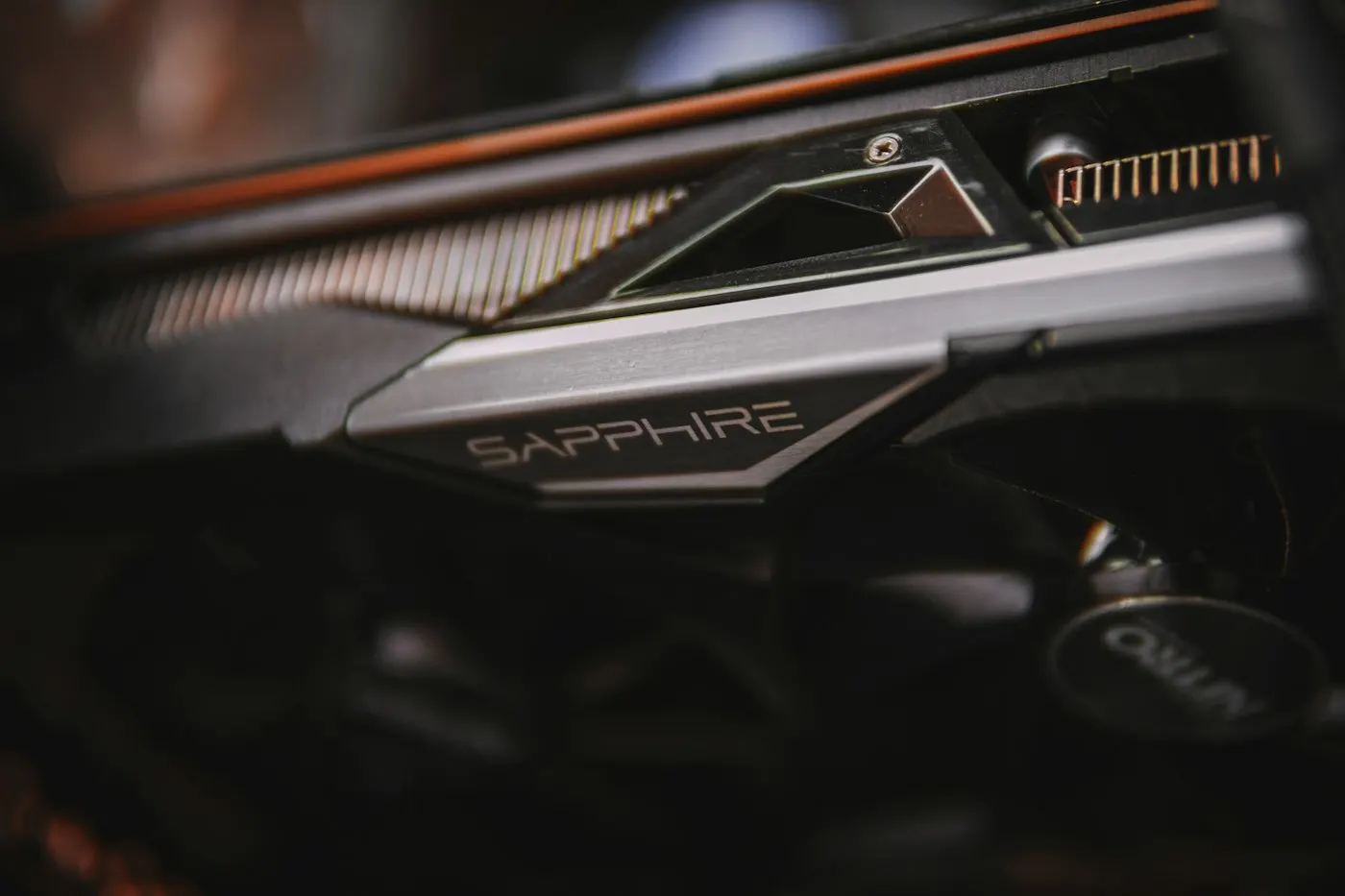
A graphics card melting is not, by itself, news; it has happened before and it will happen again. What makes the RTX 5090 power connector story from this week different is the cause: not a loose cable or a cheap adapter, but Nvidia's own flagship feature, DLSS 5, doing exactly what it was designed to do. The card did not fail despite normal use. It failed because normal use, with the feature Nvidia is pushing hardest, now draws more power than the connector was ever comfortable carrying.
DLSS 5 Trades Frame Rate for Realism, and It Trades a Lot
Nvidia shipped DLSS 5 on September 3, 2026, calling it "3D-guided neural rendering." Unlike earlier DLSS versions, which upscale resolution or generate extra frames, DLSS 5 rewrites lighting and material detail in every frame using the game engine's own depth, motion and color data, according to Nvidia's own announcement and reporting from VideoCardz. It is a fifth-generation-Tensor-Core-only feature, meaning it runs on RTX 50 series cards and nothing older, and the first supported title was NBA 2K27.
The catch is cost. Nvidia's own figures put the performance hit at roughly 50 to 60 percent, and independent testing has landed in a similar range: Digital Foundry recorded the RTX 5090 dropping from 128.4 FPS to 62.7 FPS at 4K, a 51.2 percent decline, while other outlets measured losses between 42 and 49 percent depending on the game. That is a steep trade for better lighting, and it means the GPU is working substantially harder, and pulling substantially more power, for every frame it renders with the feature on.
Advertisement
One RTX 5090 Just Turned That Power Draw Into a Melted Connector
The clearest illustration came from an MSI GeForce RTX 5090 Gaming Trio OC, reported first by Tom's Hardware and corroborated by TechPowerUp, VideoCardz and TweakTown. While testing DLSS 5 in NBA 2K27, the owner smelled burning and found the card's 16-pin power connector melted, with at least five pins scorched and one pin's plastic housing gone entirely. A GPU-Z screenshot showed board power holding steady at 613.5 watts, above the card's 575-watt rating.
That was not an isolated spike. In separate testing of the Control benchmark reported by VideoCardz and Tom's Hardware, an MSI RTX 5090 Lightning Z, which carries two 16-pin connectors and a 1,000-watt overclocking BIOS, jumped from 691 watts without DLSS 5 to roughly 800 watts with it enabled. Nvidia's own Founders Edition, capped at 575 watts, simply hit its ceiling the moment DLSS 5 was switched on. Across every test, the pattern is the same: DLSS 5 adds a meaningful, repeatable amount of power draw on top of an already power-hungry GPU.

The 12VHPWR Connector Has Been Living on Borrowed Margin Since 2022
This is not the connector's first controversy. Reports of melted 12VHPWR connectors on the RTX 4090 began circulating in late 2022, and Nvidia later acknowledged roughly 50 cases globally, according to TweakTown. The industry's response was PCI-SIG's revised 12V-2x6 connector, which uses shorter sense pins and longer power and ground pins to improve contact before a card can draw full power. That redesign shipped years ago, and RTX 5090 cards still use it, or a doubled-up version of it on the highest-end board partner models.
Despite the fix, incidents kept surfacing. HotHardware reported a case where an RTX 5090 melted its connector even with power capped at 500 watts, well under the connector's rated limit. The pattern that emerges across both generations is a connector rated for roughly 600 watts being paired with GPUs that, under the right software conditions, now sit at or above that ceiling with almost no headroom left for manufacturing tolerance, cable wear or imperfect seating.
✦ Free Newsletter ✦
Never miss a story
Tools, tutorials and AI deep-dives - straight to your inbox, every week.
The Honest Caveat: Nobody Has Proven DLSS 5 Itself Is the Design Flaw
It would be an overstatement to say DLSS 5 breaks GPUs. Multiple outlets covering the RTX 5090 melting reports, including PC Guide and Fudzilla, note that connector failures on this generation have repeatedly been traced to loose or improperly seated cables rather than a defect in the connector standard itself, and Nvidia has not issued a statement attributing the Gaming Trio OC incident specifically to DLSS 5. A single melted connector, however dramatic, is an anecdote, not a statistical pattern, and the broader RTX 5090 installed base has not reported failures at anywhere near the scale of a widespread recall issue.
What is fair to say, and what TechPowerUp and Wccftech have both argued directly, is that DLSS 5 is now stress-testing that connector margin at scale for the first time, because it is the first mainstream feature that reliably pushes flagship cards toward or past their rated power limits during ordinary play rather than synthetic benchmarks. A connector with a track record of failing under edge-case stress is now being asked to handle that stress as a routine setting, not an outlier.
Who Actually Needs to Worry About This
This story matters to a narrow but real group of readers, and it is worth being precise about who they are.
- Worry about it: owners of RTX 5090 or RTX 5090-class board partner cards, especially factory-overclocked or "OC" variants, who plan to use DLSS 5 in supported titles for extended sessions.
- Pay light attention: RTX 5080 owners, since 12V-2x6 melting has been reported on that card too, even though DLSS 5's heaviest power draw is concentrated on the 5090.
- Safely ignore this: anyone on RTX 40 series or older, since DLSS 5 does not run on those cards at all, and anyone not planning to enable DLSS 5, since the feature is opt-in and the base game runs at its normal, lower power draw without it.
What to Do If You Own an RTX 5090
None of this means avoid the card or the feature outright, but it does argue for a few concrete precautions rather than blind trust in the connector.
- Physically reseat the 16-pin connector at both the GPU and power supply ends, checking that it clicks fully rather than sitting at an angle.
- Avoid tight bends in the cable near the connector housing, which reviewers have repeatedly flagged as a contributor to uneven pin contact.
- Monitor board power with GPU-Z or Nvidia's own overlay during extended DLSS 5 sessions, and treat sustained readings near or above your card's rated wattage as a reason to check the connector, not just a performance statistic.
- If you own a factory-overclocked or dual-connector variant, do not assume the extra headroom is free; it comes with proportionally higher current through the same connector hardware.
The practical takeaway is not that DLSS 5 is unsafe to use. It is that Nvidia has shipped a feature whose normal operation now regularly approaches the point where this connector generation has previously failed, and the burden of catching a bad seat or a worn cable has shifted more heavily onto the person plugging it in. Until Nvidia or its board partners publish guidance specific to DLSS 5 power draw, treat a fully seated, undamaged, well-routed cable as mandatory rather than optional maintenance.
Readers curious about where GPU-driven hardware spending is actually going this year can compare this to the boom in handheld gaming PCs, where manufacturers have taken the opposite approach and deliberately capped power draw to stay reliable.
Sources
- Tom's Hardware: Enthusiast says DLSS 5 pushed RTX 5090 past 600W and melted the 16-pin connector
- VideoCardz: First user reports RTX 5090 with melted connector after testing DLSS 5
- TechPowerUp: DLSS 5 testing ends in a melted RTX 5090 connector
- VideoCardz: DLSS 5 could become a new GPU power stress test, RTX 5090 Lightning Z reaches 802W
- TweakTown: Nvidia says it has had only 50 cases of melted 12VHPWR connectors on RTX 4090
- HotHardware: Gamer claims his RTX 5090 capped at 500W still burned its 16-pin connector

Advertisement