
There's a word that started circulating in enterprise tech circles in early 2026 that tells you everything about the mood in the software industry right now: SaaSpocalypse.
Dramatic? Yes. Accurate? More than most SaaS executives would like to admit.
The SaaS model was one of the great business innovations of the past two decades. Sell software as a subscription. Charge per seat. Grow as your customers grow. Simple, predictable, scalable. The market hit $315 billion in 2025. Entire careers were built on it. Fortunes were made.
Advertisement
And right now, quietly but unmistakably, the foundation underneath it is cracking.
Not because software is getting worse. Because AI agents are getting good enough to replace the workflows that software was built to manage - and they're doing it for a fraction of the cost, without the login screens, the integration headaches, the per-seat invoices, or the three-year enterprise contracts that nobody reads until they need to cancel.
This is not a prediction about 2030. It's a description of what is happening to corporate software stacks right now, in 2026, on quarterly earnings calls and in IT budget reviews across the world.
The Per-Seat Model's Fatal Flaw Just Got Exposed
To understand why AI agents are such a threat to SaaS, you need to understand what SaaS pricing was actually built on.
The per-seat model worked on a beautiful assumption: every employee who does a job needs their own license to do it. More employees equals more seats equals more revenue. The software company grows automatically as its customers grow. It's almost passive income at scale.
That assumption held for twenty years because it was true. A human doing a job needed a login, a dashboard, a license. There was no way around it.
AI agents break the assumption at its foundation. When one employee with an AI agent can do the work that previously required five, the company doesn't need five seats anymore. It needs one. Revenue per customer drops. The growth engine that powered the entire SaaS model stalls.
This is exactly what showed up in Q4 2025 and Q1 2026 earnings for multiple software companies. Not because their products got worse. Because AI made their customers more efficient - and that efficiency translated directly into fewer seats, fewer licenses, fewer renewals.
Publicis Sapient, one of the world's largest digital transformation consultancies, is already cutting traditional SaaS licenses by roughly 50% - including major platforms - and replacing them with generative AI tools. That's not a pilot programme. That's a structural shift in how a large enterprise thinks about software spend.
When companies that size move, others follow.
What an AI Agent Actually Replaces
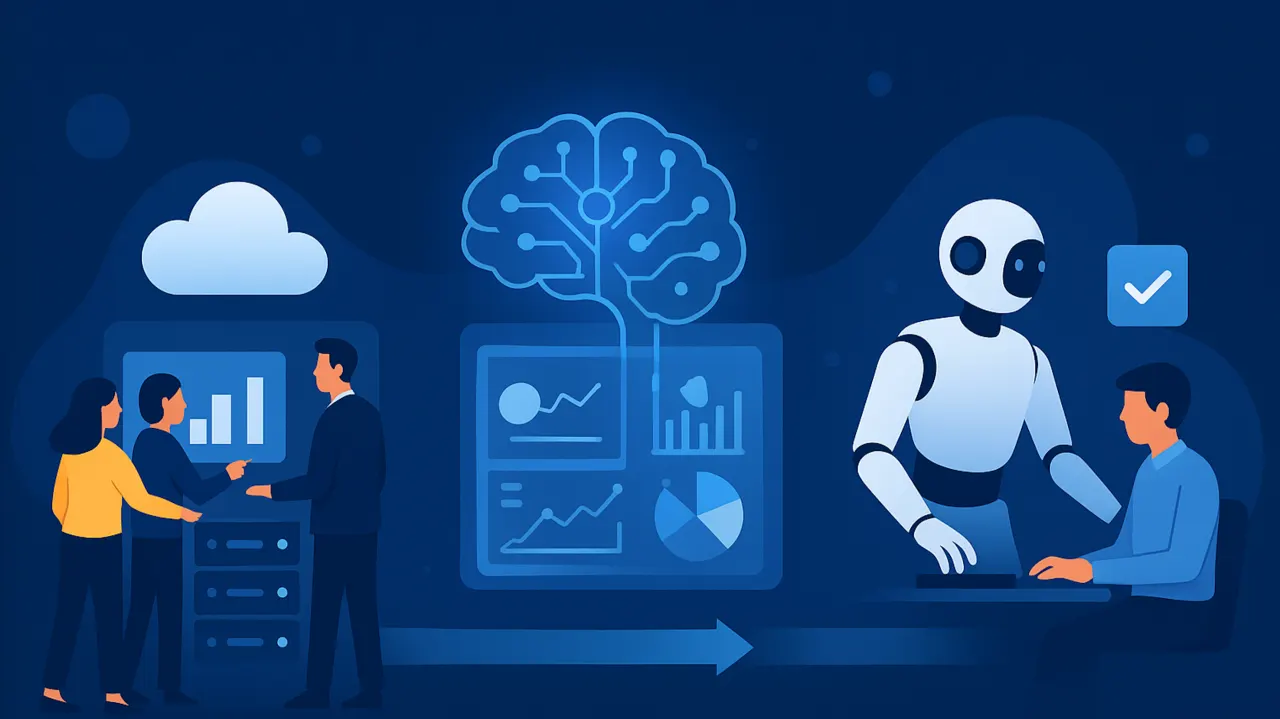
The categories under the most pressure share a specific characteristic: they exist to execute a narrow, repeatable workflow on structured data. When that's your core value proposition, an AI agent can approximate it - often exceed it - at dramatically lower cost.
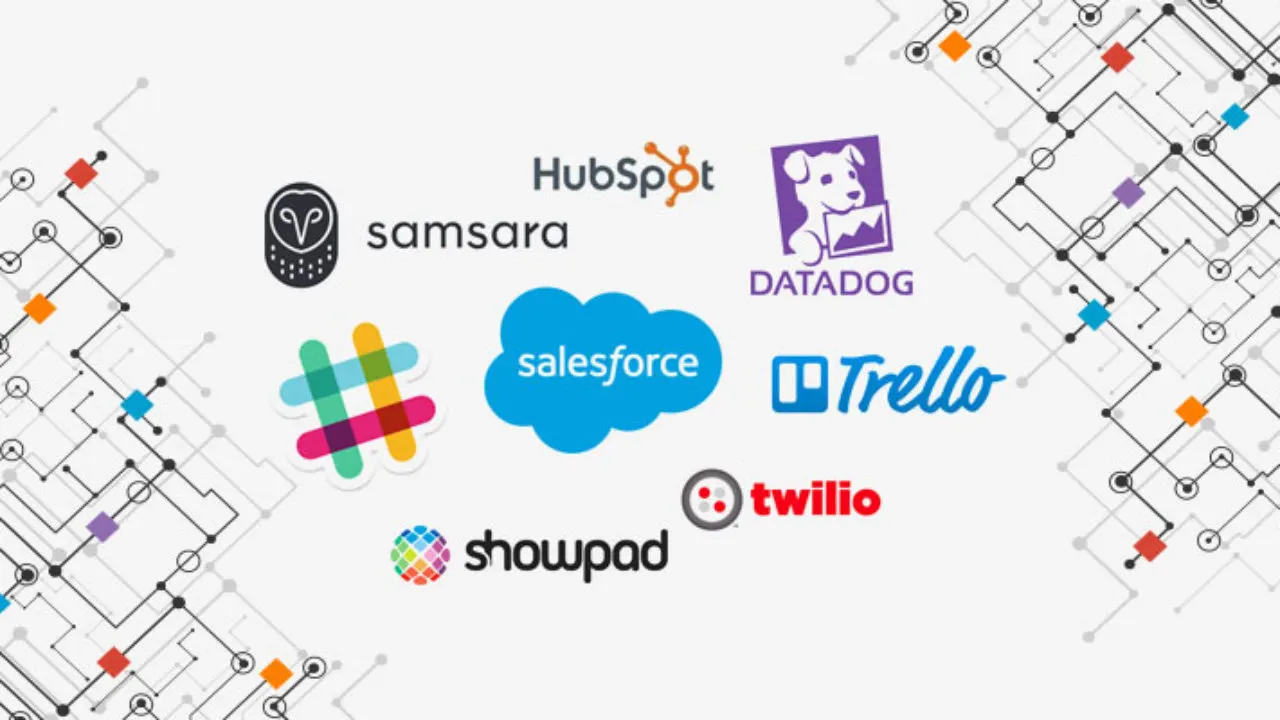
CRM software is the clearest example. The traditional pitch of a CRM is that it helps sales teams manage relationships by keeping track of contacts, deals, emails, and follow-ups. In practice, half the value is just data entry - logging calls, updating deal stages, recording what was discussed. AI agents do this automatically by reading email threads, extracting deal signals, updating records, and flagging when a deal has gone quiet. The salesperson spends less time in the CRM because the CRM is increasingly running itself.
Project management tools face a similar pressure. When an AI agent can read your incoming communications, identify tasks, assign them, track progress, and surface blockers without anyone creating a Jira ticket or updating a Notion board, the case for paying per seat weakens significantly.
Email marketing platforms are vulnerable. An AI agent that writes campaigns, personalises content per recipient, manages send timing, analyses performance, and optimises future sends autonomously replaces a workflow that previously required a dedicated tool, a dedicated person, and a dedicated budget line.
Advertisement
HR software for routine functions - onboarding paperwork, leave request processing, policy queries - is being compressed. Customer support ticketing for tier-one queries is being compressed. Invoice processing, expense management, compliance reporting for structured regulatory requirements - all being compressed.
The pattern is consistent: any software whose primary job is to organise humans doing repetitive information work is exposed. Because that's precisely the work AI agents are best at.
The Numbers That Explain Why SaaS Stocks Are Nervous
The market saw this coming before most people did. A $285 billion correction in SaaS valuations in 2026 reflects investors repricing the growth assumptions that made these companies so valuable in the first place.
✦ Free Newsletter ✦
Never miss a story
Tools, tutorials and AI deep-dives - straight to your inbox, every week.
The specific trigger that accelerated the shift: when Anthropic released enterprise plugins in early 2026 that let non-developers automate entire business workflows previously requiring five to ten separate SaaS subscriptions, investors repriced the sector within 48 hours. Not because the technology was new, but because the moment non-technical employees could deploy AI agents to replace software stacks without writing a line of code, the addressable replacement market became enormous.
The usage data backs up the anxiety. A Databricks survey found multi-agent system usage spiked 327% over just four months in 2025. Gartner projects that 40% of enterprise applications will feature AI agents by 2026, up from under 5% in 2025 - a figure that would have seemed implausible three years ago. The same research suggests that by 2028, a third of enterprise software applications will include agentic features by default — meaning the SaaS vendors that survive will do so by becoming AI-agent platforms themselves, not by staying as dashboards humans navigate manually.
The economics of the switch are hard to argue against for finance teams. Organisations adopting agentic AI are achieving cost reductions of up to 70% compared to SaaS equivalents, with average ROI of 171% and 74% of executives seeing returns within year one, according to a PwC survey of 308 US executives. A CFO looking at those numbers and then looking at a seven-figure annual SaaS bill has a very simple decision to make.
The Honest Nuance: What AI Agents Cannot Replace
This is where most coverage of this topic goes wrong, and it's worth being clear about it.
AI agents are not going to delete enterprise software. Not in 2026, not in 2028, not in the foreseeable future for large chunks of the stack. The "death of SaaS" framing, while useful for capturing what's happening at the workflow layer, understates how much software infrastructure is not about executing repeatable workflows on structured data.
Core financial systems - the general ledger, the ERP backbone that large enterprises run their operations on - are not going away. The complexity, the compliance requirements, the audit trails, the integration with regulatory reporting systems, the change management cost of replacing them — all of this makes them sticky in ways that workflow automation doesn't touch.
Collaboration infrastructure - the platforms teams use to communicate, share documents, and coordinate work - is evolving toward AI-native rather than being replaced. Microsoft 365 and Google Workspace are not being displaced by agents; they're being extended by them. The agent layer sits on top, not instead of.
Security and compliance tooling for complex, context-dependent regulatory environments requires human judgment and institutional knowledge that current agents handle poorly.
The more accurate picture is a split: the SaaS tools that manage structured, repetitive, well-defined workflows are facing existential pressure. The SaaS tools that provide infrastructure, enable collaboration, or handle complexity requiring human oversight are evolving rather than dying.
Advertisement
That's cold comfort for the companies in the first category, which represent a significant chunk of the software market by revenue. But it means this is a disruption of specific categories rather than an industry extinction event - at least on the current timeline.
What This Means Depending on Who You Are
If you're a business owner or founder reviewing your software spend right now, the practical question is which tools in your stack exist primarily to organise people doing repetitive information work, and which ones do something genuinely more complex. The first category is worth auditing for replacement. The second is probably not going anywhere yet.
The companies getting the best results from this transition share a common approach: they didn't try to replace their entire software stack at once. They picked one workflow - usually something that consumed significant human time with predictable, structured inputs - ran an agent pilot alongside the existing tool for 60 to 90 days, compared outputs, and made a decision based on actual performance data rather than analyst projections.
If you're a SaaS founder, the strategic question is stark: is your product's core value proposition executing a workflow, or providing something more durable - infrastructure, integration, institutional knowledge, compliance depth? If it's primarily workflow execution, the competitive pressure from agent-based alternatives is real and accelerating. The companies navigating it well are embedding agentic capabilities into their own products before the agents replace them from outside.
If you're an investor, the SaaS growth multiples that seemed reasonable in 2022 and 2023 are being repriced against a different assumption about per-seat expansion. The companies worth watching are the ones transitioning from selling seats to selling outcomes - charging for results achieved rather than licenses granted. That model is more defensible in a world where agents can replicate workflows, because outcomes still require accountability and trust.
The Bigger Picture
The SaaS era isn't ending in the dramatic, sudden way the SaaSpocalypse framing implies. It's transforming - more slowly and more unevenly than the most excited predictions suggest, but more thoroughly and more permanently than the software incumbents would prefer.
What's really happening is a renegotiation of what software is for. The interface-first, human-navigated, seat-licensed model made sense when the only way to execute a workflow was to have a person log in and do it. When agents can execute the same workflow faster, cheaper, and without a login screen, the interface stops being the value. The outcome is the value.
Software companies that understand this are already repositioning around it. The ones that don't are going to spend the next three years explaining to investors why their net revenue retention is declining even though their product hasn't changed.
The product hasn't changed. That's precisely the problem.
Advertisement
The world underneath it has.
FAQ
- Is SaaS really dying, or is this just hype?
- It's not dying uniformly — it's splitting. Workflow-execution tools (CRM, project management, email marketing, HR admin) are under genuine, measurable pressure from AI agents. Infrastructure and collaboration tools are evolving rather than being replaced. The hype around total SaaS death overstates the speed; dismissing the disruption understates it.
- Which SaaS categories are most at risk from AI agents?
- Any software whose core job is organising humans doing repetitive, structured information work: CRM data entry, project management ticketing, email marketing execution, HR admin tasks, expense management, and tier-one customer support. These are the workflows AI agents replicate most effectively.
- What SaaS categories are safer from AI disruption?
- Core financial systems (ERP, general ledger), collaboration infrastructure (Microsoft 365, Google Workspace), and complex compliance tooling are more defensible. They either provide infrastructure that agents run on top of, or require human oversight for complex regulatory and judgment-heavy tasks.
- What should a business do about this right now?
- Audit your software stack for tools that primarily organise repetitive information work. Pick one workflow, run a 60–90 day agent pilot alongside the existing tool, and evaluate on real performance data. Don't try to replace the whole stack at once — that's how pilots fail.
Advertisement